
How to Open a Can Without a Can Opener Using Concrete or Stone
Published on March 1, 2025 · Last reviewed May 29, 2026
Quick answer
The safest answer is to keep a manual can opener in every emergency food kit. If you must open a can without one, use a stable surface, protect your hands, work slowly, and avoid jagged metal edges. If the can is swollen, leaking, badly rusted, or smells wrong, do not eat it.
In a survival situation, every bit of food matters. If you come across a sealed can but don’t have a can opener, you’re faced with a challenge—how do you get to the food inside without spilling it everywhere or cutting yourself? Most people are so used to can openers that they’ve never considered alternative methods, but our ancestors and soldiers in the field have been opening cans without fancy tools for generations.
For blackout planning, a manual can opener belongs with the basics in your home power outage kit; the printable blackout checklist is a simple way to catch that gap before an outage. If refrigeration is also down, follow the food safety during a power outage guide before deciding what to keep or discard.
Whether you’re in an emergency, out camping, or just misplaced your can opener, knowing how to open a can using everyday objects can save you from going hungry. The key is to work with the can’s design, not against it. This guide will teach you several reliable ways to open a can safely and efficiently.
A can without a way to open it is a planning failure, just like storing food without safe water options or waiting until the emergency to organize the routines in the first 100 days after collapse. If power is also out, connect this with your blackout plan.
Understanding How Cans Are Sealed
Before trying to open a can, it’s useful to understand how they are made. Most metal cans have a thin aluminum or steel lid that is crimped around the edges, forming an airtight seal. This seal is strong but not indestructible, and with the right pressure or friction, it can be broken.
Older cans used to be soldered shut, but modern cans have a weak point along the rim where the metal is folded over itself. That’s where you’ll focus your effort, no matter which method you use.
The Spoon Method – Safe and Effective
One of the safest and most reliable ways to open a can without a can opener is using a sturdy metal spoon. It takes a little effort, but it works surprisingly well.
How to do it:
Grip the spoon firmly
in your dominant hand. Place your thumb over the back of the spoon’s head for added pressure.
Press the spoon’s tip against the lid’s crimped edge
(the seam where the lid meets the can).
Rub the spoon back and forth
with force. The friction will gradually wear down the metal.
Once a small hole forms
, push the spoon into it and work your way around the lid until you can peel it back.
The spoon method takes about a minute or two, but it’s safe and doesn’t risk metal shavings falling into your food.
The Knife Method – Fast But Risky
Using a knife to open a can is effective, but it’s also dangerous if you don’t do it correctly. A dull knife is actually better than a sharp one because there’s less risk of the blade slipping.
How to do it:
Use a strong, fixed-blade knife (avoid using a folding knife, as it could collapse).
Place the tip of the blade along the lid’s crimped edge. Hold the handle firmly.
Apply downward pressure and tap the back of the knife with your other hand to puncture the metal.
Work your way around the lid, making small punctures until the lid can be peeled back.
Warning: Avoid stabbing directly downward into the can, as this increases the risk of slipping and cutting yourself. If you must use a knife, go slowly and keep your other hand away from the blade’s path.
The Rock or Concrete Method – Best for Outdoor Survival
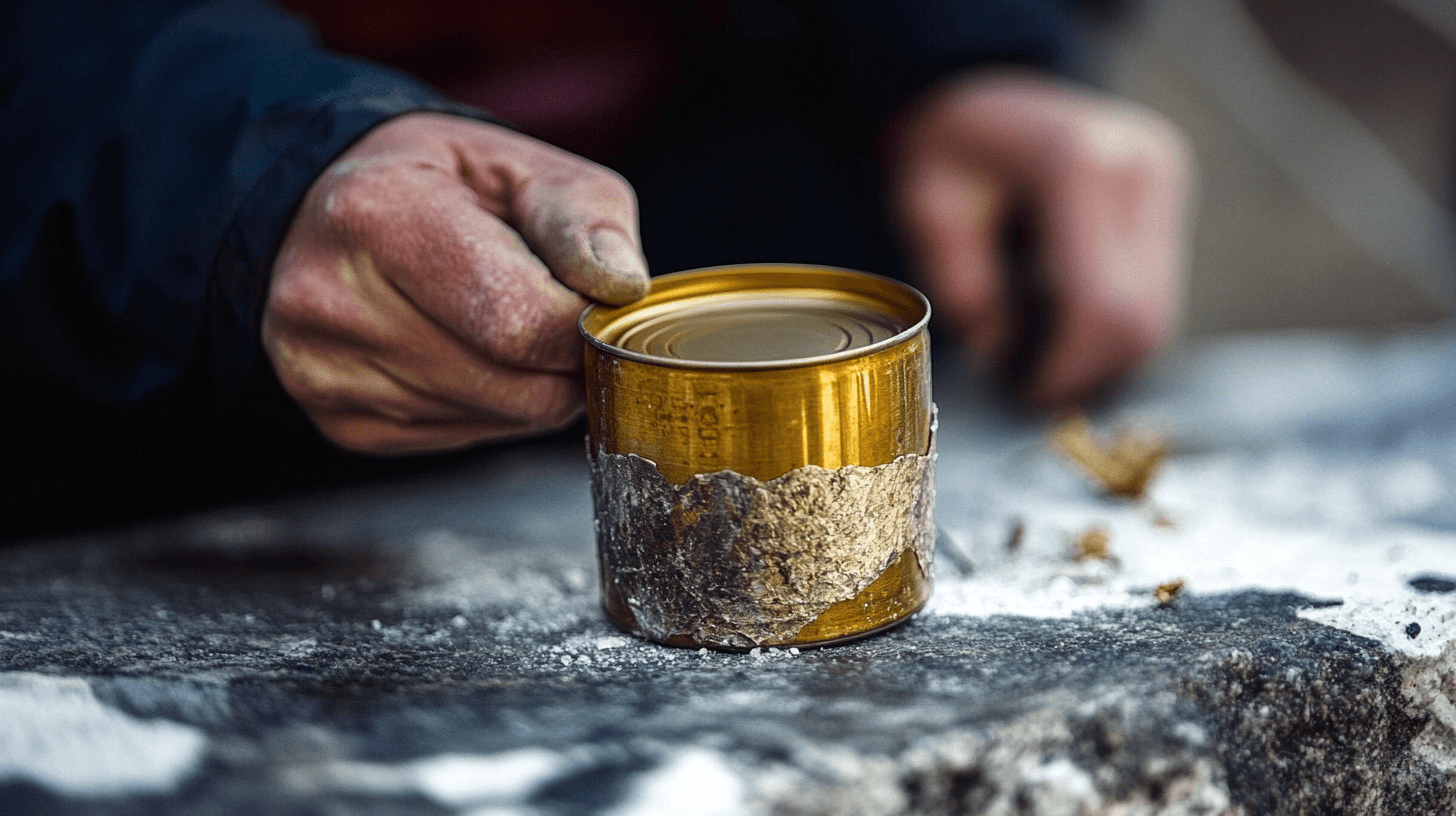
If you’re stranded outdoors without tools, you can use a flat rock or concrete surface to grind down the can’s lid until it breaks open. This method is messy but requires no tools at all.
How to do it:
Find a rough, flat rock or a concrete slab.
Hold the can upside down and rub the lid against the surface with firm pressure.
Check the lid every 30 seconds. You’ll notice moisture forming as the seal weakens.
Once the seal is worn down, squeeze the can’s sides to pop the lid open.
This method works best on cans with thin lids. It’s slow but effective, making it a great survival trick when nothing else is available.
The Pliers or Multi-Tool Method – Controlled and Efficient
If you have a multi-tool, pliers, or even vice grips, you can pry the can open in a controlled way.
How to do it:
Grip the crimped edge of the lid with the pliers.
Bend and twist the metal until it starts to break apart.
Work your way around the lid, twisting sections of it until you can peel it back completely.
This method takes some effort but allows precise control over the opening process. If you have pliers available, it’s one of the safest ways to open a can without risking contamination.
What NOT to Do When Opening a Can
While it’s important to know how to open a can, it’s just as crucial to know what not to do:
Avoid using your teeth or bare hands.
The metal edges are razor-sharp and can cause deep cuts.
Don’t shake the can too much before opening.
This increases the chance of spilling food when the lid is removed.
Be cautious with metal shavings.
If you use a rough method, wipe the lid with a cloth before eating to avoid ingesting metal debris.
Never leave food in an open can.
Once opened, transfer leftovers to another container, as metal cans can react with food and spoil faster.
Why This Skill is Essential for Survival
Knowing how to open a can without a can opener isn’t just a party trick—it’s a critical survival skill. In emergencies, canned food is one of the best long-term storage options. But if you lose your can opener, you could be left staring at a meal you can’t access.
This skill is useful for:
Emergency preparedness – If you stockpile canned food, make sure you know how to open it without modern tools.
Camping and wilderness survival – Sometimes, you forget gear. Knowing alternative methods ensures you never go hungry.
Urban survival situations – If disaster strikes and stores are looted, you may have to rely on found canned goods.
Final Thoughts
Opening a can without a can opener is simple if you know the right techniques. Whether you use a spoon, knife, rock, or pliers, the key is to focus on breaking the crimped seal rather than brute-forcing through the metal. With a little patience, you can access your food safely and efficiently—no fancy tools required.
Next time you find yourself without a can opener, don’t panic. Just use one of these methods and keep your survival skills sharp.
Article recap
- A manual can opener is cheap, light, and should be stored with emergency food.
- Improvised can-opening methods create sharp edges, so hand protection matters.
- Food safety still comes first: damaged or suspect cans are not worth the risk.
Editorial note
This is a fallback skill, not the preferred way to handle emergency food. The real preparedness lesson is to store the right tools with the food before you need them.
Frequently asked questions
Is it safe to open a can on concrete or stone?
It can work as an emergency fallback, but it creates sharp edges and contamination risk. Work slowly, keep the can stable, protect your hands, and wipe the top before opening if possible.
When should I throw a canned food item away?
Discard cans that are swollen, leaking, badly dented along seams, deeply rusted, spurting liquid, or smell wrong when opened. Food poisoning risk is not worth it.
Sources and further reading
- Ready.gov: Food — Ready.gov, accessed May 30, 2026
- FDA: Food and Water Safety During Power Outages and Floods — FDA, accessed May 30, 2026
- Ready.gov: Build a Kit — Ready.gov, accessed August 14, 2026