
Logo
Generator Carbon Monoxide Safety Checklist: Where to Put It and What Not to Do

Generator Carbon Monoxide Safety Checklist: Where to Put It and What Not to Do

June 4, 2026

A generator can make a power outage easier, but it can also turn a bad night into a deadly one. The most dangerous generator mistake is not noise or fuel storage. It is carbon monoxide: an invisible, odorless gas that can build up...

Start here

Practical emergency preparedness for ordinary people

The Survival Nexus organizes survival advice into usable guides for power outages, water and food problems, first aid limits, communications failures, civil unrest, and other emergencies. The goal is calm preparation, not panic.

Recommended first step · free PDF

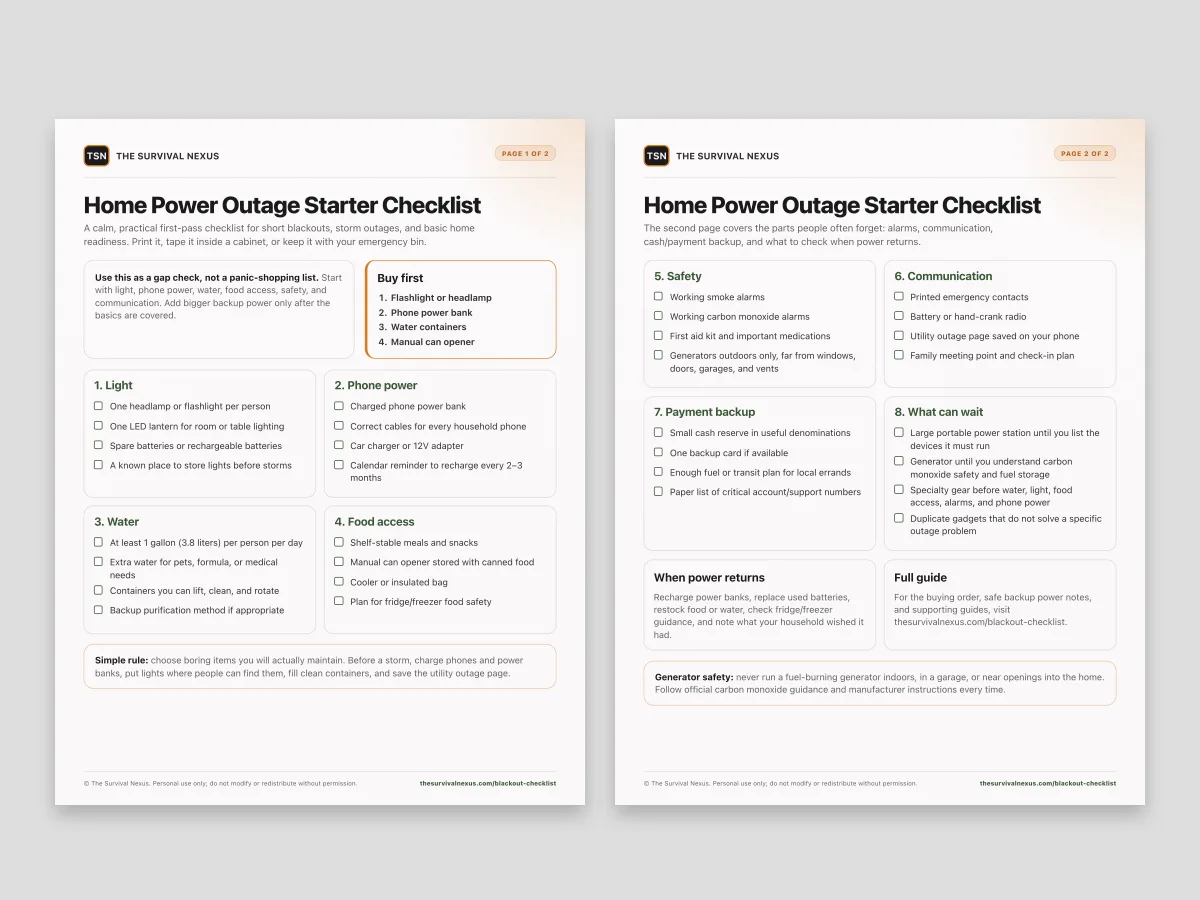
Start with the blackout checklist

A 2-page printable gap check for lights, phone power, water, food access, radios, alarms, and what to check after power returns.

Get the checklist

Browse preparedness topics

Use these hubs when you want a deeper guide for a specific problem.

Power & Grid-Down

What to buy first for a home blackout kit, what can wait, and how to avoid common outage mistakes.

Browse guides →

Free Blackout Checklist

A printable 2-page gap check for lights, phone power, water, food access, radio, alarms, and family basics.

Browse guides →

Water, Food & Everyday Readiness

Low-drama preparedness for outages, supply interruptions, and ordinary emergencies.

Browse guides →

Medical & First Aid Boundaries

Calm guidance for prevention, triage, and knowing when professional help matters.

Browse guides →

War, Nuclear & Civil Unrest

High-risk scenarios explained with caveats, official guidance, and practical first steps.

Browse guides →

Wilderness Basics

Navigation, shelter, fire, water, and decision-making when you are away from help.

Browse guides →

Communications & Digital Preparedness

Backup communication, cyber outages, and keeping critical information available offline.

Browse guides →

Editorial standard

Calm guidance for higher-risk topics

  • We start with practical steps readers can take before leaning into worst-case scenarios.
  • When a topic touches medicine, law, fire, radiation, fuel, or weapons, we add clear safety caveats.
  • For high-stakes guidance, we prefer official sources such as Ready.gov, FEMA, CDC, NOAA, and the Red Cross.