
Power Bank Fireproofing Your Life
Published on January 19, 2026 · Last reviewed May 30, 2026
Quick answer
For power bank fireproofing your life, act early: monitor official alerts, decide whether to shelter or leave, prepare essential documents and supplies, and avoid last-minute improvisation. The article's core idea is simple: When the lights go out and the cell network gets flaky, your phone stops being entertainment and becomes a lifeline. Maps, emergency calls, two-factor logins, local news, flashlight, notes, photos, offline docs—suddenly …
When the lights go out and the cell network gets flaky, your phone stops being entertainment and becomes a lifeline. Maps, emergency calls, two-factor logins, local news, flashlight, notes, photos, offline docs—suddenly the “battery percentage” is a survival resource. A power bank is the simplest way to buy time during a 72-hour outage, a bug-in week, or a night outdoors when you’re leaning on a phone and tablet for navigation, weather windows, or keeping kids calm.
The catch is that a power bank is also a lithium battery. If you treat it like a harmless accessory, you increase the odds of the worst kind of failure: heat, smoke, and fire exactly when you can least afford chaos.
A power bank works best as one part of a broader outage plan, not as the whole plan. If you are building from scratch, put it inside a basic power outage kit for home with dedicated lighting, safe charging habits, water, shelf-stable food, and a way to get emergency updates.
Safety note: This is general guidance, not professional fire-safety instruction. If a device is smoking or burning, prioritize evacuation, fresh air, and emergency services.
What a power bank is in a survival scenario
In preparedness, a power bank is not “extra battery.” It’s your bridge between normal life and self-reliance. In a 72-hour disruption, it keeps your phone alive long enough to coordinate, get information, and make decisions. In a bug-out or overnight situation, it supports navigation and emergency contact when your vehicle power is unavailable or you’re conserving it. In a shelter-in-place week, it becomes part of the routine that keeps your household functional: charging phones on a schedule, preserving battery health, and avoiding panic when the last device hits 5%.
That’s why safety matters. A power bank that fails doesn’t just remove power—it can create a hazard you’re not equipped to handle, especially indoors.
The failure triggers you can actually control
Most problems come from four things: low-quality builds, physical damage, heat, and charging abuse. Quality is the foundation. You cannot “careful handling” a junk power bank into being safe. Buy from brands and sellers that are traceable and that operate in markets with real warranties and recalls. Avoid suspiciously cheap packs with inflated capacity claims or vague certification badges.
After that, your behavior dominates outcomes. Physical damage is common in real life: dropped packs, crushed backpacks, tight pockets, and gear bins. Heat is the quiet multiplier: cars in summer, direct sun, heaters, and charging setups that trap warmth. Charging abuse is the classic mistake: charging on beds and couches, charging while covered, or charging where you won’t notice abnormal heat.
Bug-in use without turning your home into a hazard
In a blackout, people charge wherever they can. That’s exactly when you should be stricter. Charge on a hard, non-flammable surface. Keep the power bank uncovered and away from piles of paper, clothing, and bedding. If you want a simple rule: if it’s soft enough to sleep on, it’s a bad charging surface.
Treat charging like a routine, not a background activity. Pick a “charging spot” and keep it consistent. Charge devices in cycles instead of everything at once. This reduces heat build-up and makes it easier to notice when a pack is warming more than it should.
If you have kids, make this part of the plan. When stress rises, people toss devices onto couches and beds to “just get some power.” That’s how incidents happen. Create a habit now: one safe spot, one adult responsible, no exceptions.
72 hours outdoors and the backpack reality
Outdoors, the fire risk often starts with damage and short-circuits. Power banks get slammed against hard objects, bent, squeezed, or exposed to temperature swings. Keep your power bank in a protective pouch and separate it from metal items like keys, tools, lighters, or loose batteries. You’re preventing the simplest disaster: something metallic bridging contacts or damaging ports.
Also assume you’ll use power in bursts. Your goal is not to keep every screen bright all night. Your goal is to keep critical functions alive: navigation checks, emergency contact windows, and essential information. In practice, that means airplane mode when you’re not actively communicating, low brightness, and charging your phone only when it drops into a lower range rather than topping it up constantly.
Red flags that mean the power bank is done
In preparedness, “still works” is not a safety standard. Retire a power bank immediately if you see swelling, smell chemicals, hear hissing/popping, notice unusual heat during normal use, or see casing cracks. Treat a hard drop or crush event seriously even if it looks fine; lithium failures can show up later.
If you’re building a dependable kit, rotate and test. An “emergency-only” power bank that hasn’t been used in a year is a gamble. Use it occasionally, then recharge and store it properly.
What to do if it overheats
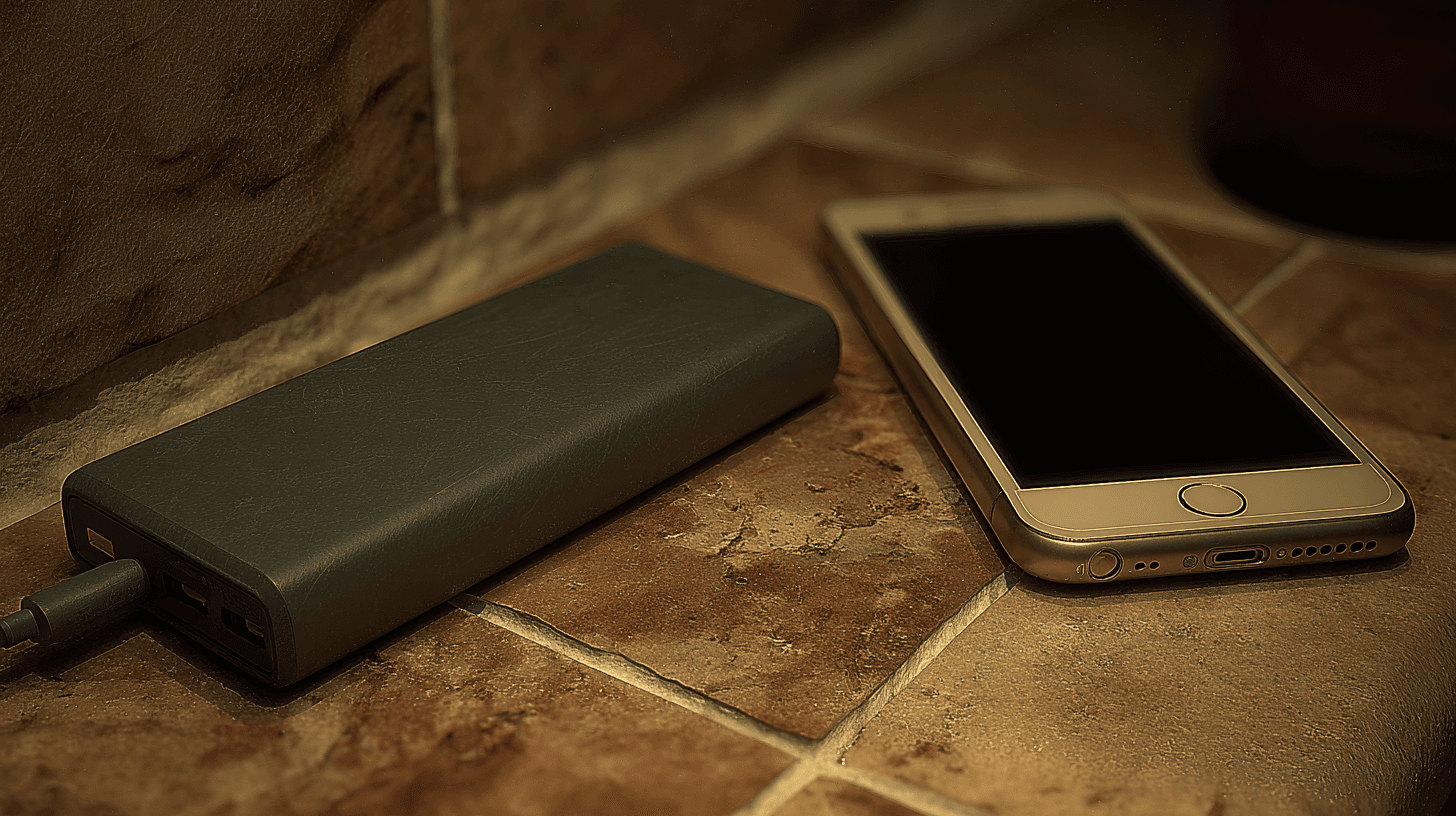
If it’s overheating, stop charging and isolate it. Unplug it. Move it to a non-flammable surface like tile, concrete, or a metal tray away from anything that can ignite. Do not wrap it, do not put it in a drawer, and do not keep it close to where people are sleeping. If there’s smoke, flame, or rapid swelling, evacuate and call emergency services. The smoke is not something you want inside your lungs or your home.
The TSN baseline setup
You don’t need a drawer full of power banks. Two is usually enough: one you use daily so it’s constantly “proven,” and one backup stored for outages and travel. Store the backup in a cool, dry place at a partial charge rather than fully full or fully empty for months. Pair them with a small cable kit that matches your actual devices. The goal is reliability and routine, not specs on paper.
Article recap
- Official alerts matter more than rumors.
- Leaving early is usually safer than waiting for perfect certainty.
- A written checklist prevents missed documents, medications, and pet needs.
Editorial note
This article is reviewed as practical preparedness guidance, not a substitute for professional emergency, medical, legal, or local-authority advice. Follow official alerts and local rules for your area.
Frequently asked questions
[power-bank-fireproofing-your-life] What should I do first for Power Bank Fireproofing Your Life?
Start by slowing the situation down: check for immediate danger, protect people first, and follow official or professional guidance where it applies. Then work through the practical steps in the article instead of trying to solve everything at once.
[power-bank-fireproofing-your-life] What is the biggest mistake to avoid with Power Bank Fireproofing Your Life?
The biggest mistake is usually acting on assumptions. Do not rely on rumors, unsafe shortcuts, or gear you have never tested. Confirm the risk, use known-safe supplies or procedures, and get professional help when health, legal, fire, water, or life-safety issues are involved.
Sources and further reading
- Ready.gov Disasters and Emergencies — Ready.gov, accessed May 30, 2026
- National Weather Service: Weather Safety — NOAA/NWS, accessed May 30, 2026
- FEMA: Community Preparedness — FEMA, accessed May 30, 2026