
Water & food
Choosing Dry-Food Storage Containers That Fit Your Pantry
A giant bucket can be a poor answer to a small pantry problem. If you struggle to lift it or close its lid, extra capacity is not much of an advantage. Choos...
Quick answer
Choose packaging around the food, how often you will open it and where it will sit. Confirm food-contact suitability, the actual barrier and matching closure, and protection from damage. A securely closing container may be enough for ordinary rotation; suitable sealed reserve portions may need a specified foil-laminate bag plus outer protection. Neither vacuum sealing nor oxygen absorbers make moist food safe at room temperature.
A giant bucket can be a poor answer to a small pantry problem. If you struggle to lift it or close its lid, extra capacity is not much of an advantage. Choose dry-food storage containers around the food and the way you use it, not the biggest package on sale.
Think of it as a system: safe food contact, a material and closure suited to the job, and protection from damage. One container may be enough; a bag and rigid outer container can also do different jobs.
Start with the food and the next opening
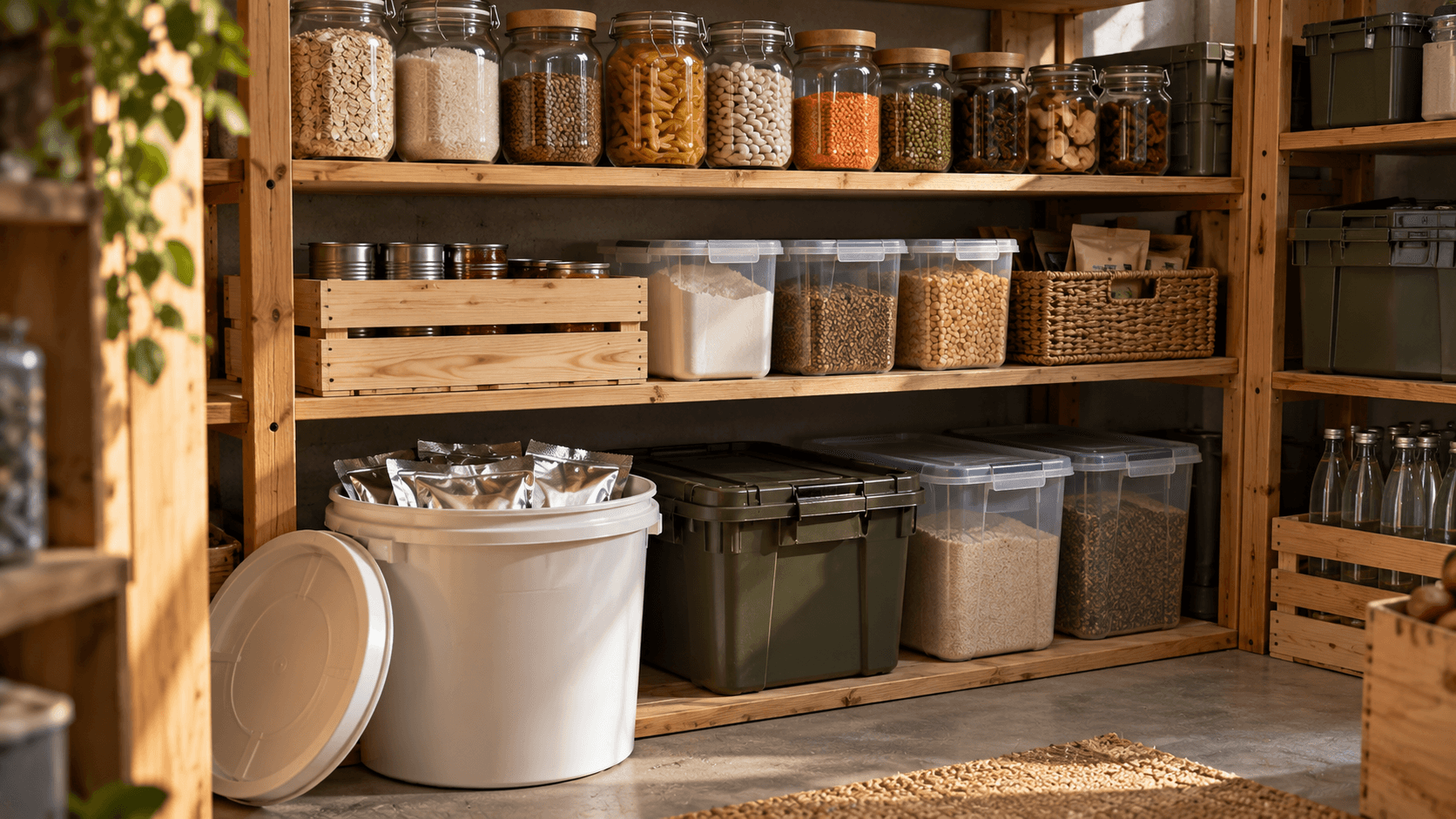
Separate the staples you cook every week from food you intend to leave sealed as a reserve. For ordinary rotation, keeping a suitable commercial package inside a securely closing protective bin may be enough. Follow the package's directions after opening. Decanting everything into matching jars is optional, not a prerequisite for preparedness.
Food choice comes first. White rice is not interchangeable with brown rice or nuts, whose oils can become rancid. Whole-wheat flour is not the same storage problem as intact wheat berries: milling exposes more of the grain to oxygen. For oily foods and milled whole grains, favor amounts you will use sooner and follow product storage instructions. Better packaging is not permission to assume a white-rice storage life.
Also separate cooking ingredients from ready-to-eat backup meals. Dry rice still needs safe water and a way to cook it. Our guide to choosing usable emergency groceries helps with that decision before you spend money on containers.
Give each layer a clear job
Food contact comes first. Confirm that the finished container is intended for the food and storage conditions you have in mind. A recycling number identifies a plastic category; it does not establish the container's history, suitable use or lid performance. Buy from a supplier that provides intended-use information. Reject former chemical containers and containers that held other nonfood products, even if you plan to add a liner. Trash bags are not food-storage liners.
The barrier includes the closure. A lid that keeps flour from spilling is not necessarily a strong long-term oxygen or moisture barrier. Utah State University notes that HDPE food buckets allow slow oxygen transfer through their walls. A matching gasketed lid matters, but it does not change the wall material. Likewise, a high-barrier bag cannot deliver its intended protection if its final closure is unsuitable.
Physical protection is a separate job. Flexible bags need protection from punctures, abrasion and chewing. A rigid outer container can help, but a plastic bucket is not automatically rodent-proof. Tight-fitting lids matter for pantry insects too: small pests can get under loose lids and chew through bags and cardboard. Packaging is not a rescue treatment for infested food; discard affected food and clean the storage area.
Match the container to the way you use it
Glass jars suit smaller working quantities. Use a food-storage jar with a sound, tight lid. Glass is heavy and breakable, so consider who will handle it and where it might fall. Keep clear jars in dark storage. Closing a dry-food jar is not home canning and does not make unsuitable food shelf-stable.
Kitchen canisters and small food buckets suit frequent access. Look for a lid you can open comfortably and close reliably, plus manufacturer instructions for cleaning and reuse. Check whether replacement gaskets or lids are available. The word “airtight” alone is not a measured long-term oxygen-barrier specification. For food you use regularly, convenient access may be more useful than elaborate reserve packaging.
Larger food buckets suit bulk handling or outer protection. Check the exact bucket and lid combination, not just the bucket's food-contact claim. Some lids are intended for one opening rather than repeated use. Consider the filled weight, the reach to the bottom and whether you can remove the lid where the bucket will sit. Do not infer a safe shelf load or stacking height from its nominal capacity.
Foil-laminate bags suit appropriate sealed reserve portions. Look for actual food-contact and laminate specifications, not just the word “Mylar,” a shiny surface or a thickness claim. Utah State University describes the foil layer as reducing oxygen and moisture transmission. These bags can complement a protective bucket rather than compete with it.
Closure details are worth checking before purchase. For example, an IMPAK foil-laminate pouch specification recommends a heat seal to maximize that pouch's barrier properties even though it has a zipper. That is a specification example, not a product recommendation or a rule for every bag. Ask what final closure the actual bag requires and whether you can provide it before buying a case.
Let your pantry set the size
Choose the storage spot before the container. Look for cool, dry, dark space you can inspect, away from chemicals and obvious pest access. Measure the shelf opening as well as the shelf itself: a bucket that fits under a shelf may still have no room for its lid to come off.
Smaller portions can make food easier to reach and move, and let you open one reserve portion while leaving others closed. More packages also mean more closures and more labels to manage. Choose that tradeoff deliberately. Keep original directions, dates and product or lot identity when repacking; a photograph can preserve information that would otherwise be lost. Our guide to rotating emergency food covers keeping those purchases in ordinary use.
A rice purchase, two different decisions
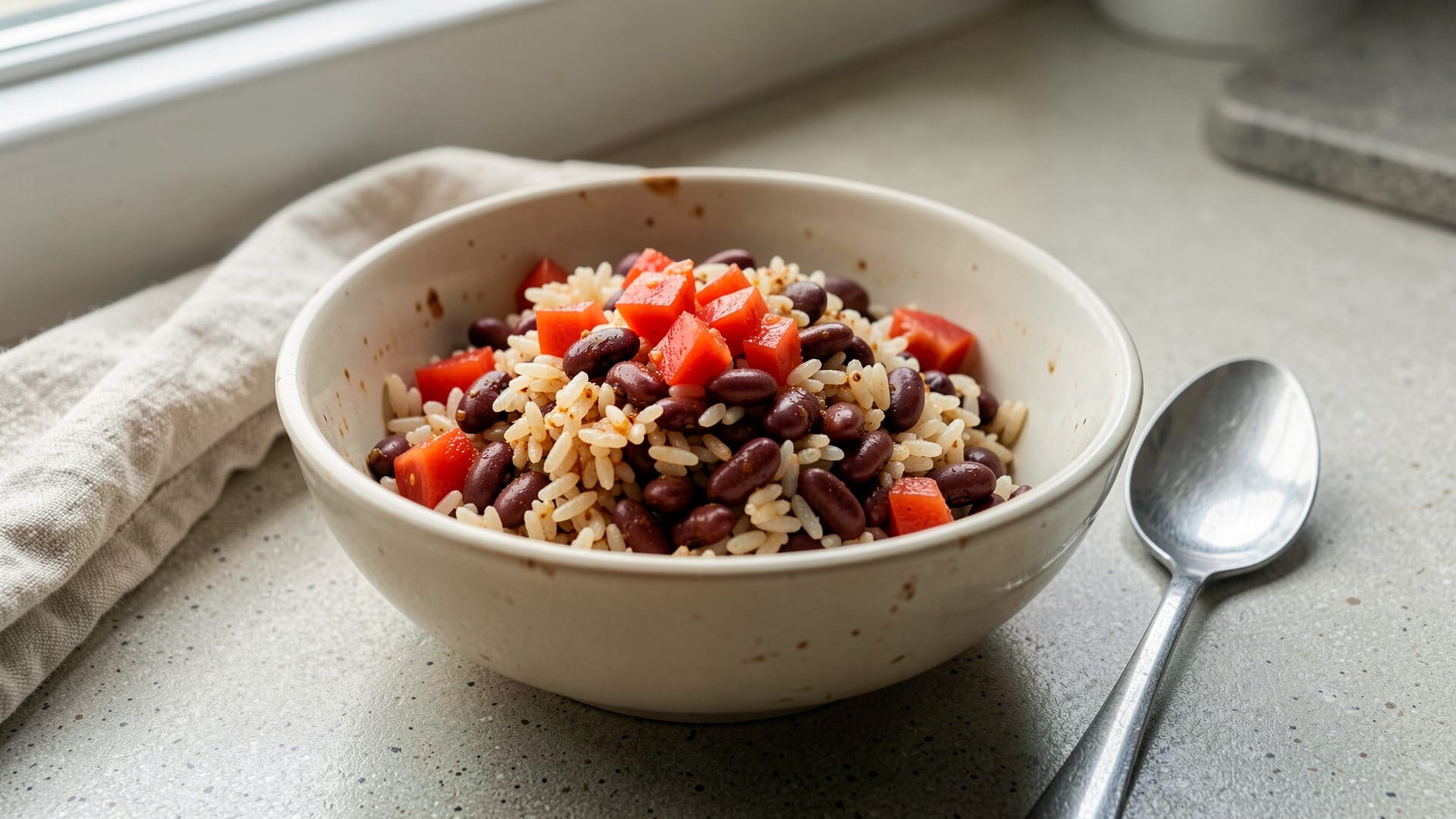
A household buying 10 lb (about 4.5 kg) of commercially dry white rice for regular cooking should first ask where it will sit and how much to handle at once. A working canister plus the remaining rice in suitable packaging inside a secure bin may fit better than one large bucket pulled out for every meal. Follow the rice package's storage directions. Routine use does not automatically call for oxygen absorbers or specialized barrier packing.
If you instead want part of that purchase held as an unopened reserve, suitable foil-laminate portions inside a protective outer container become worth considering. Each portion should match an amount you can use conveniently once opened. Check the food's suitability and the bag's required closure before buying supplies. Do not assume that 10 lb fits a particular jar or bucket: container volume is not a universal dry-food weight rating.
Change the food to brown rice or nuts and revisit the plan, not just the container size. A smaller purchase and faster use may be the better decision. None of these examples establishes a safe storage duration or a complete emergency food supply.
Stop before packaging becomes a safety promise
Vacuum sealing is not food preservation by itself. Food that requires refrigeration or freezing still needs it after vacuum sealing. Moist foods in reduced-oxygen packaging can pose a botulism risk. Do not treat oxygen absorbers or a tight seal as a way to make moist food or uncertain home-dried food safe at room temperature. A dry feel is not proof that a food is suitable for low-oxygen storage.
Before ordering, you should be able to explain the choice plainly: this food, this amount opened at once, this food-contact material, this matching closure and this storage spot. If a seller cannot answer the material or closure questions, choose a better-documented option. Buy a system you can use, not a promise of a universal shelf life.
Editorial note
This guide compares packaging choices, not tested products or guaranteed storage durations. Follow the food label and the container or bag manufacturer’s instructions. Moist and uncertain home-dried foods need food-specific preservation guidance, not a stronger seal.
Article recap
- Food-contact suitability, oxygen and moisture barriers, and physical protection are separate requirements.
- Choose portions and lids you can handle comfortably; ordinary pantry rotation does not automatically require barrier packing.
- Check the actual food, laminate and closure specifications. A recycling code or “Mylar” label is not enough.
Sources and further reading
- Utah State University Extension: Food Storage Packaging Methods
- Iowa State University Extension and Outreach: Safe Food Storage Containers
- IMPAK Corporation: Foil ZipSeal Pouch Material and Closure Specifications
- Utah State University Extension: Packaging Foods
- Penn State Extension: Unacceptable Food Storage Containers
- Utah State University Extension: Food Storage Booklet
- University of Maryland Extension: Kitchen and Pantry Pests
Read next
Questions readers askFrequently asked questions
Not for every use. For regularly used food, a suitable container with a secure closure may meet the task. For an appropriate sealed dry-food reserve, a specified foil-laminate bag can provide a barrier while the bucket supplies physical protection. Check the food, bag and final closure requirements. A food-grade bucket alone is not a guarantee of a long-term oxygen barrier or rodent protection.
No. The code identifies HDPE, not the finished bucket’s intended food-contact use, history or lid performance. Confirm the manufacturer’s intended use and compatible closure. Reject buckets that held chemicals or other nonfood products, even if you intend to use a liner.
No. Vacuum sealing is not preservation by itself, and foods requiring refrigeration or freezing still need it afterward. Moist foods in reduced-oxygen packaging can pose a botulism risk. Do not assume that oxygen absorbers, a tight seal or a dry feel make moist or uncertain home-dried food suitable for room-temperature storage.
No. A suitable jar and tight lid can hold appropriate dry food, but closing a lid or creating a vacuum does not perform a validated canning process. Do not use a dry-storage container choice as permission to store food that requires refrigeration at room temperature.
Comments
Leave a comment
No comments yet. Be the first to comment!