Water & food
What to Do When You Cannot Flush the Toilet
A blocked toilet, an interrupted water supply and an unusable sewer need different responses. Before adding water, check what has failed. Then arrange a usab...
Quick answer
Stop repeated flushing and check whether the problem is a clog, a supply-only outage or a wastewater failure. Manual flushing needs utility confirmation that the sewer remains usable. Otherwise use a confirmed working toilet elsewhere or a stable temporary toilet, wash with soap and safe water, and hold waste securely for locally approved removal.
A blocked toilet, an interrupted water supply and an unusable sewer need different responses. Before adding water, check what has failed. Then arrange a usable toilet, handwashing and secure waste holding.
First decide whether flushing is safe
One toilet appears clogged: Stop re-flushing it. With normal water supply and unaffected drains elsewhere, contact your landlord or plumber about a possible local blockage. Do not force waste through with a bucket of water. Gurgling or trouble at other drains suggests a possible wider wastewater problem.
Sewage backup, flooding or a no-flush notice: Stop flushing and adding wastewater to the affected system, including from laundry and dishwashing. Slow drains, gurgling and overflowing floor drains are warning signs. Keep people and pets out of contaminated areas and report the problem to the sewer utility and building manager. Do not pour water down a drain to test it. A temporary toilet belongs only in a safe, uncontaminated space.
Confirmed water-supply interruption only: Consider manual flushing only when your utility confirms wastewater service is usable, with no blockage, backup, flood damage or no-flush restriction. Follow utility and fixture instructions, not a universal pouring recipe. Water Corporation's Western Australia planned-outage advice covers this limited case, not disaster-damaged sewers. Preserve safe water for drinking and handwashing.
Septic or a pumped system: Flooded or saturated ground can prevent septic systems from working properly. Power loss can affect systems that rely on electric pumps. Check restrictions with your local health department or septic service professional, reduce nonessential wastewater and arrange a temporary toilet if needed. Suspected damage needs professional inspection. Do not open tanks, attempt pumping or improvise electrical work.
If uncertain, pause flushing and check official alerts. A clear bowl or restored tap supply does not confirm a usable sewer.
Choose a working toilet or a stable temporary one
First check for a working toilet you can safely reach with a neighbor, relative or designated community facility, outside any wastewater restriction. Washington State Department of Health lists using someone else's working toilet first.
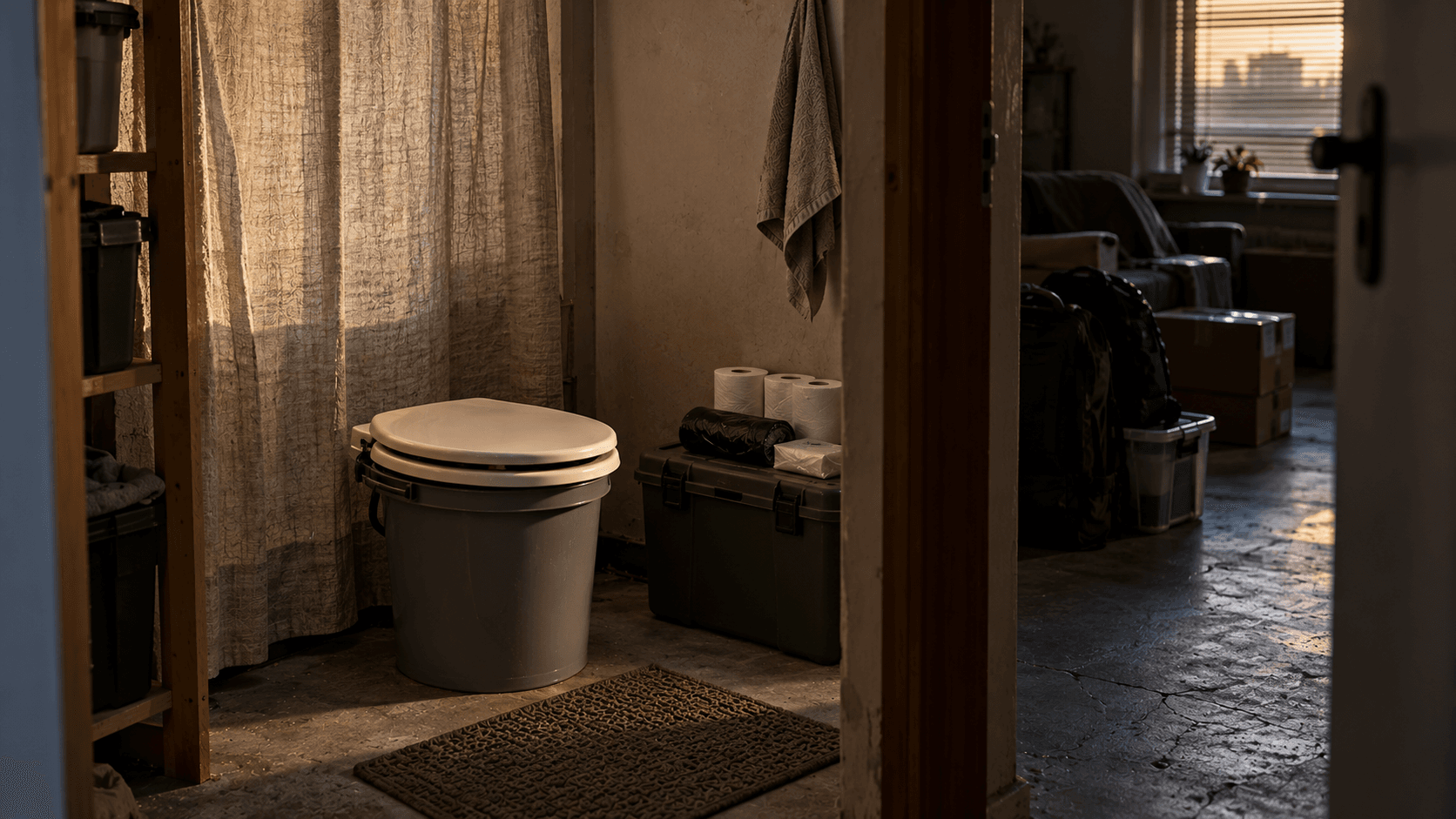
For home use, choose a purpose-made portable toilet and follow its liner or tank instructions. A basic alternative is a sturdy dedicated bucket with a compatible fitted toilet seat, lid and strong liners. Washington's bucket option uses double bags: one liner inside another. A seat resting on the rim is not necessarily secure.
Place it on a dry, level, stable floor, with privacy and clear access, away from food and drinking water. Check that everyone can sit, stand and receive help safely. Do not balance it on loose boards or bricks. Arrange a supported commode, caregiver help or an accessible facility when needed.
Keep spare liners, paper and gloves separate from used equipment. Keep children and pets away from equipment and collected liquids. Never reuse waste equipment for food or drinking water.
Set up handwashing before the first use
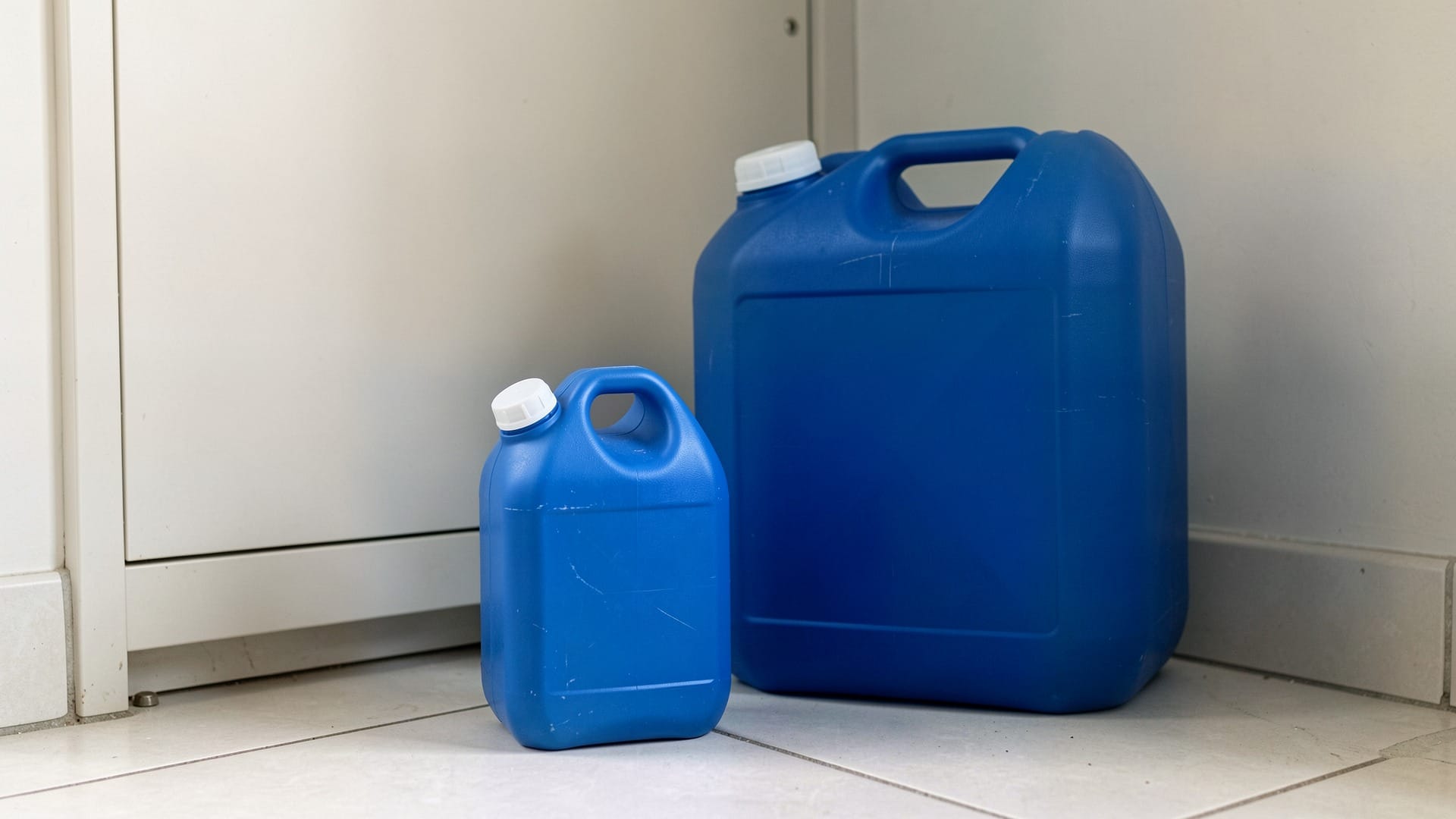
Set up soap, a secure safe-water jug with a spigot, clean drying material and a separate catch basin, as Oregon State University Extension describes. Keep clean supplies away from waste and splashes. Catch used water instead of using a failed drain; secure the basin from children and pets.
Wash hands with soap and safe water for at least 20 seconds after toilet use, helping someone toilet, handling waste or removing gloves, and before preparing or eating food. Gloves do not replace handwashing. Keep the spigot and other touched surfaces clean according to suitable cleaning-product labels; never mix cleaning products.
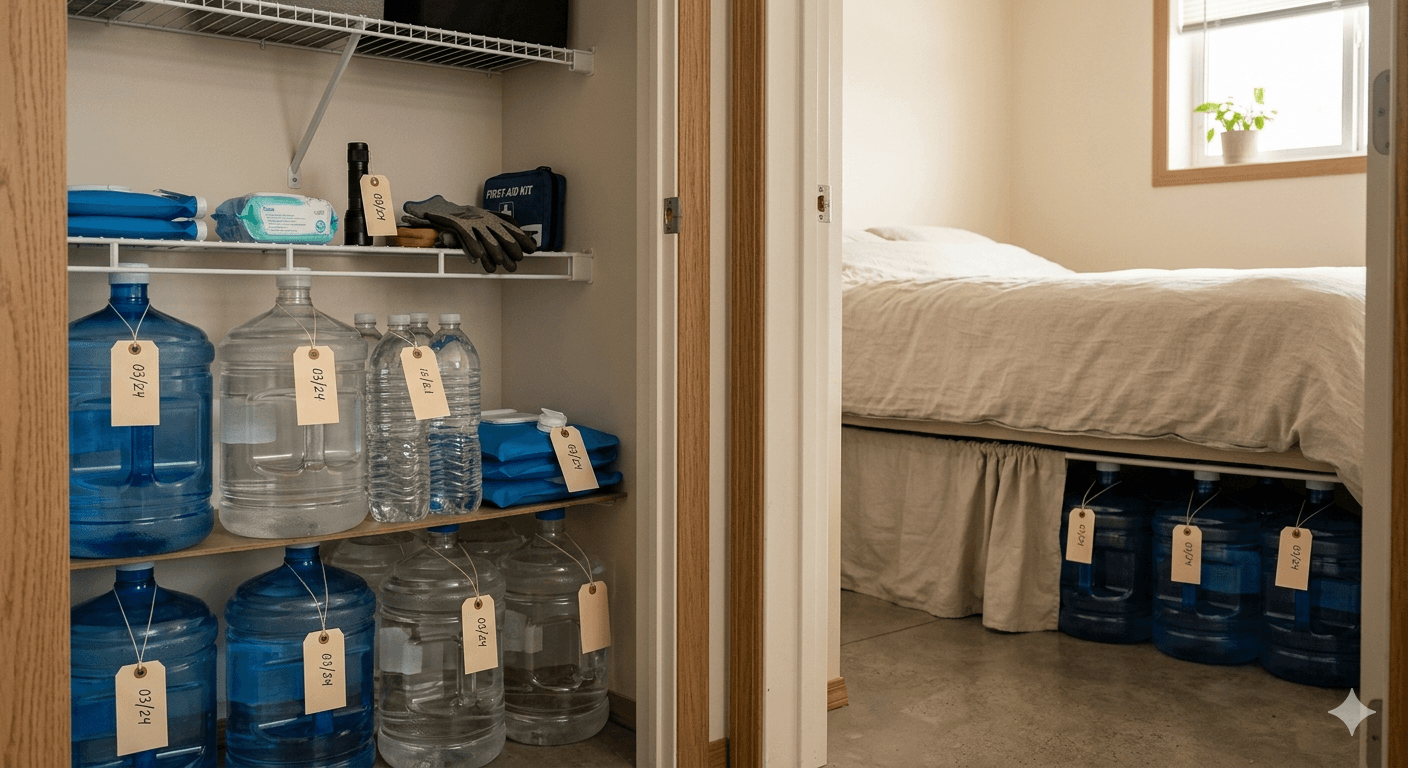
Follow the actual water advisory for handwashing. A boil-water advisory, a do-not-drink advisory and a do-not-use advisory have different restrictions. Our boil-water advisory guide explains how to follow the notice, but an advisory is not permission to flush. Keep clean water available in manageable containers; apartment water storage can help with limited space.
If soap and water are unavailable, use sanitizer with at least 60% alcohol, as CDC recommends. It does not eliminate all germs, may not remove harmful chemicals and works less well on dirty or greasy hands. This fallback does not certify sewage-contaminated hands as clean. Arrange handwashing promptly.
Collect, close and hold waste securely
For the basic lined-bucket approach, fit the two liners securely beneath the compatible seat. Add an absorbent material such as kitty litter for liquid and odor control, as Washington's guidance describes, or use the material specified for your toilet system. Absorbency is not disinfection. Do not add bleach to urine or feces, or mix household chemicals into the bag. Washington's chemical-safety guidance warns against bleach mixtures involving ammonia, including urine.
Explain seating, supplies and handwashing to everyone. Keep paper, wipes and menstrual products out of failed plumbing; bag used hygiene products for the locally directed waste stream. Close the toilet lid between uses according to its design. This is holding, not home composting.
Have an adult handle liner changes with disposable gloves. Change the liner before it leaks, becomes difficult to handle or reaches the product's limit. Do not wait for the bucket to fill. Close and tie the inner bag without squeezing, compressing or splashing its contents, then secure the outer bag. Do not empty or decant bag contents to save liners.
Place closed bags in a dedicated watertight secondary container with a secure lid. Store it separately from ordinary garbage, away from food and water, and protected from children, pets, insects and rodents. Keep it where it can be removed safely later, not across an exit. Remove gloves and wash hands after handling. Follow product labels for routine surface cleaning; a sewage overflow needs help and a cleanup plan, not just more liners.
Arrange removal and know when to leave
Contact local public health, your sewer utility or solid-waste service before choosing a disposal destination. Ask which toilet bags or tank contents they accept, how to package and hold them, and whether there is a special collection or approved drop-off. Ask separately about urine, captured handwashing water and used hygiene products. Portable tank toilets need an approved emptying point, not a storm drain.
Do not assume that a commercial gel bag is accepted in normal trash. Oregon and Florida emergency guidance warn against putting human waste in ordinary garbage. Local emergency arrangements decide the route for your household. Do not improvise burial, lawn disposal or garden composting from instructions written for another place. Keep waste contained pending local directions, and use official radio updates or designated assistance points if phone service is unavailable.
Seek help or safe relocation before you lose the ability to contain waste, wash hands or assist someone safely. Ask emergency management about working toilets or accessible shelter facilities if bags, water, secure holding space or a removal route cannot be sustained. Keep out of sewage-contaminated rooms and report active overflow. Do not wait for waste to leak before changing plans.
Before the next use, check: a usable toilet, safe seating, soap and safe water, secure waste holding, and a local removal contact. Resume normal use only when the relevant utility or septic professional clears your situation.
Editorial note
Emergency waste collection and water-use restrictions vary by location and by incident. Follow your utility, public-health department and solid-waste service. Septic or pumped systems may need system-specific professional advice. This guide describes temporary collection and holding, not sewage-spill cleanup or home composting.
Article recap
- Do not add water to a suspected blockage or failed sewer. Confirm wastewater service before considering manual flushing.
- Set up a stable toilet and soap-and-safe-water handwashing station before use.
- Absorbent material does not disinfect waste. Close bags and hold them in secure secondary containment.
- Ask local authorities about removal. Seek help or relocate if sanitation and safe care cannot be maintained.
Sources and further reading
- Toilet Use During an Emergency — Washington State Department of Health, accessed Oct 2026
- Guidelines for Septic and Onsite Wastewater Systems — Centers for Disease Control and Prevention, accessed Oct 2026
- Guidelines for Personal Hygiene During an Emergency — Centers for Disease Control and Prevention, accessed Oct 2026
- Survival Basics: Sanitation and Waste Management — Oregon State University Extension Service, accessed Oct 2026
- What Homeowners Should Do if Public Wastewater Treatment Plants Are Disrupted After a Hurricane — University of Florida IFAS Extension, accessed Oct 2026
- Dangers of Mixing Bleach with Cleaners — Washington State Department of Health, accessed Oct 2026
- How to Prepare When Works Impact My Water Supply — Water Corporation, Western Australia, accessed Oct 2026
- Sewer Blockage or Overflow — Water Corporation, Western Australia, accessed Oct 2026
Read next
Questions readers askFrequently asked questions
Only for a confirmed water-supply-only interruption when your utility says wastewater service remains usable and there is no backup, blockage, flood damage or no-flush restriction. Follow local utility and fixture instructions. Do not pour water into a suspected blockage to test it.
Do not assume so, even if a bag contains absorbent gel. Ask your local public-health or solid-waste authority about the exact product, packaging and current emergency collection rules. Hold closed bags securely in a dedicated watertight lidded container while arranging approved removal.
No. The cited bucket guidance uses absorbent material for liquid and odor control, not as a verified disinfection method. Waste still needs careful handling, secure containment and locally approved removal. Do not add bleach to urine or feces.
Wash with soap and safe water for at least 20 seconds, including after removing gloves. If these are temporarily unavailable, use sanitizer with at least 60% alcohol, but arrange handwashing promptly. Sanitizer does not eliminate all germs or reliably remove harmful chemicals and is less effective on visibly dirty hands.
Comments
Leave a comment
No comments yet. Be the first to comment!