
Collapse & conflict
7 Forgotten Survival Skills You Can Practice at Home
The button comes off your work shirt just as you are leaving. In the shed, a hammer handle has a crack you had not noticed. Both are easier to handle when yo...
Quick answer
Start with one low-risk task: sew on a shirt button or inspect three hand tools. Build toward simple bench work, tested food preservation, one crop, reliable handwashing and teaching others. Practice supports stored supplies and qualified help; it does not replace them.
The button comes off your work shirt just as you are leaving. In the shed, a hammer handle has a crack you had not noticed. Both are easier to handle when you have practiced before you need the result.
The useful part of “forgotten survival skills” is not the idea that everyone once knew everything. These skills are still alive in homes, workshops and classrooms. They may simply be unfamiliar to you. Learning to mend, maintain, grow and share can help keep a household working when replacements or services are harder to reach.
Start with ordinary objects, sound equipment and time to ask questions. Skills support stored supplies and professional help; they do not replace them.
1. Mend the shirt you already own
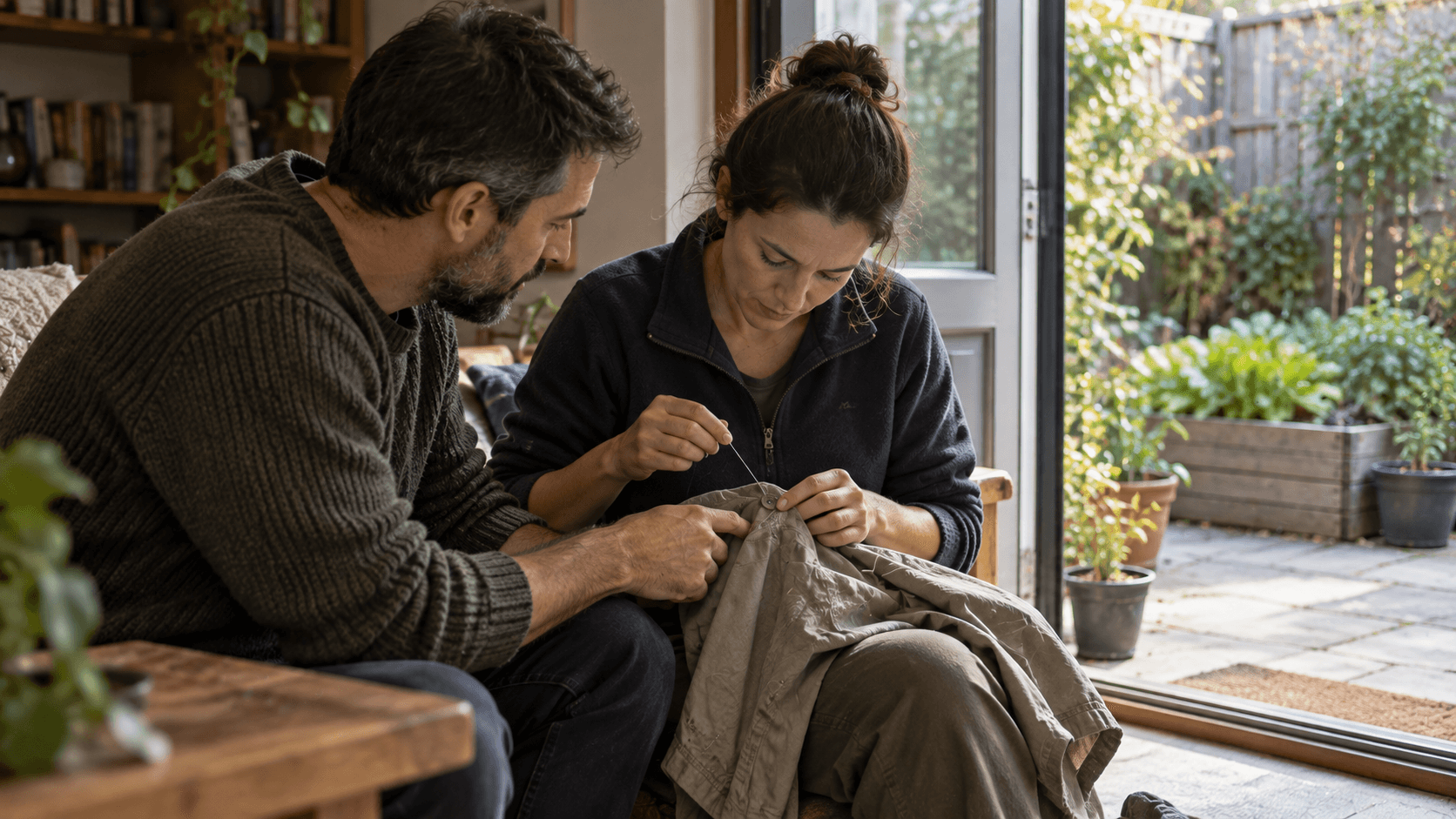
A missing button can put a perfectly usable garment out of service. Fixing it teaches needle control and thread tension on something forgiving, rather than on the only coat you have during bad weather.
Take an old shirt, a matching spare button, thread, a needle and scissors. Follow UF/IFAS Extension’s button-sewing instructions, using the existing button position as your guide. Work in good light over a clear surface. When finished, button and unbutton the shirt, checking that the fastening sits comfortably and stays attached. Return the needle to a secure container.
That is a useful first result. Do not extend this exercise to climbing harnesses, life jackets or load-bearing straps. Home stitching does not restore safety certification.
2. Learn when a tool should stay in the drawer
Tool maintenance begins with noticing a defect, not with building a forge. A few sound tools beat a collection you cannot safely use.
Lay out three hand tools that are not in use. Inspect their handles, heads and working ends for cracks, looseness, wear and corrosion. Use the manufacturer’s cleaning and storage directions for sound tools. Make two groups: ready to use, and set aside for repair or replacement. Label defective tools so someone else does not pick them up unaware.
The CCOHS hand-tool guidance emphasizes inspection, the right tool and secured work. Tape is not a repair for a split handle. Leave sharpening until you have suitable instruction and tool-specific guidance; welding stressed parts or fixing electrical faults is outside this starter task. Recognizing “not safe to use” is a skill, too.
3. Measure and fasten on scrap, not on your house
Small carpentry jobs reward patience: a clear mark, a stable workpiece and the right fastener. Practicing on scrap removes the pressure to finish a household repair immediately.
Ask a competent person to help choose sound scrap wood and a suitable screw, including whether a pilot hole is needed. On a stable bench, mark a line with a square and clamp the wood securely. With a correctly fitting manual screwdriver and appropriate eye protection, practice driving the screw into the prepared scrap. Keep your support hand out of its path. Never hold the work in your palm.
Stop if the wood splits, the screw strips or the work shifts. The result is a practice piece, not a load-tested joint. Roofs, ladders, load-bearing structures, gas and electrical systems need a different level of competence. The habit worth carrying home is to assess the job before reaching for a tool.
4. Read a preservation recipe like it matters
A basket of surplus apples is an invitation to learn, not a reason to improvise shelf-stable food. Preservation can reduce waste, but its useful skill is following a tested process, including the details that are easy to skip.
For a first session, open the National Center for Home Food Preservation’s applesauce directions. Read the entire method. Identify the equipment, jar size and processing table for your elevation. Write down what you have and what is missing. If anything is unclear, take that list to an Extension class or an experienced instructor before making a batch. A completed equipment-and-recipe check is a valid first exercise.
When ready, follow the full published method and record the recipe URL, date and process used. Do not shorten it from memory. NCHFP’s safe-canning guidance explains why low-acid foods require pressure canning with a tested process. A sealed lid alone does not prove safety. Smoke, salt or an improvised heat source is not a substitute, and canning cannot rescue spoiled or temperature-abused food.
5. Grow one crop and keep an honest record
A pot of salad greens can teach you about light, watering and local seasons. It cannot promise to feed your household through an emergency. Start small enough that you can notice what changes from one day to the next.
Choose one locally suitable herb or salad-green crop using local Extension advice. Match it to your available light and season. Use a clean container intended for food growing, with drainage holes and a suitable growing medium. The University of Maryland Extension’s container guidance is a useful starting point. Do not use a container that held unknown chemicals or add rocks expecting better drainage.
Log the planting date, actual light, watering and any harvest. Record failures as carefully as successes: “too shaded” is more useful than pretending the crop worked. The first goal is learning one plant’s needs. Keep a working food reserve that you rotate alongside gardening; a few pots are neither dependable replacement calories nor a reason to forage for unfamiliar plants.
6. Make handwashing easy before it becomes awkward
The overlooked hygiene skill is arranging things so people actually wash their hands. Ordinary soap, suitable water and a usable setup matter more than a homemade-soap experiment.
Try a portable station using a suitable dispensing container with a tap, clean running water, ordinary soap, a clean towel and a basin to catch wastewater. Practice the CDC’s handwashing sequence: wet, lather, scrub for at least 20 seconds, rinse and dry. Check that everyone who needs it can reach and operate the tap. Work out who replenishes supplies and how wastewater will be disposed of under local guidance.
Do not assume clear-looking water is safe; follow local water advisories. This station is not a water-treatment or sewage system. Store ordinary soap rather than trying ash-lye chemistry: lye can seriously burn skin and eyes. Making soap is not wound care.
7. Pass on a skill without pretending to be an expert
If only one person knows how to do a task, the household still has a weak point. Teaching a small, safe job also reveals the steps you have been skipping in your own head.
Arrange one low-risk exchange with a willing household member or trusted neighbor: button sewing for a tool-inspection lesson, for example. Demonstrate, then let the learner repeat the task while you watch. Write down one skill offered, one skill needed and any borrowed tool’s return date. Keep contact details private; a paper contact and meeting-place map can support that arrangement without broadcasting anyone’s supplies.
Be honest about your limits. A skill exchange does not guarantee barter value or qualify someone to make safety-critical repairs. For medical capability, choose first-aid training with hands-on practice, not a swap of homemade remedies. First aid can help while you seek professional medical care. Herbs are not replacement antibiotics, and supplements can interact with medicines.
Choose one useful result this week
Pick the task you can complete safely with what you have: one attached button, three inspected tools or a fully checked preservation recipe. Gather the materials and instructions before you begin. Ask a competent person for feedback where needed, then repeat the task rather than rushing to the next skill.
Keep a short paper note: what you used, what worked and where you stopped. Teach the safe version once you can repeat it. You do not need to master seven trades. You need one more household problem you can handle, and enough judgment to know when to ask for help.
Editorial note
These beginner exercises focus on ordinary household tasks, not trade certification or emergency medical treatment. Preservation and health references are mainly U.S. guidance; hand-tool guidance is Canadian. Follow current local advice and manufacturer instructions, and seek qualified help for safety-critical work.
Article recap
- Start with a useful, low-risk result, not a promise to master a trade.
- Inspect tools before use and set damaged ones aside. Home repairs do not restore safety certification.
- Follow complete tested preservation methods. A sealed jar is not proof of safe food.
- A first crop teaches plant care; it does not replace stored food or resupply.
- Practice handwashing with ordinary soap and suitable water. Skip improvised lye and homemade remedies.
- Teach within your competence, protect private information and seek trained help for higher-risk tasks.
Sources and further reading
- Life Skills in a Minute: Sewing on a Button — UF/IFAS Extension Columbia County, accessed Oct 2026
- Hand Tools - General Hand Tool Operation — Canadian Centre for Occupational Health and Safety, accessed Oct 2026
- Applesauce — National Center for Home Food Preservation, accessed Oct 2026
- Ensuring Safe Canned Foods — National Center for Home Food Preservation, accessed Oct 2026
- Types of Containers for Growing Vegetables — University of Maryland Extension, accessed Oct 2026
- About Handwashing — Centers for Disease Control and Prevention, accessed Oct 2026
- Is it safe to make soap at home? — National Capital Poison Center, accessed Oct 2026
- First Aid Training — American Red Cross, accessed Oct 2026
- Using Dietary Supplements Wisely — National Center for Complementary and Integrative Health, accessed Oct 2026
Read next



Questions readers askFrequently asked questions
Choose a low-risk task you can finish and check, such as sewing a button onto an old shirt or inspecting three hand tools. Begin with sound equipment and clear instructions. Repeat that task before progressing to work where a mistake could injure someone.
For shelf-stable canning, use a current research-tested recipe from a reliable preservation authority, such as NCHFP or your local Extension service. Do not assume a family recipe is safe because it has been used before. Follow its full process, jar size and elevation adjustments; low-acid foods require pressure canning with a tested process.
No. A small container crop can provide produce and teach plant care, but results depend on light, season, water and experience. Keep a working food reserve and realistic resupply options rather than counting on a first harvest for essential calories.
No. Choose first-aid training with hands-on practice and seek qualified medical care when needed. Herbs are not replacement antibiotics, and supplements may interact with medicines. Growing a culinary herb is a gardening exercise, not medical training.
Comments
Leave a comment
No comments yet. Be the first to comment!