
Sleeping in Your Car Overnight: How to Make a Safer Stop
Published on September 25, 2026 · Last reviewed September 25, 2026
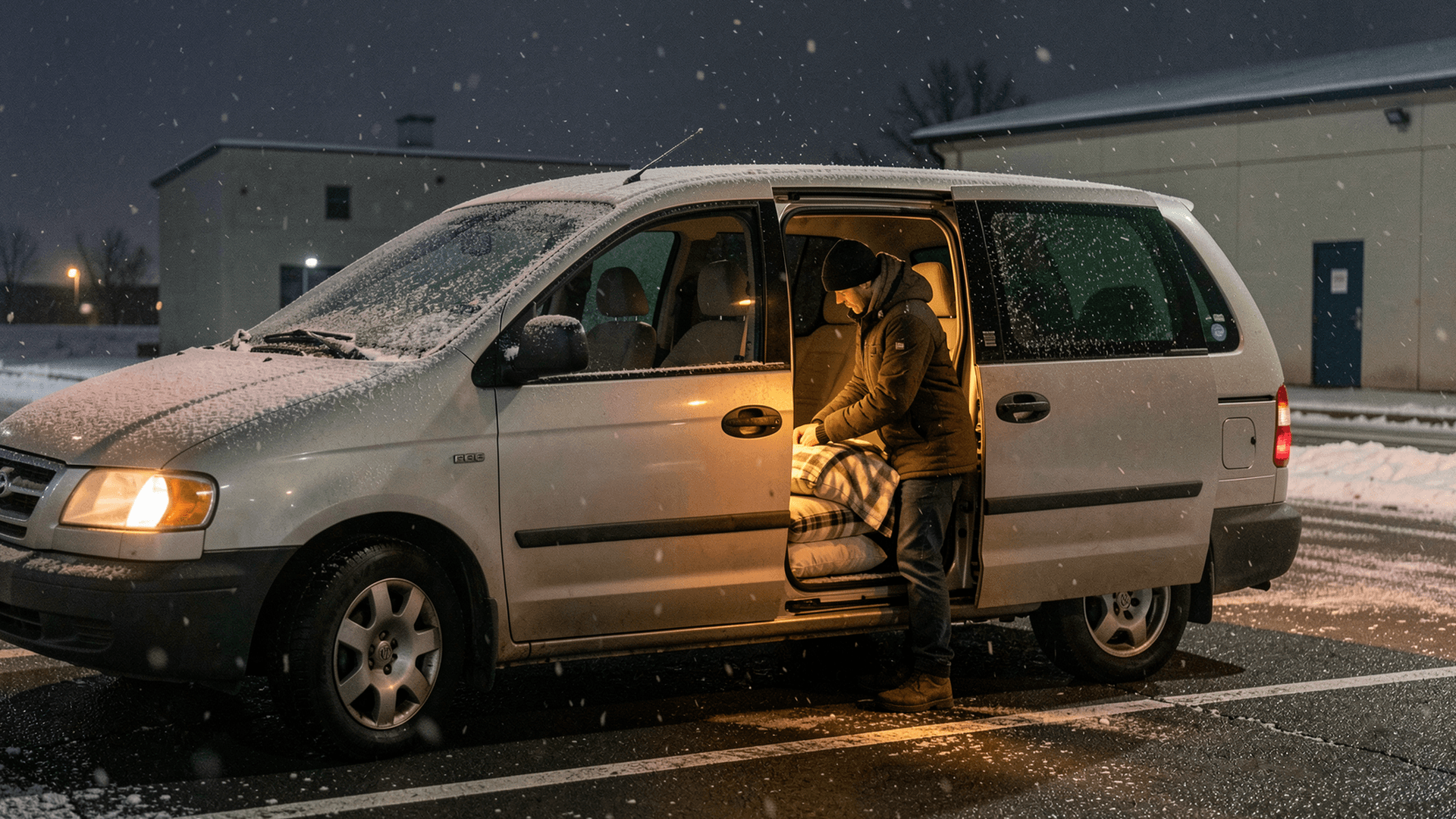
Quick answer
If you are too drowsy to drive, find a lawful place away from moving traffic and stop. For an ordinary overnight rest, park securely, switch the engine off, dress for the conditions, and keep your phone and keys within reach. A freeway breakdown or a snowstorm stranding calls for help and a different plan; do not treat a shoulder as a campsite or sleep through a severe-weather emergency.
The road signs blur together, your lodging plan falls through, and you are considering the back seat. First decide whether this is a safe place to stop and whether you need rest or emergency help.
If you feel drowsy, do not bargain for one more stretch of highway. CDC/NIOSH advises drivers to pull off at the next exit or rest area, stop driving, and get sleep and/or caffeine. Sort out the rest of the night off the road.
First, identify which situation you are in
Tired but able to drive to a safe exit: Find a lawful, open place to park. A short nap may be enough to reassess, but do not resume driving until you are alert enough to do so. If you still need a full night, find a permitted overnight option rather than assuming your nap spot allows it.
Disabled on a freeway or stopped on a shoulder: This is a traffic hazard, not an overnight parking choice. Call roadside assistance or emergency services as the circumstances require, give your location, and follow local responder instructions. California's driver handbook advises staying in the vehicle with a seat belt on while awaiting help after a freeway breakdown, but notes that inadequate shoulder space or other immediate danger can make it safer to get out and move away. Assess the traffic hazard rather than reclining the seat and going to sleep.
Stranded in snow, ice, or very poor visibility: Contact emergency services, share your location, and follow local alerts. When travel out is unsafe, staying with the vehicle can make you easier for rescuers to find. The winter-stranding steps below are not the same as a planned night in a parked car.
Too hot or too cold to rest safely: Change the plan. A car is not reliable shelter from extreme temperatures. Seek a heated or cooled building or ask for help rather than counting on bedding, a fan, or an idling engine to fix dangerous conditions. If someone has signs of heat illness, move to a cooler place; suspected heat stroke needs emergency medical help. Never leave a child, pet, or person who depends on you unattended in a parked car.
Find a place where you are allowed to stay
An exit, a rest area, a travel plaza, a campground, and a hotel parking lot are not interchangeable permissions. Look for an open location with clear signs and enough separation from traffic. Read the posted time limits and overnight restrictions; check state or local rules if they are unclear. Ask the owner or manager before staying on private property. If a campground or lodging is available and the weather is harsh, paying for a suitable place can be the safer choice.
Rules can be surprisingly specific. Washington limits time at its rest areas and separately restricts camping or maintaining a sleeping accommodation; individual zones can have shorter posted limits. Yosemite allows sleeping in vehicles only in designated campsites. Neither example tells you what is permitted at the rest area or park in front of you. Do not assume that a business lot, beach, trailhead, or public-land pullout permits overnight sleeping just because parking is allowed.
Before you stop, consider the morning: Is there a restroom, water, and a clear route out? A quiet midnight spot may have restrictions or deliveries at dawn.
Set up for a simple engine-off night
Park fully within the permitted space and away from traffic flow. Set the parking brake, turn the engine off, lock the doors, and keep your phone, keys, shoes, and a light where you can reach them. Tell a trusted person where you have stopped if that is practical. Leave yourself a way to leave promptly if the location or your sense of safety changes.
Dress for the conditions, not the temperature while the heater was running. Keep dry layers and a blanket; Ready.gov includes a blanket and phone charger in its car-kit advice. Make room to rest without blocking your exit. Remove privacy shades that obstruct your view before driving.
A little window condensation can make the morning unpleasant. In mild, safe conditions, ventilation may help with comfort and moisture, but there is no magic window gap that makes an overheated, freezing, or exhaust-exposed car safe. Keep glass clear enough to see before you drive. If you wake up chilled, overheated, unwell, or uneasy about the site, relocate to suitable shelter or get help.
Do not idle the car while you sleep. Carbon monoxide (CO) is colorless and odorless; an exhaust-system leak can let it accumulate inside a vehicle, and sleeping people may be poisoned before they notice symptoms. Do not use a camp stove, charcoal, or any fuel-burning heater in the passenger compartment. Never run a vehicle in a garage, even with the garage door open. Opening a window is not a dependable workaround. For a broader explanation of combustion and exhaust risks, see our generator carbon monoxide safety checklist.
Headache, dizziness, weakness, nausea, chest pain, or confusion can be signs of CO poisoning. If you suspect it, get into fresh air and seek emergency help. Do not wait to confirm a smell: CO has none.
If you are stuck in a winter storm, switch to a rescue plan
If snow or ice has immobilized the vehicle, call for help and give your precise location or share it from your phone. Follow responders' advice. In dangerous visibility or on icy roads, setting out on foot may be less safe than remaining with the vehicle where rescuers can find you. Keep warm clothing and blankets on hand; the car itself is not enough to count on for warmth. Conserve phone power while maintaining a way to receive calls and signal rescuers.
Winter-stranding guidance is an emergency exception to the normal engine-off sleep plan. CDC advises a stranded person who needs heat to run the motor and heater for about 10 minutes per hour, open a window slightly, and make sure snow does not block the exhaust pipe. This assumes you are awake and able to monitor the exhaust and conditions, not asleep with the engine running. A blocked tailpipe can rapidly fill the vehicle with CO, and a clear tailpipe does not rule out an exhaust leak. If you cannot keep the exhaust clear or you feel symptoms that could indicate CO exposure, stop using the engine, get to fresh air when you can do so safely, and seek urgent help. Follow instructions from local emergency responders over a generic schedule.
Do not plan to sleep through a serious winter stranding. CDC advises stranded people to stay awake. National Weather Service guidance says that, when more than one person is present, they can take turns sleeping while one stays awake to watch for rescuers. If you are alone, cold, or losing alertness, tell rescuers that when you call. You need a rescue decision, not a better pillow arrangement.
Before you drive again
In the morning, dispose of trash and clear fog, frost, or snow from the glass. Check weather, fuel, vehicle status, and your alertness. Another rest stop, shelter, or driver is better than continuing drowsy.
A small car kit makes an unplanned pause easier: a charged phone and car charger, warm layers and a blanket for cold weather, water and any needed medication, plus the seasonal vehicle supplies Ready.gov recommends, such as an ice scraper and a reflective triangle. The kit is a backup, not permission to ignore unsafe parking, extreme weather, or a vehicle breakdown.
Three questions before you settle in
Am I in a permitted place away from moving traffic, with a workable morning exit?
Can I rest here with the engine off without dangerous heat, cold, or exhaust exposure?
Is this really a routine stop, or do I need roadside assistance, shelter, or emergency help?
Resolve uncertain answers first. Sleep keeps a tired driver off the road, but the location and conditions decide whether the car is a reasonable place to take it.
Article recap
- Stop driving when fatigue makes you unsafe; choose a permitted location, not the highway shoulder.
- For a routine sleep stop, turn the engine off and never use a fuel-burning stove or heater in the cabin.
- Check posted parking rules and actual weather; neither a legal parking space nor a cracked window guarantees safe overnight conditions.
- If you are stranded in a storm or disabled on a freeway, summon help and follow situation-specific guidance instead of the normal sleep plan.
Editorial note
(optional, reader-facing) Parking rules and storm conditions vary by location. Check posted restrictions, local alerts, and instructions from emergency responders before relying on a place as an overnight stop.
Frequently asked questions
Is it legal to sleep in a car at a rest stop?
It depends on the state, the particular rest area, posted time limits, and whether the activity is treated as camping. A place that allows a short fatigue nap may not allow an overnight stay. Check the signs and local rules rather than assuming all rest stops have the same policy.
Should I leave the engine running while I sleep?
No. For an ordinary sleep stop, shut it off. Exhaust leaks can allow carbon monoxide into the cabin, and a sleeping person may not recognize poisoning. If you are stranded in winter weather, use emergency guidance and contact rescuers; limited, supervised heating in that situation is not a recommendation to idle overnight.
What if I get stranded in deep snow?
Call for help, share your location, and follow local instructions. Staying with the vehicle is often safer than walking into poor visibility or over icy roads. If you must use the engine briefly for heat while awake, check that snow is not blocking the exhaust and follow official winter-stranding precautions. Do not sleep through a serious stranding with the motor running.
Sources and further reading
- Preventing Crashes, Module 11: Driving — CDC/NIOSH, accessed September 25, 2026
- CDC: Carbon Monoxide Poisoning Basics — Centers for Disease Control and Prevention, accessed September 13, 2026
- Safety Guidelines: During & After a Winter Storm — CDC, accessed September 25, 2026
- Winter Weather Safety — National Weather Service, La Crosse, accessed September 25, 2026
- Car Safety — Ready.gov, accessed September 25, 2026
- Limitations on Use of Rest Areas, RCW 47.38.020 — Washington State Legislature, accessed September 25, 2026
- Campground Regulations — National Park Service, Yosemite, accessed September 25, 2026
- Heat Cramps, Exhaustion, Stroke — National Weather Service, accessed September 25, 2026
- California Driver’s Handbook: If Your Vehicle Becomes Disabled on the Freeway — California DMV, accessed September 25, 2026
- Children, Pets and Vehicles — National Weather Service, accessed September 25, 2026
- Clear Snow from Tailpipes — CDC, accessed September 25, 2026