Power outages
Generator Carbon Monoxide Safety Checklist: Where to Put It and What Not to Do
A generator can make a power outage easier, but it can also turn a bad night into a deadly one. The most dangerous generator mistake is not noise or fuel sto...
Quick answer
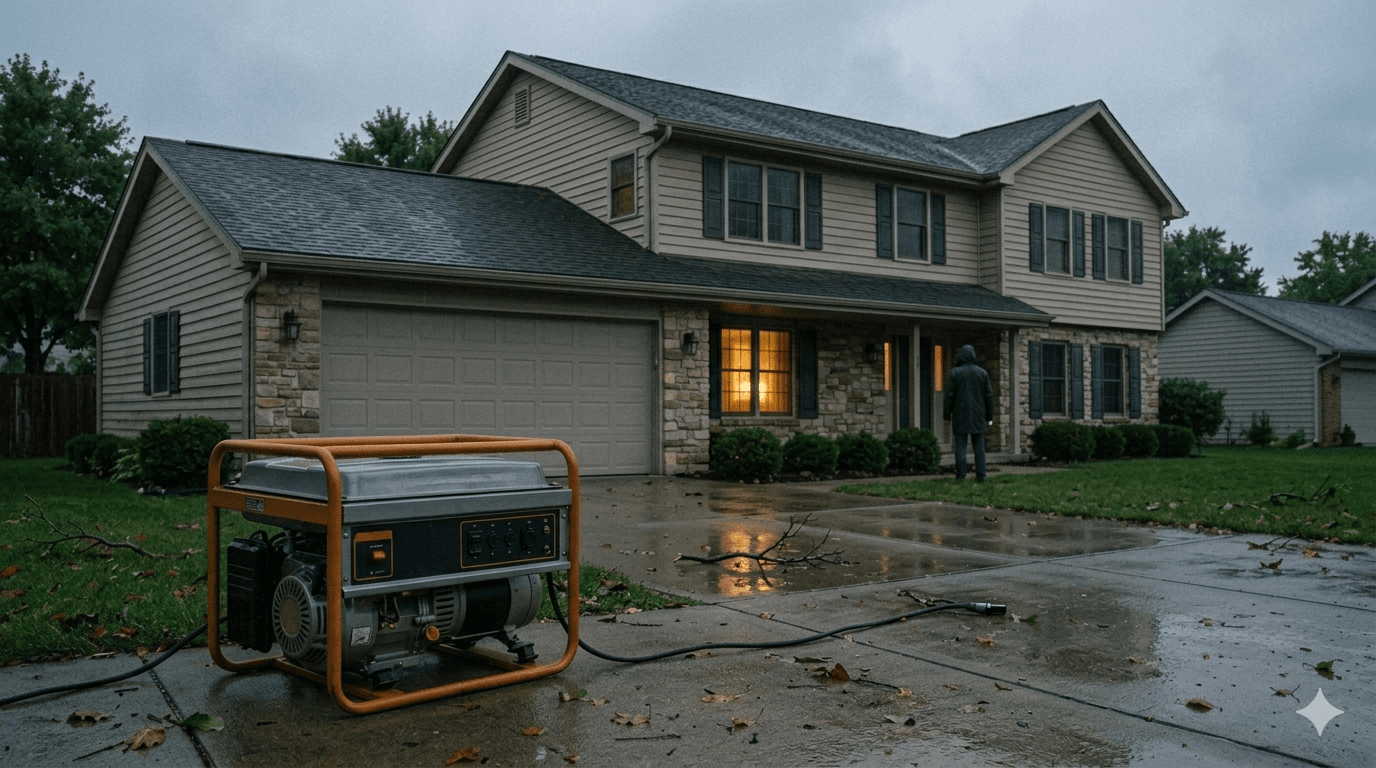
Run portable generators only outdoors, far from windows, doors, vents, garages, crawlspaces, and enclosed areas. Carbon monoxide is invisible and odorless, so do not rely on smell or open doors for safety. Pick the generator location before an outage, use working CO alarms, and shut everything down if an alarm sounds or anyone feels sick, dizzy, weak, confused, or unusually sleepy.
A generator can make a power outage easier, but it can also turn a bad night into a deadly one. The most dangerous generator mistake is not noise or fuel storage. It is carbon monoxide: an invisible, odorless gas that can build up when fuel-burning equipment is used too close to a home.
This checklist is for ordinary households using portable generators during storms, blackouts, and local utility failures. It fits with a broader home power outage kit and backup-power plan: use the generator only where it is safe, power only what matters, and never trade convenience for indoor air safety.
Quick answer: the generator carbon monoxide rules
Never run a generator inside a home, garage, basement, crawlspace, shed, or enclosed porch.
Place it outside and far away from windows, doors, vents, and air intakes.
Point exhaust away from the home and neighboring homes when possible.
Keep working carbon monoxide alarms on each level and near sleeping areas.
Shut it down and get fresh air immediately if a CO alarm sounds or anyone feels dizzy, weak, nauseated, confused, or unusually sleepy.
Why “just in the garage” is still dangerous
A garage feels outside because it is not the living room, but it is still attached to the house. Exhaust can move through gaps, doors, vents, attic spaces, and pressure changes. Opening the garage door does not make it safe. Carbon monoxide can still collect and move where people sleep.
The same logic applies to covered patios, sheds, basements, breezeways, and porches. If the generator is under a roof or near openings, assume the exhaust can find a way indoors.
Make the generator location boring before the storm
Do not wait until rain is blowing sideways to decide where the generator goes. Walk around the house in daylight and choose a location that is outdoors, open to air, away from openings, and practical for extension cords. If the only available spot is too close to the home, the plan is not ready. For the wider cold-weather sequence, work through the winter power outage checklist before the storm arrives.
Mark the safe spot if that helps. Store the correct outdoor-rated cords with the generator. Keep a flashlight or headlamp nearby so nobody drags the machine toward the house at night just because it is easier.
Carbon monoxide alarms are not optional
A CO alarm is not a replacement for safe placement. It is a last warning when something is wrong. Install alarms according to manufacturer instructions and local code, test them regularly, and replace expired units. Battery backup matters during outages because plug-in alarms may stop working when power fails.
Put alarms where people will hear them while sleeping. If one sounds, do not debate it indoors. Move everyone to fresh air, call emergency services if needed, and do not re-enter until it is safe.
Only power what matters
A generator plan gets safer when it is smaller. Decide what actually needs power: refrigerator or freezer, phone charging, medical equipment, a few lights, sump pump, or heat-related equipment if professionally set up. The more devices you try to run, the more cords, fuel, noise, and mistakes enter the picture.
For smaller needs, compare whether a power bank or portable power station can solve the problem without fuel, exhaust, or cords. Generators are useful, but they are not the first answer for every outage.
Fuel and refueling mistakes
Store fuel safely, legally, and in approved containers. Keep it away from living areas, ignition sources, and children. Let the generator cool before refueling. Spilled fuel on a hot machine can create a fire hazard, especially when people are tired or working in the dark.
Follow the owner’s manual for maintenance, grounding, oil, fuel type, load limits, and weather protection. Do not improvise electrical connections into home wiring. If a transfer switch or whole-home connection is involved, use a qualified electrician and follow local code.
A practical safety note
This guide is general preparedness information, not a substitute for manufacturer instructions, local fire code, or emergency services. Carbon monoxide poisoning can be fatal. If a CO alarm sounds or symptoms appear, get to fresh air immediately and call for help.
Generator CO safety checklist
Choose the outdoor generator location before an outage.
Keep generators out of garages, basements, sheds, porches, and enclosed spaces.
Use outdoor-rated cords and avoid overloading circuits.
Test CO alarms before storm season and replace expired units.
Store fuel safely and let the machine cool before refueling.
Shut down and evacuate to fresh air if a CO alarm sounds.
Sources and further reading
Editorial note
Reviewed against CDC, CPSC, and Ready.gov guidance. Generator placement and carbon monoxide safety should always follow the manufacturer’s manual, local code, and emergency guidance.
Article recap
- Never run a generator indoors, in a garage, or in any enclosed or partly enclosed space.
- Choose the outdoor placement before the storm so nobody improvises at night.
- Working CO alarms are a backup warning, not permission to place the generator closer.
- Keep the generator plan small: power essentials, avoid overloads, and follow the manual.
Read next

Comments
Leave a comment
No comments yet. Be the first to comment!