
Water & food
Emergency Water Storage for Apartments: How Much to Keep and Where to Put It
Apartment emergency water storage is a different problem from suburban basement storage. You may not have a garage, spare closet, utility room, or permission...
Quick answer
For an apartment, store at least several days of drinking water in food-grade containers you can actually lift, inspect, and rotate. Spread the weight across safe storage spots, keep some non-drinking water for hygiene if space allows, and have collapsible containers or a bathtub liner ready to fill before predictable storms or water interruptions.
Apartment emergency water storage is a different problem from suburban basement storage. You may not have a garage, spare closet, utility room, or permission to stack heavy containers wherever you want. But you still need water if a pipe breaks, a boil-water advisory hits, a storm disrupts service, or the building’s pumps stop working.
The goal is not to turn a small apartment into a warehouse. The goal is to keep a realistic amount of safe drinking and hygiene water in places that do not create leaks, trip hazards, or wasted space.
Quick answer: how much water should an apartment store?
A practical starting point is at least one gallon per person per day for a few days, then more if you have room, pets, hot weather, medical needs, or a baby in the household. If space is tight, start with three days of drinking water and add a separate hygiene plan with stored jugs, a bathtub liner, or collapsible containers you can fill before predictable storms.
Where to store water in a small apartment
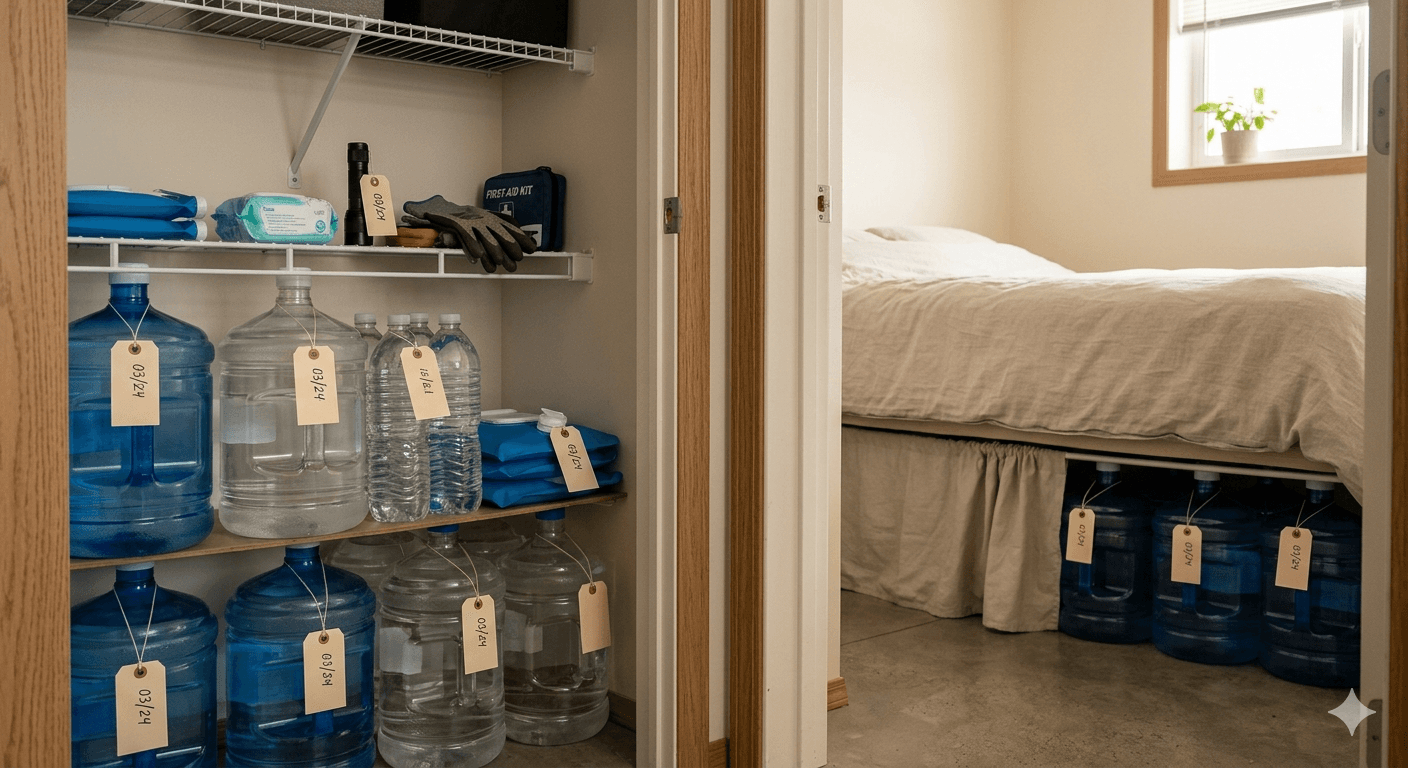
Good storage spots are cool, dark, stable, and easy to inspect. Try the back of a closet floor, under a bed, behind a sofa, in a pantry corner, under a sturdy table, or in a rolling bin if the floor can handle the weight. Avoid places where a leak would destroy electronics, documents, or a downstairs neighbor’s ceiling before you notice it.
Spread the weight. Water is heavy, and apartments are not designed for one heroic tower of jugs in a single weak spot. Several smaller containers are easier to move, inspect, and rotate than one massive container you can barely lift.
Use the right containers
For drinking water, use clean food-grade containers or commercially sealed water. Do not use milk jugs, chemical containers, or mystery buckets. Label refillable containers with the fill date, keep them sealed, and rotate according to the container manufacturer’s guidance and your local water advice.
Commercial water bottles are convenient but bulky and wasteful if they become the whole plan. Larger jugs save space, while smaller bottles are easier to hand to kids, guests, or neighbors. A mixed setup usually works best.
Do not forget water you can fill before trouble
If a storm, repair notice, or water-main issue is expected, fill containers before the tap becomes questionable. A bathtub liner or clean collapsible container can add a large temporary reserve for flushing, cleaning, or backup use. Treat this as utility water unless the product and filling process are clearly suitable for drinking.
This pairs naturally with a boil-water advisory plan. Stored water buys time so you are not boiling every cup, rinsing every bottle, and trying to make decisions while the sink is taped off.
Plan for pets, medications, and heat
Pets need water too. So do people taking medications, people using powdered formula, anyone with medical equipment, and households in hot apartments without air conditioning. The one-gallon rule is a minimum planning number, not a magic guarantee.
If you live upstairs, think through carrying water. A few smaller jugs may be more useful than one giant container if the elevator stops working during a blackout. Include this water plan in your wider home power outage kit.
Hygiene water is separate
Drinking water disappears fast when people also use it for handwashing, dish rinsing, sponge baths, pets, and toilet needs. Keep some water clearly marked for non-drinking use if space allows. Even a few extra jugs of utility water can reduce stress during a short outage.
For longer disruptions, water storage connects to sanitation. Keep hand sanitizer, wipes, trash bags, gloves, and cleaning supplies with the apartment emergency kit so safe water is not wasted on every small cleanup.
Mistakes to avoid
Do not store water where a slow leak can go unnoticed for weeks.
Do not stack heavy containers so high they can fall or split.
Do not count only on the building, landlord, or nearby store during a regional event.
Do not forget pets, babies, medical needs, or summer heat.
Do not make the water so hard to access that nobody rotates or uses it correctly.
Apartment water checklist
Store at least a few days of drinking water for each person.
Add pet, baby, medical, and hot-weather needs.
Use food-grade containers and label refill dates.
Spread weight across safe storage spots.
Keep separate hygiene and sanitation supplies.
Know how you will fill extra containers before a predictable outage.
Before a predictable outage, use the free Home Power Outage Starter Checklist to review the rest of your household supplies.
Editorial note
This guide focuses on practical apartment water storage for short disruptions, boil-water advisories, and predictable service interruptions. Follow local emergency instructions and water advisories if officials issue different guidance for your building or area.
Article recap
- Apartment water storage should be realistic, distributed, and easy to inspect.
- Start with several days of drinking water, then add pets, heat, babies, medication, and hygiene needs.
- Use food-grade containers and avoid storage spots where leaks could cause major damage.
- Temporary fill options help before predictable storms, repairs, or advisories.
Sources and further reading
- Ready.gov: Build a Kit — Ready.gov, accessed Jun 2026
- CDC: Creating and Storing an Emergency Water Supply — CDC, accessed Aug 2026
Read next

Comments
Leave a comment
No comments yet. Be the first to comment!