Water & food
Boil-Water Advisory Survival: What to Do When the Tap Becomes Unsafe
A boil-water advisory sounds simple until you are standing in your kitchen wondering what is safe. Can you brush your teeth. Can the dog drink it. What about...
Quick answer
During a boil-water advisory, stop using untreated tap water for drinking, cooking, brushing teeth, making ice, rinsing produce, or preparing baby formula unless officials say it is safe. Use bottled water if available, or boil water according to local instructions and let it cool in a clean covered container. When the advisory ends, flush taps and appliances before returning to normal use.
A boil-water advisory sounds simple until you are standing in your kitchen wondering what is safe. Can you brush your teeth. Can the dog drink it. What about the coffee maker, baby bottles, ice cubes, salad, dishes, or the water already sitting in the fridge.
This is one of the most realistic household emergencies because it does not require the world to end. A main break, flood, power failure at a treatment plant, storm runoff, or contamination scare can make normal tap water questionable overnight. If you have already planned for type: entry-hyperlink id: 5FjLJXr9hblGfWd47rnYuT, a boil-water advisory is the smaller but more common version: water still comes out, but trust is gone.
The survival problem is not only purification. It is preventing one careless habit from undoing all the careful ones.
The first move is to stop using the tap automatically
Most mistakes happen in the first hour because muscle memory takes over. Someone rinses a toothbrush. Someone fills the pet bowl. Someone starts coffee. Someone washes fruit. The tap is familiar, and familiar things feel safe even when they are not.
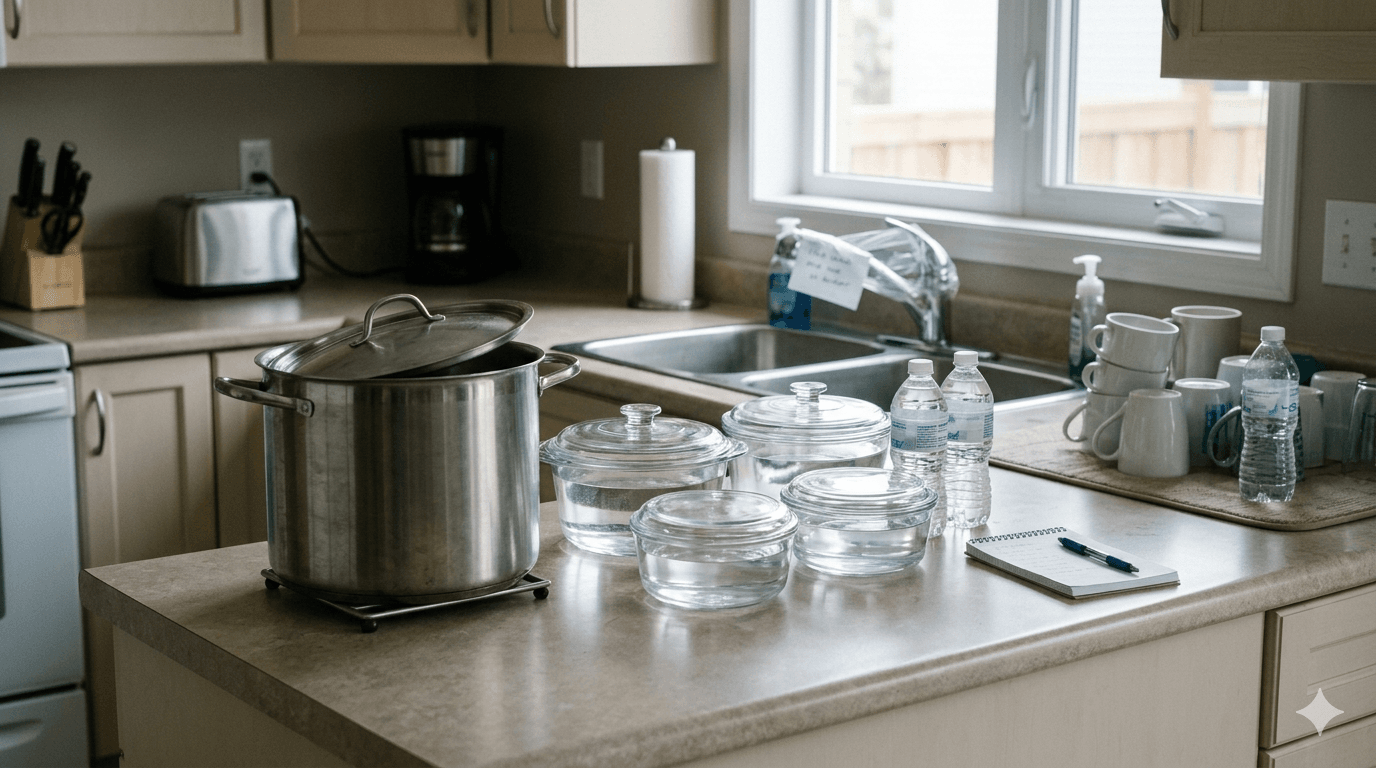
Treat the advisory like a contamination line through the house. Put a note on the sink. Tell everyone clearly. If you have kids, make it physical: tape the faucet, place a clean water jug on the counter, and make the safe option obvious.
Boiling is about time and discipline
For most boil-water advisories, the standard instruction is to bring water to a rolling boil and keep it there for the time recommended by local officials. In many cases that is one minute, longer at high elevation, but the local notice is the authority because the reason for the advisory matters.
After boiling, let it cool in a clean covered container. Do not pour clean water back into a dirty jug. Do not dip unwashed cups into it. The water can be made safe and then contaminated again by lazy handling.
Make a clean-water zone
Pick one counter or table as the safe zone. Keep boiled or bottled water there. Keep clean cups there. Keep a marker and label containers with the date and purpose if the event lasts more than a day.
This sounds fussy, but it prevents confusion. During a long advisory, half-used containers and mystery pitchers multiply quickly. A simple clean zone keeps the household from guessing.
Do not forget the hidden water
Ice is easy to overlook. If it was made from unsafe water, throw it out. Automatic ice makers should be turned off until the advisory is lifted and the system is flushed according to local guidance.
Coffee makers, fridge dispensers, hydration bladders, pet fountains, and water bottles can also hold questionable water. Empty and clean them before putting safe water back in. The tap is not the only source once contamination has moved through the house.
Food prep gets stricter
Use safe water for drinking, cooking, brushing teeth, making ice, washing produce, mixing formula, and preparing anything that will not be cooked thoroughly. If you are boiling pasta or soup and the water stays at a full boil long enough, that may be fine, but do not improvise when infants, elderly people, or immune-compromised family members are involved.
When in doubt, simplify meals. Canned food, shelf-stable items, and food that requires little water reduce mistakes. This is exactly why the boring pantry logic behind type: entry-hyperlink id: 5RaBNMpeA2C3KDljE0CSsG matters: the right food choices can reduce your water problem instead of making it worse.
Pets and vulnerable people come first
Pets can get sick from contaminated water too. Give them the same safe water standard you use for yourself. For babies, formula, wound care, medical equipment, and anyone with a weakened immune system, be more conservative, not less.
A boil-water advisory is inconvenient for healthy adults. It can be more serious for people who do not have much margin. That is why storing extra water is not paranoia. It is household responsibility.
When the advisory ends, you are not done instantly
Follow local instructions for flushing pipes, faucets, refrigerators, filters, ice makers, and appliances. Replace filters if officials recommend it or if contamination may have reached them. Throw out questionable ice and clean containers before refilling.
The end of the advisory means the public system is cleared. It does not magically clean every container, line, or appliance inside your home.
The real prep
The best time to prepare for a boil-water advisory is before the alert. Store water. Keep a pot large enough to boil useful amounts. Keep clean containers with lids. If you ever have to move from household water safety to outdoor collection, the same seriousness applies to type: entry-hyperlink id: 2Z0A1ASDyWJx0EsS8a9ZmL: assume water is unsafe until you have a real reason to trust it.
Most households do not fail a water advisory because they cannot boil water. They fail because the system inside the home stays chaotic. Make safe water obvious, keep unsafe habits blocked, and treat cleanup as part of the event.
Editorial note
This article was refreshed for searches around boil-water advisories, what to do at home, drinking water, cooking, brushing teeth, dishes, and when tap water becomes unsafe. Always follow the specific advisory from your local water utility or health department, because instructions can vary by incident.
Article recap
- Use bottled water or properly boiled water for drinking, cooking, brushing teeth, making ice, and preparing infant formula unless local officials say otherwise.
- Do not rely on taste, smell, or appearance to decide whether advisory water is safe.
- Follow local boil-time and cooling instructions; elevation and incident type can affect guidance.
- After the advisory ends, flush taps, appliances, filters, and ice makers according to utility instructions.
Read next
Comments
Leave a comment
No comments yet. Be the first to comment!