
Water & food
Where to Store Emergency Food at Home
The empty shelf in the garage looks useful until summer arrives. The basement feels cool, but there is a damp patch after heavy rain. Meanwhile, a small hall...
Quick answer
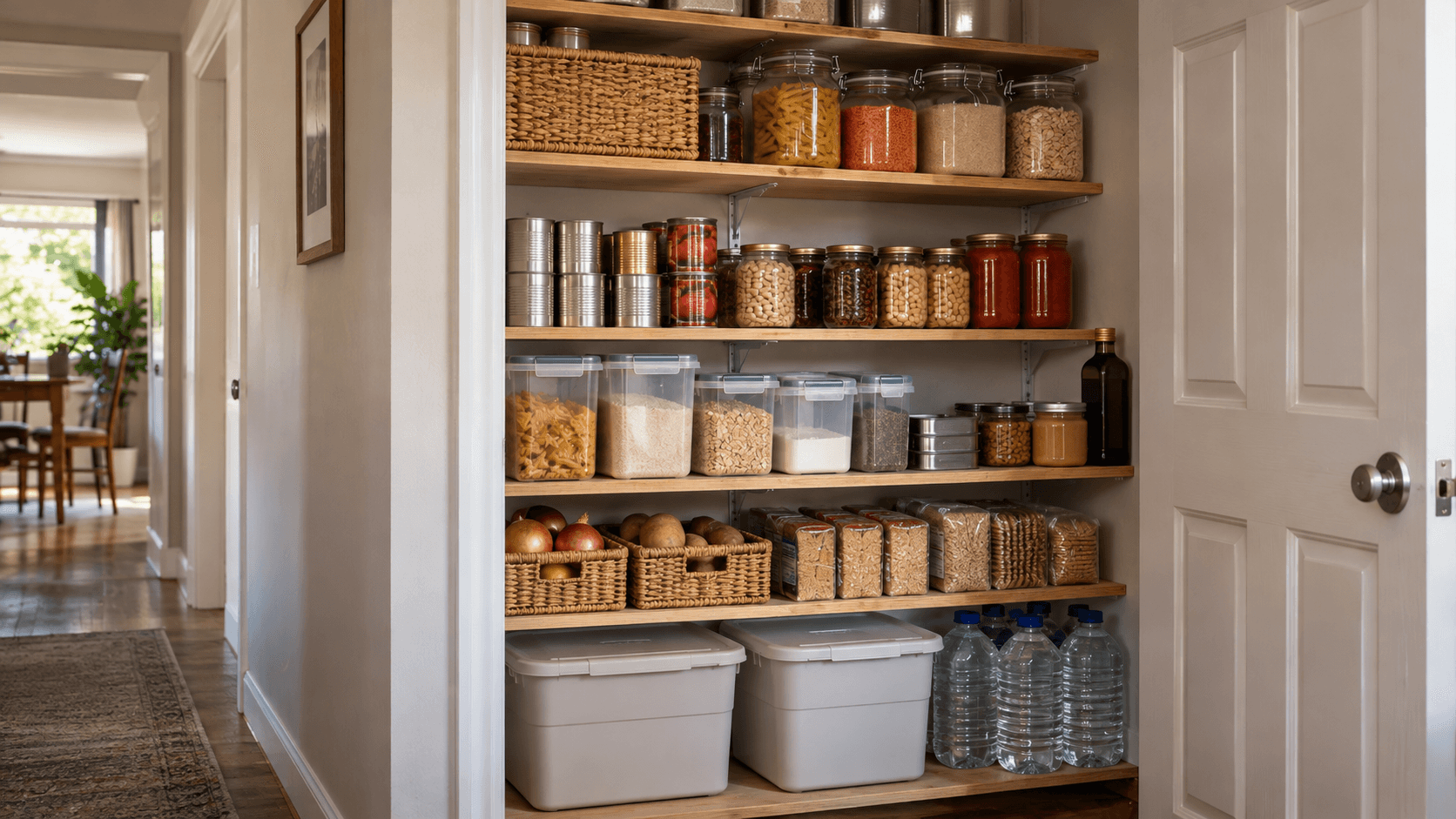
Start with a dry pantry or interior closet away from heat, leaks and chemicals, then compare the actual shelf conditions with other options. A basement may work if it stays dry and outside likely flood or sewage exposure. A garage must meet the same standards, including protection from temperature extremes. Check labels, seasonal conditions, shelving and access before loading food.
The empty shelf in the garage looks useful until summer arrives. The basement feels cool, but there is a damp patch after heavy rain. Meanwhile, a small hallway closet may offer less space but fewer problems. The best place for emergency food is the spot whose conditions suit the food, not the room with the most spare capacity.
Compare two or three real shelves. Rule out contamination and likely flood exposure first, then assess heat, moisture, pests and access.
Check the food before choosing its room
This comparison is for foods labeled for shelf-stable storage while unopened, such as suitable canned goods and dry groceries. Read each product's storage directions. Some shelf-stable products need refrigeration after opening; a cool closet is not a substitute for a refrigerator. Keep those requirements separate from the question of where unopened reserves belong.
If the food normally needs refrigeration, use our guide to food safety during a power outage instead. Moving it to the coolest room does not turn it into pantry food.
Pantry, closet, basement or garage?
Compare the actual shelves, including nearby appliances and seasonal changes. There is no fixed room ranking.
Pantry: convenient, unless the shelf runs hot
A pantry within the home's conditioned space is a sensible place to start. It is easy to notice damaged packages and reach food you already use. Reject shelves exposed to sun, leaks or heat from cooking and appliances. New Mexico State University Extension recommends the coolest kitchen cabinets, away from the oven, stove and refrigerator exhaust. A cabinet under plumbing deserves a leak check, not an automatic pantry label.
Interior closet: a useful small-space option
A dry interior closet can offer darkness and separation from kitchen heat. Give food its own suitable space away from cleaners. Check for dampness, especially along an exterior wall, and make sure you can inspect the back of the shelf. Do not assume shelves installed for linens can support a dense row of cans.
Basement: investigate water before enjoying the cool
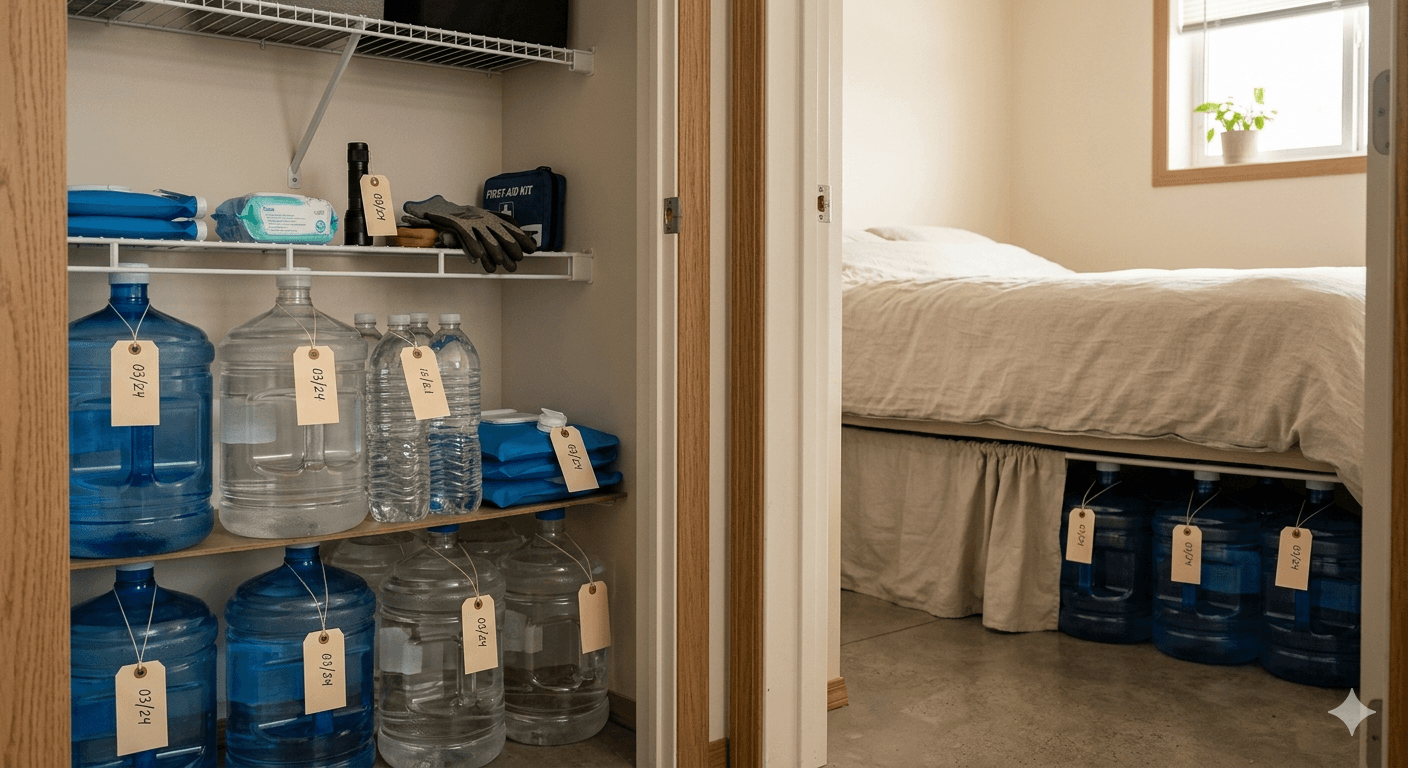
A consistently dry basement may offer good conditions, but cool air does not cancel seepage, condensation or sewage-backup risk. Inspect after rain and ask about past water entry. Avoid furnace heat and hot pipes. If floodwater or a drain backup could reach the proposed shelves, choose another location or level rather than relying on a bin lid. Also consider whether everyone who needs the supply can safely use the stairs during an outage.
Garage: spare space is not enough
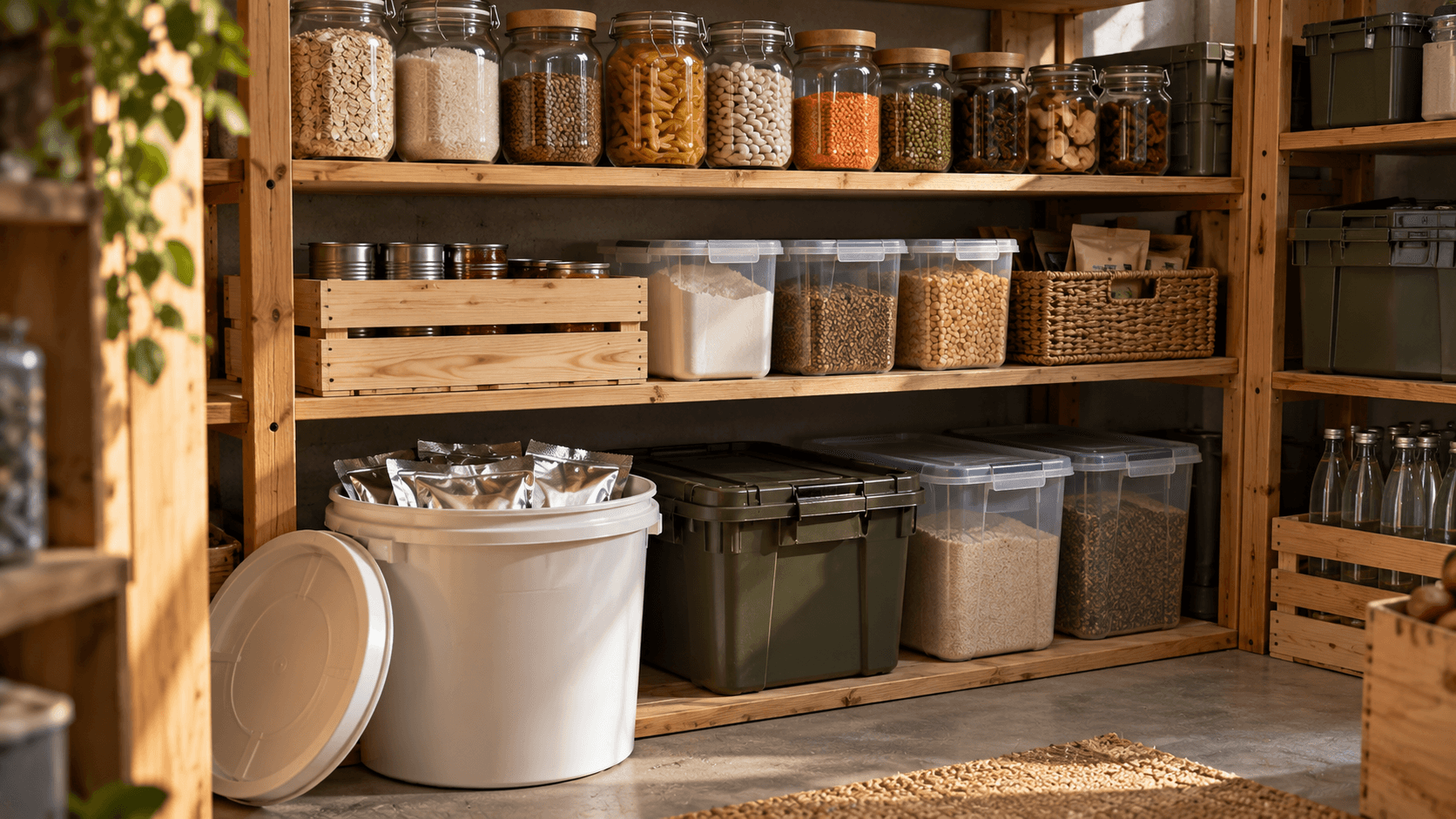
An uncontrolled garage can expose food to summer heat, winter freezing, pests and large temperature swings. Fuel, solvents, pesticides and cleaners are further reasons to reject a food-storage spot. A sealed bag or bucket does not correct those conditions. A genuinely temperature-controlled, dry, clean garage with food kept separate from chemicals could qualify, but it has to pass the same checks as an indoor room. Avoid locations where sealed cans or glass jars may freeze, as Utah State University Extension advises.
Measure where the packages will sit
Put a thermometer at the proposed shelf, not just in the middle of the room. Check it at different times, including while nearby appliances run. A minimum-and-maximum thermometer can help reveal swings you would otherwise miss. Review hot-weather and cold-weather conditions too. A few mild days are a screening check, not proof that the shelf is suitable year-round.
Utah State University Extension's storage guidance favors cool, dry conditions and protection from direct sunlight. Moisture can damage packaging and let molds and bacteria grow in dried foods that absorb it. Look for condensation, damp walls, water stains, wet cartons and rust. A humidity meter can help you notice trends, but no single household reading certifies the food as safe.
Ask what changes when heating, cooling or a dehumidifier stops; you may need an alternative during an outage. Packaging cannot cool a hot room. Once the location is suitable, choose appropriate dry-food storage containers.
Keep contamination out of the decision
The FDA's food-storage advice says not to store non-perishable foods near household cleaning products and chemicals. Choose a separate food location, not a shared chemical cabinet with a lid added to the groceries. Avoid places you cannot keep clean or inspect.
Keep food off the floor to reduce contact with moisture, but do not confuse shelving with flood protection. Consider water entering through doors or walls, leaking pipes and drains that could back up. If contamination could reach the shelf, an upstairs cupboard may be the better choice. Do not enter a hazardous area to rescue groceries.
If flooding has already reached food, relocation alone is not a remedy. FDA says to discard food in non-waterproof packaging that may have contacted floodwater, including cardboard cartons and home-canned foods. It identifies a narrow salvage option for undamaged commercially prepared all-metal cans and retort pouches, using its full cleaning and sanitation procedure. Follow the FDA's complete flood-food guidance, not an improvised wash-and-return routine. Ask local public-health officials about suspected chemical or sewage contamination. Appearance, smell and taste cannot establish safety.
Leave room to inspect and retrieve food
Check the shelving manufacturer's load and installation instructions, including anchoring where specified. If capacity or installation is uncertain, seek competent help. Keep access and exits clear, avoid precarious stacks and place heavier packages where they can be handled safely without lowering them into a water-risk area.
Arrange packages so you can inspect around them and clean spills. Check unopened groceries too: pantry insects can arrive inside packages and spread. University of Maryland Extension advises throwing away infested foods and thoroughly cleaning shelves. Do not simply move infested packages to another room or spray food-storage areas with insecticides.
Ready.gov recommends a designated emergency-kit location that household members know. Show others the food shelf and check that they can retrieve ingredients without shifting heavy containers or climbing over belongings. Keep a flashlight nearby.
A smaller dry closet can win
Imagine a spacious garage shared with lawn chemicals, a cool basement that sometimes takes on water, and a smaller dry hallway closet with suitable shelving. On those assumptions, choose the closet. Keep a working supply in a suitable kitchen cupboard if useful, but do not expand into an unsuitable room just to fit more food. In another home, a dry, accessible basement could beat a cupboard beside the oven.
Finish with a location check
Before loading the shelf, read the labels, check for chemical storage and water paths, observe temperature and dampness, inspect for pest signs, and confirm shelf instructions and clear access. Tell the household where the food is. Then put a reminder in your calendar to recheck during seasonal extremes and after heavy rain or a leak.
New condensation, pest activity, heat outside product directions, water warnings or an unstable shelf are reasons to reassess promptly. Move sound, unaffected food only when safe; set suspect food aside for the appropriate discard or official salvage decision, not routine redistribution. Once the location works, use a simple emergency-food rotation routine to keep it visible and useful.
Editorial note
This guidance concerns choosing a location for shelf-stable food, not extending shelf life or replacing refrigeration. Follow product storage directions and local emergency advice. Flood exposure, infestation or damaged packaging calls for specific safety guidance, not just a new shelf.
Article recap
- Choose by actual shelf conditions, not room name or spare capacity.
- Keep food separate from chemicals and outside likely flood or sewage exposure.
- Check labels, seasonal heat and moisture, pest signs, shelving instructions and household access.
Sources and further reading
- Food Storage Conditions — Utah State University Extension
- FDA: Are You Storing Food Safely?
- FDA: Food and Water Safety During Power Outages and Floods
- E-118: Storing Food Safely — New Mexico State University Cooperative Extension
- University of Maryland Extension: Kitchen and Pantry Pests
- Ready.gov: Build a Kit — Ready.gov, accessed Aug 2026
- Storing Canned Goods — Utah State University Extension
Read next
Questions readers askFrequently asked questions
Only if the actual location stays suitable for the foods on their labels: dry, protected from temperature extremes, clean and separate from household chemicals. An uncontrolled garage is often a poor choice because of heat, freezing and swings. Sealed packaging does not remove those problems. Check the shelf across seasons, not just on a comfortable day.
Not automatically. A dry basement with stable conditions and safe access may be useful, but seepage, condensation, flood exposure or sewage-backup risk can rule it out. A suitable pantry away from appliance heat may be the better choice. Compare the actual shelves rather than choosing by room name.
Use suitable shelving to keep food away from floor moisture, but there is no universal shelf height that makes a location flood-safe. Consider the water exposure possible in your home. If contaminated water could reach the shelves, choose another location or level. Follow the shelving manufacturer's load and installation instructions.
Do not assume it does. FDA says to discard flood-exposed food in non-waterproof packaging, including cardboard cartons and home-canned foods. Undamaged commercially prepared all-metal cans and retort pouches have a specific salvage procedure, not blanket permission to eat them. Follow the full FDA guidance and local public-health advice; washing alone does not establish safety.
Comments
Leave a comment
No comments yet. Be the first to comment!