Water & food
Food Safety During a Power Outage: What to Keep, Cook, or Throw Away
A blackout becomes stressful fast when the refrigerator is full, the freezer is warming, and nobody knows what can still be eaten. Food safety during a power...
Quick answer
After a power outage, keep fridge and freezer doors closed, check temperatures as soon as power returns, and be conservative with high-risk foods. A closed refrigerator only stays safely cold for a limited time, while a full freezer holds cold longer than a half-full one. If perishable food has been warm too long or you cannot verify it stayed cold, do not taste it—discard it.
Affiliate disclosure
This article may contain affiliate links. If you buy through these links, The Survival Nexus may earn a commission at no extra cost to you. We recommend product categories and buying criteria that fit the emergency scenario described. Read our disclosure.
A blackout becomes stressful fast when the refrigerator is full, the freezer is warming, and nobody knows what can still be eaten. Food safety during a power outage is not about memorizing every possible item. It is about slowing warming, using simple decision points, and avoiding the common mistake of trusting smell, taste, or hope.
This guide focuses on ordinary home outages: storms, grid strain, utility failures, and local emergencies. Pair it with TSN’s home power outage kit guide so food safety is not treated as a separate problem from lighting, phone power, water, and heat.
Quick answer: the first food-safety moves
Keep refrigerator and freezer doors closed as much as possible.
Use appliance thermometers if you have them; do not rely on guessing.
Move the most perishable foods to a cooler only if you have ice or frozen gel packs ready.
Eat shelf-stable food first if you are unsure how long power will be out.
Throw away questionable high-risk foods instead of tasting them.
If you want a simple pre-outage reminder, download the free Home Power Outage Starter Checklist and keep a copy near your emergency supplies.
Before the outage: make the refrigerator less fragile
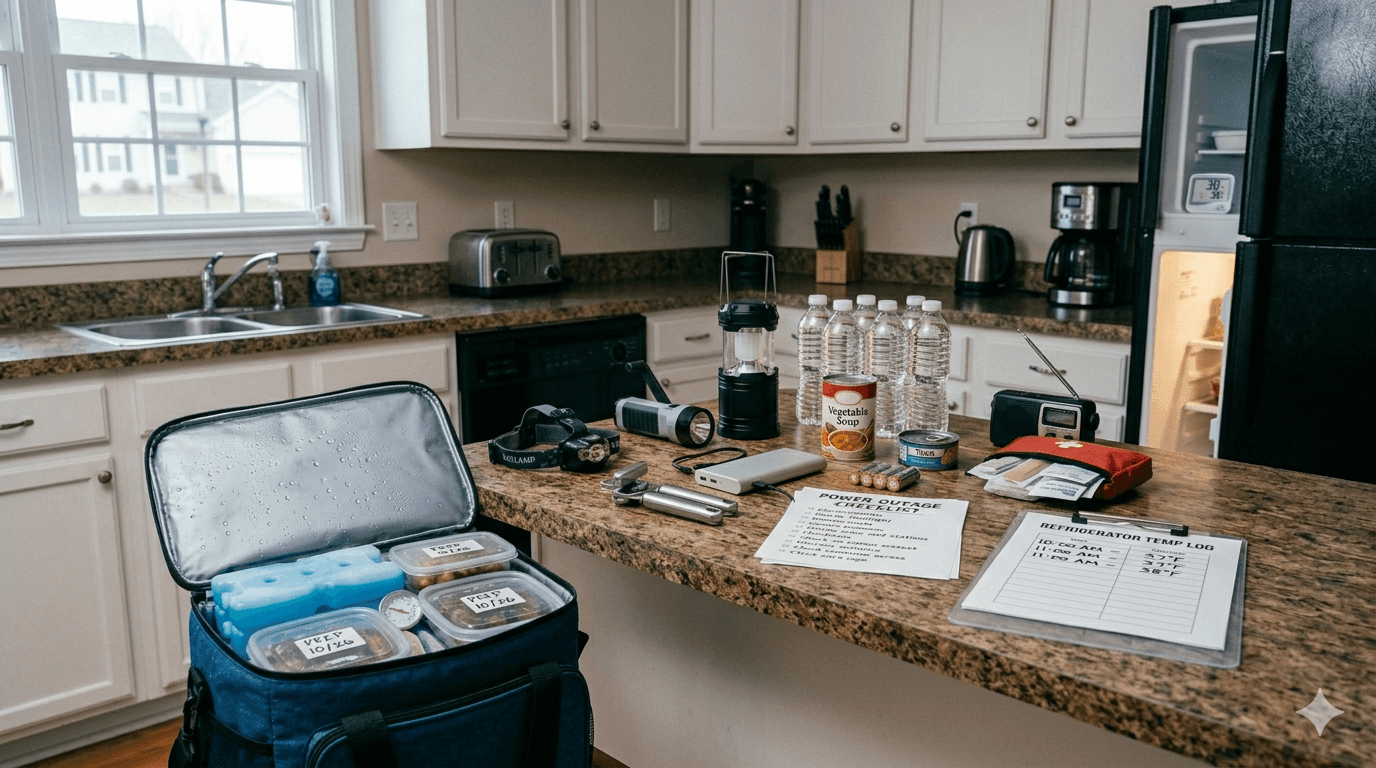
The cheapest food-safety upgrade is not a generator. It is knowing what temperature your refrigerator and freezer are before trouble starts. A small appliance thermometer gives you a clearer answer than opening the door repeatedly and guessing by feel.
If a storm or outage risk is likely, group freezer items together so they help each other stay cold. Freeze water bottles or gel packs if you have room. A fuller freezer generally holds cold better than a nearly empty one, and frozen water bottles can later move to a cooler. The winter power outage checklist covers the wider cold-weather setup, including food, heat, lighting, and relocation planning.
Also plan meals that do not depend on refrigeration. Canned soup, peanut butter, crackers, shelf-stable milk, ready-to-eat tuna or beans, and similar ordinary foods are not glamorous, but they reduce pressure to cook risky food in a hurry. If canned food is part of the plan, keep a manual can opener with the food. TSN’s blackout kit buying order puts that cheap item near the top for a reason.
During the outage: stop checking every ten minutes
Every door opening trades cold air for curiosity. Decide who is allowed to open the fridge, what they are getting, and how fast they need to move. A written list on the door can help: what to use first, what should stay closed, and where the backup food is stored.
For short outages, the safest approach is often to leave the fridge and freezer alone and eat shelf-stable food. If the outage stretches longer, prioritize foods that are still safely cold and easy to cook completely. Do not partially cook meat or leftovers and then save them for later unless you can keep them safely cold afterward.
What to eat first
Start with items that are already opened, easy to finish, and still cold. Use the most perishable foods before the less fragile ones. Meat, poultry, seafood, cooked leftovers, milk, soft cheeses, and cut produce deserve more caution than unopened condiments, whole fruits, bread, or dry pantry foods.
If you cannot keep food cold and cannot cook safely, switch to shelf-stable meals. This is where a modest pantry beats an expensive gadget. A blackout meal does not need to be perfect; it needs to be safe, low-effort, and realistic when the kitchen is dark.
Coolers help only if you have a cold source
A cooler without ice is just an insulated box. It can slow warming, but it does not reset the clock. If you use a cooler, load it quickly, keep it closed, and put the foods you need most often in a separate smaller cooler so the main cold storage is not opened repeatedly.
Suggested starting point: compare coolers, ice packs, and appliance thermometers. Use these as comparison links, not as a claim that one exact model fits every household.
Cooking during an outage
Cooking can make food safe only if the food was safe before cooking and you cook it properly. It cannot rescue food that has already spent too long in unsafe temperatures. If you use a grill, camp stove, or generator-powered appliance, keep fuel-burning devices outdoors and away from windows, doors, and vents. Carbon monoxide risk is not a theory; it is one of the most serious blackout hazards.
If safe cooking is not available, do not improvise with indoor charcoal, grills, or outdoor stoves inside the house or garage. Use ready-to-eat foods instead and save fuel for situations where it is genuinely needed.
After power returns
Do not treat the lights coming back on as proof that the food is fine. Check appliance thermometers, look for thawing in the freezer, and compare questionable items with official food-safety guidance. If you do not know how warm a high-risk food became or how long it sat there, discard it.
Then restock the boring basics: freezer packs, shelf-stable meals, bottled or stored water, batteries, and a manual can opener. Write down what you wished you had during the outage while the memory is fresh.
A practical safety note
This article is general preparedness guidance, not a substitute for local health advice. People who are pregnant, immunocompromised, elderly, very young, or medically fragile should be more cautious with questionable food. If local officials issue specific guidance after a disaster, follow that guidance.
Simple food-safety checklist
Put appliance thermometers in the refrigerator and freezer.
Freeze water bottles or gel packs before predictable storms.
Keep a cooler, shelf-stable meals, and manual can opener ready.
Keep doors closed and avoid repeated checking.
Use official guidance for questionable food; do not taste-test.
Restock what you used after power returns.
Sources and further reading
Editorial note
This article was refreshed for searches around fridge and freezer food safety after a power outage. Food-safety advice should follow USDA/FDA/FoodSafety.gov guidance and local health advisories when available; when in doubt, throw unsafe food out rather than tasting it.
Article recap
- Keep refrigerator and freezer doors closed as much as possible during the outage.
- Use appliance thermometers if you have them; temperature history matters more than guesswork.
- Never taste food to decide whether it is safe after a prolonged outage.
- Prioritize a simple discard plan for meat, dairy, seafood, cut produce, leftovers, and anything with an unusual odor or texture.
Read next

Comments
Leave a comment
No comments yet. Be the first to comment!