
Water & food
Creative Ways to Grow Food Without Owning Land
In the heart of bustling cities, where concrete and steel dominate the landscape, the idea of growing your own food might seem like a distant dream. Yet, urb...
Quick answer
You do not need land to grow useful food. Start with the space you actually control: a sunny window, balcony, shared yard, rooftop, community garden plot, or small hydroponic setup. Choose easy crops, check building or community rules, use safe soil and containers, and treat harvests as a supplement to your food plan rather than a complete replacement.
Urban Gardening Without Land: A New Frontier
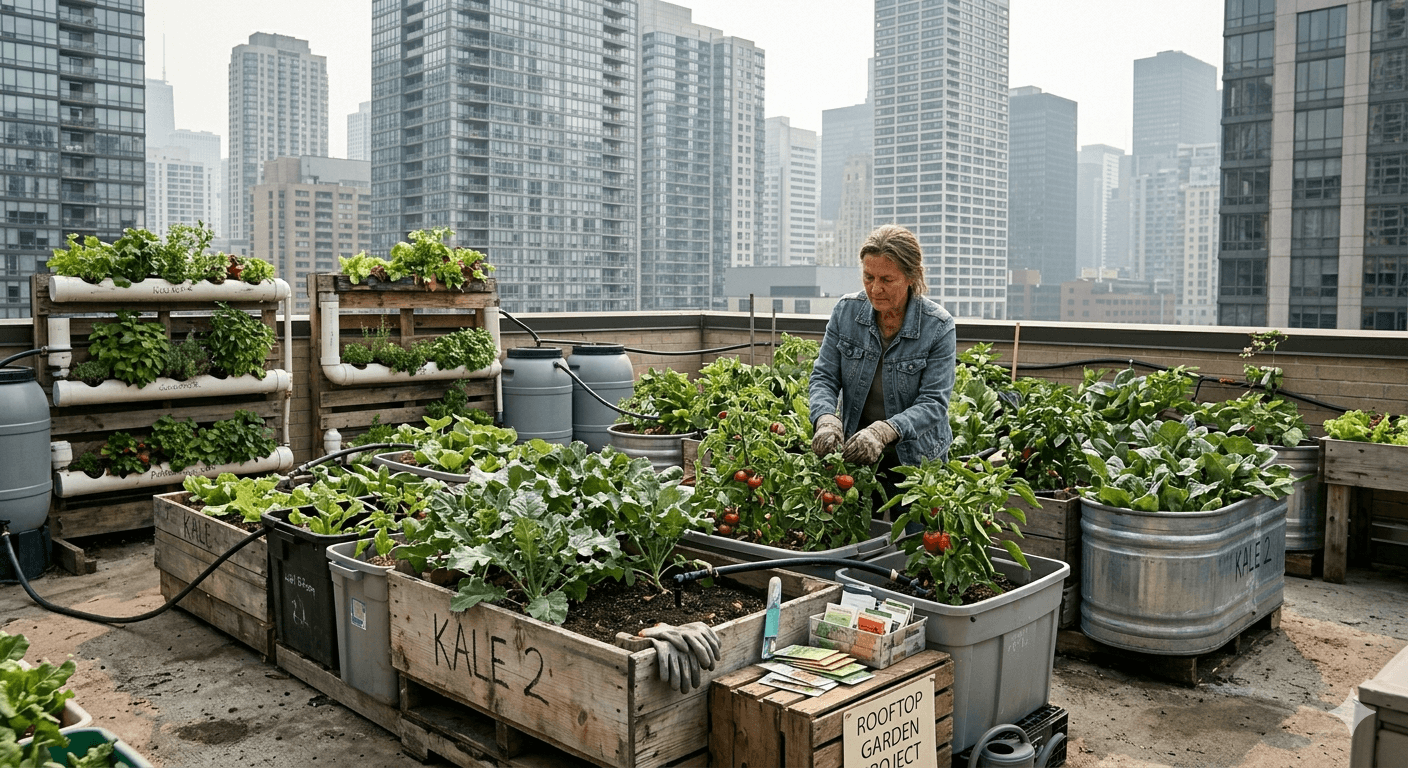
In the heart of bustling cities, where concrete and steel dominate the landscape, the idea of growing your own food might seem like a distant dream. Yet, urban gardening is transforming these urban jungles into green havens. This movement is not just about sustainability; it's about reclaiming space and redefining what it means to cultivate food in environments where land is scarce or non-existent. Imagine a rooftop in Manhattan, once a barren expanse of tar and gravel, now teeming with vibrant green life. This is the new frontier of urban gardening, where creativity meets necessity.
The urban gardening movement is a response to the growing need for sustainable food sources in densely populated areas. As cities continue to expand, traditional agricultural land becomes increasingly inaccessible. However, this challenge has sparked innovation. Urban gardeners are finding ingenious ways to grow food in the most unlikely places, from vertical gardens on the sides of buildings to hydroponic systems in basements. These methods not only provide fresh produce but also contribute to urban biodiversity and help mitigate the urban heat island effect.
Analyzing the Urban Landscape
Urban areas present unique challenges for aspiring gardeners. The lack of traditional gardening space is the most obvious hurdle. However, the urban environment also offers unique opportunities. Rooftops, balconies, and even windowsills can become fertile grounds for growth. The key is to rethink the available space and utilize innovative techniques that maximize yield in minimal areas. This shift in perspective is crucial for those who want to grow food but do not have access to traditional plots of land.
Consider the story of a small apartment in Tokyo, where a family has transformed their balcony into a lush garden. Using vertical gardening techniques, they have managed to grow a variety of vegetables and herbs, providing fresh ingredients for their meals without ever leaving their home. This example illustrates how urban dwellers can still grow food without owning land, by creatively utilizing the spaces they do have.
Moreover, urban areas often have access to resources that can aid in gardening efforts, such as community composting programs and local gardening workshops. These resources can provide valuable knowledge and materials for those looking to start their own urban gardens. By tapping into these community assets, aspiring gardeners can overcome some of the challenges posed by urban environments.
Innovative Techniques for Urban Food Production
To successfully grow food in urban settings without land, several creative techniques have emerged. Vertical gardening is one such method, allowing plants to grow upwards rather than outwards, making efficient use of limited space. Hydroponics and aquaponics systems offer soil-free solutions, using nutrient-rich water to cultivate plants. These systems can be set up indoors or on rooftops, making them ideal for city dwellers.
Vertical gardening involves using structures such as trellises, towers, or wall-mounted planters to grow plants vertically. This method is particularly effective in urban areas where horizontal space is limited. For instance, a café in Chicago has turned its exterior walls into a vertical herb garden, providing fresh ingredients for its kitchen while also enhancing the building's aesthetic appeal.
Hydroponics and aquaponics take a different approach by eliminating the need for soil altogether. These systems use water enriched with nutrients to grow plants, often resulting in faster growth rates and higher yields. A notable example is a startup in Brooklyn that has converted an old warehouse into a hydroponic farm, producing leafy greens and herbs year-round. This innovative use of space demonstrates how urban environments can still be productive agricultural areas.
Another approach is container gardening, which uses pots and other containers to grow plants. This method is versatile and can be adapted to fit any space, from small balconies to larger rooftop gardens. Community gardens also provide shared spaces where individuals can collaborate and grow food collectively, fostering a sense of community and shared responsibility.
For preparedness, think of this as one layer of food resilience, not the whole plan. A few containers can support the broader habits in growing food after collapse, while shelf-stable basics from a smart prepper grocery run keep the household covered when a harvest is small or delayed.
Vertical Gardening: Maximizes space by growing plants upwards.
Hydroponics/Aquaponics: Soil-free systems using nutrient-rich water.
Container Gardening: Flexible and adaptable to various spaces.
Potential Pitfalls and Future Directions
While urban gardening offers many benefits, it is not without its challenges. Limited sunlight, pollution, and water access can all impact plant growth. Additionally, the initial setup for systems like hydroponics can be costly and require technical knowledge. It's essential to research and plan thoroughly before starting an urban garden to mitigate these issues.
For instance, a community garden in Los Angeles faced challenges with air pollution affecting plant health. By installing air-filtering plants and using protective coverings, they were able to improve conditions and ensure a successful harvest. This example shows the importance of adapting to urban-specific challenges in order to maintain a thriving garden.
Looking ahead, the future of urban gardening lies in innovation and community involvement. As technology advances, new methods and tools will continue to emerge, making urban gardening more accessible and efficient. Encouraging community participation and education will also play a vital role in expanding these green spaces, ensuring that more people can enjoy the benefits of growing their own food, even without traditional land.
In conclusion, urban gardening is a testament to human ingenuity and adaptability. By embracing creative techniques and leveraging available resources, city dwellers can transform their environments into productive, sustainable spaces. Whether through vertical gardens, hydroponic systems, or community collaborations, the possibilities for growing food without land are endless. As more people join this movement, urban areas will continue to evolve into greener, more self-sufficient communities.
Editorial note
This refresh frames urban food growing as practical household resilience, not a promise of full self-sufficiency from a balcony or windowsill.
Article recap
- Small-space food growing works best when it starts with light, water access, safe containers, and realistic crop choices.
- Community gardens, container gardens, vertical planters, and simple hydroponics can all reduce dependence on fragile supply chains.
- Urban-grown food still needs ordinary food-safety judgment: clean water, safe soil, clean hands, and proper washing before eating.
Sources and further reading
- USDA: Urban Agriculture — USDA, accessed May 2026
- USDA: Food Safety Tips for Your Garden — USDA, accessed May 2026
- Ready.gov: Build a Kit — Ready.gov, accessed Aug 2026
Read next

Questions readers askFrequently asked questions
Usually not from a small balcony or window alone. The realistic goal is to add fresh herbs, greens, and some vegetables while building skills, confidence, and a little food depth. Larger community plots or shared gardens can contribute more, but they still work best alongside a pantry plan.
Start with clean containers, known potting mix, good light, reliable water, and beginner-friendly crops such as herbs, greens, or compact vegetables. If you garden near old buildings, roads, or industrial areas, be cautious about soil contamination and use raised beds or containers when appropriate.
Comments
Leave a comment
No comments yet. Be the first to comment!