Water & food
How to Find and Purify Water in the Wild (Even If You Have Nothing)
Water is the first real problem in any survival situation. Not food, not shelter. Water. The human body can handle hunger for a long time, but dehydration st...
Quick answer
In the wild, find water before you are desperate, filter visible sediment when possible, then disinfect using a reliable method such as boiling, approved chemical treatment, or a properly rated filter. Clear water is not automatically safe, and dehydration can push you into bad decisions fast.
Water is the first real problem in any survival situation. Not food, not shelter. Water. The human body can handle hunger for a long time, but dehydration starts affecting you within hours. Your energy drops, your thinking slows down, and your ability to make decisions gets worse. In a survival scenario, that is often what leads to failure.
Most people assume that water is simply not there. In reality, it usually is. The problem is that it is hidden, hard to access, or unsafe to drink. Survival depends on understanding how to find it and what to do next.
Water planning should connect to your larger emergency system: compare improvised methods with a dedicated survival water filter, understand how dehydration affects the first 100 days after collapse, and remember that unsafe water can quickly turn into the infection problems covered in treating infections when there is no doctor.
Finding Water in the Wild
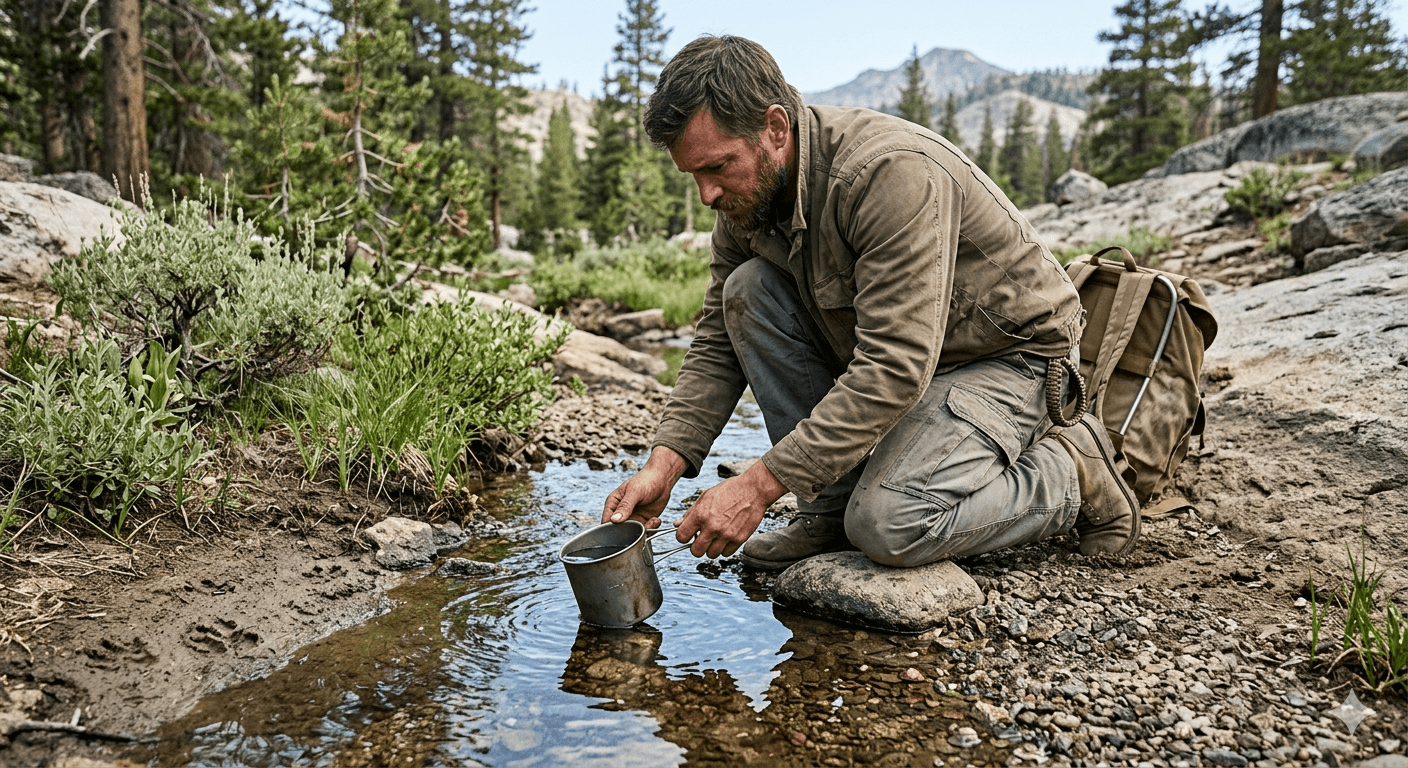
Water follows patterns. It moves downhill, collects in low areas, and supports life around it. If you are moving through unknown terrain, your first instinct should be to look for valleys, depressions, and natural channels where water would gather. Even when there is no visible stream, the environment gives clues. Greener vegetation often means moisture below the surface. Insects tend to gather near water. Animal tracks frequently lead toward a source, especially early in the morning or late in the day.
When obvious sources are missing, you shift from searching to collecting. Rain is the safest option and should always be prioritized when available. Even without proper gear, you can use basic materials to catch it and direct it into something you can drink from. Morning dew can also be collected slowly by wiping vegetation with fabric and squeezing it out. In dry environments, digging into low ground or dry riverbeds can reveal damp soil and small amounts of water that seep in over time.
Why Most Water Is Not Safe
Finding water is only half the job. Drinking it untreated can cause serious problems very quickly. Natural sources often contain bacteria, parasites, and other contaminants that are not visible. Even clear water can be unsafe. In a survival situation, getting sick from bad water can weaken you faster than dehydration alone, which is why purification matters.
Making Water Safer to Drink
If you have the ability to make fire, boiling is the most reliable method. Bringing water to a strong boil is enough to eliminate most biological threats. It is simple, effective, and should always be your first choice when possible.
When boiling is not an option, the goal becomes reducing risk. Improvised filtration can help remove dirt and some contaminants. Passing water through layers such as cloth, sand, and charcoal improves its quality, even though it does not make it completely safe. If you manage to combine filtration with boiling later, that significantly increases your chances of avoiding illness.
If you have no tools and no fire, you are forced to make the best possible decision with what is available. In those situations, choosing the right source matters more than anything else.
Prefer moving water over stagnant water
Look for clear sources rather than murky ones
Let water sit so particles can settle before drinking
These steps do not eliminate risk, but they reduce it enough to improve your chances.
What to Avoid
Some water sources are more dangerous than helpful and should be avoided unless there is no alternative. Stagnant water with a strong smell, areas near dead animals, or anything that shows visible contamination can cause serious illness. Saltwater is not drinkable and will make dehydration worse.
Managing Your Water Once You Have It
Securing water once is not enough. You need to maintain your condition over time. Many people try to ration too aggressively, which leads to faster physical and mental decline. A better approach is to control your environment and activity. Staying out of direct sun, reducing movement during the hottest parts of the day, and drinking small amounts regularly will help you stay functional longer.
The Reality of Survival
Survival is rarely about one big decision. It is a series of small, practical choices that build on each other. With water, those choices are direct and unforgiving. You need to recognize where it is, collect it consistently, and make it as safe as possible before drinking.
Get that right, and your chances improve immediately. Water is not just another resource. It is the line between staying in control of the situation and losing it.
Editorial note
Water treatment advice is safety-sensitive. Local contamination, chemicals, flooding, and sewage can change what methods are appropriate, so official guidance and conservative choices matter.
Article recap
- Plan water early; thirst makes people take unsafe risks.
- Filtering debris and disinfecting microbes are different jobs.
- When illness, injury, or contamination is possible, choose conservative water decisions.
Sources and further reading
- Ready.gov: Water — Ready.gov, accessed May 2026
- EPA: Emergency Disinfection of Drinking Water — EPA, accessed May 2026
- WHO: Drinking-water — World Health Organization, accessed May 2026
Read next
Questions readers askFrequently asked questions
Not automatically. Clear water can still contain microbes or contamination. Treat it unless you have reliable local knowledge and a safer source is not available.
Boiling is useful for many biological hazards, but it does not remove many chemicals, fuels, heavy metals, or salt. Suspected chemical contamination requires a different plan and official guidance.
Comments
Leave a comment
No comments yet. Be the first to comment!