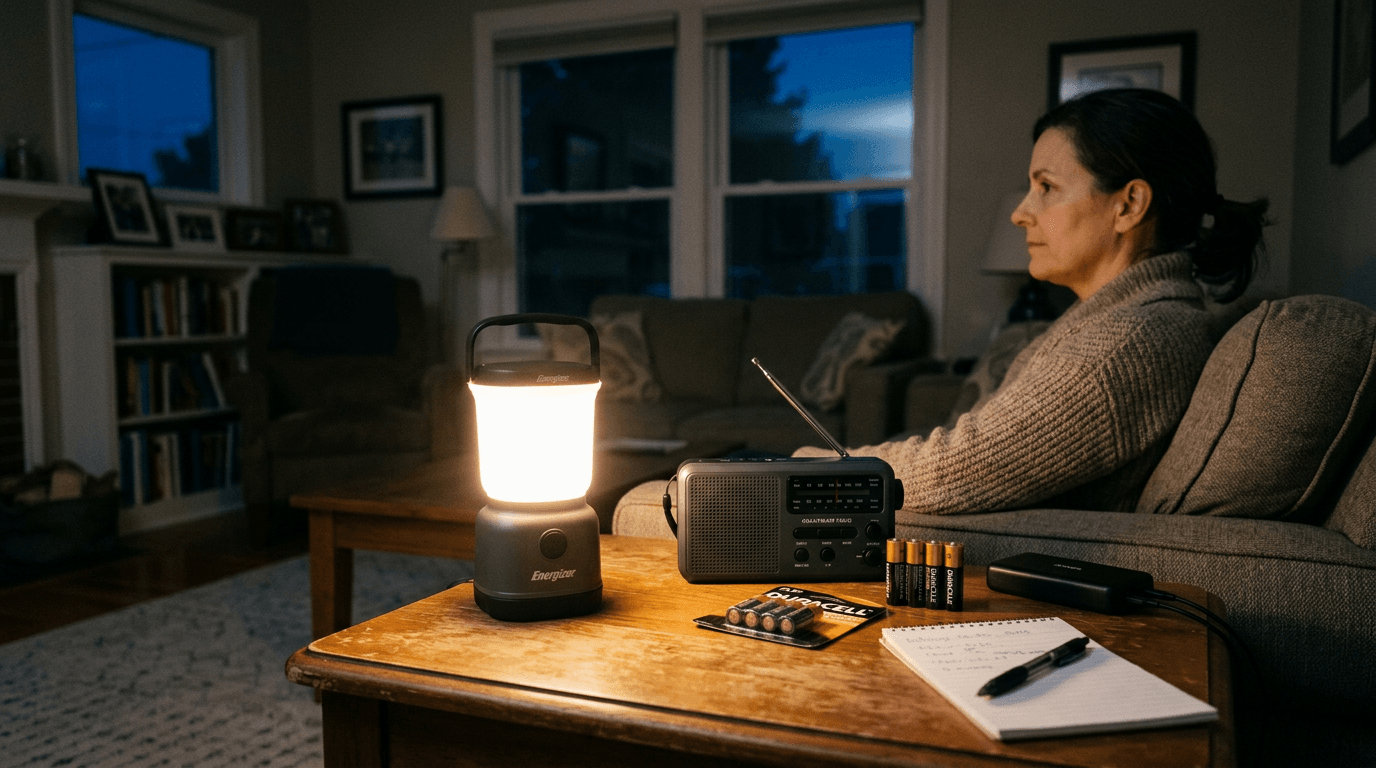
When the power fails, your phone may still work - but every percentage point of battery suddenly matters. Mobile data can become unreliable, home internet disappears with the router, and local conditions may change faster than a social feed can explain them. An emergency radio gives your household a separate, low-power way to receive official weather and public-safety information.
That does not mean you need the biggest radio with the longest feature list. For most homes, reception, understandable audio, simple controls, and sensible battery options matter far more than an oversized solar panel or a claim that one gadget can replace your entire communication plan.
The short buying answer
In the United States, start with a radio that can receive NOAA Weather Radio and ordinary AM/FM broadcasts. Prefer a model that accepts common replaceable batteries, and treat an internal rechargeable battery or hand crank as additional options - not the only way to power it. Before trusting the radio, test NOAA reception from the room where you expect to shelter and learn the controls while the lights are on.
If you are building the rest of your supplies at the same time, use the home power-outage kit guide to cover lighting, water, food access, phone charging, and other first-night needs. A radio is one layer of that kit, not the whole kit.
Why NOAA reception matters
NOAA Weather Radio All Hazards is a nationwide network operated through the National Weather Service. It broadcasts official warnings, watches, forecasts, and other hazard information around the clock from local offices. A NOAA-capable receiver uses dedicated weather-radio frequencies; an ordinary AM/FM radio does not automatically receive them.
AM and FM are still useful. Local stations may carry utility updates, road closures, shelter information, and Emergency Alert System messages. The practical choice is therefore not “NOAA or AM/FM.” It is a radio that gives you both, plus a phone and written local contact information. Redundant information sources are more reliable than betting everything on one device.
Features worth paying for
Reliable reception: a radio is only useful if it can receive the stations that serve your area. Test it at home before the emergency.
NOAA Weather Radio support: essential for dedicated U.S. weather and hazard broadcasts.
Alert mode: useful if you want a capable radio to remain quiet until an alert is received. Check the manual and local coverage rather than assuming every alert feature works identically.
Common replaceable batteries: AA or AAA support makes it easier to standardize batteries across radios, headlamps, and other household gear.
Simple tuning and volume controls: tired people should be able to use the radio in the dark without scrolling through confusing menus.
Clear speaker audio and a headphone jack: intelligibility matters more than loudness, while headphones can reduce power use and avoid disturbing others.
Power options: batteries first, backups second
A replaceable-battery radio is boring in the best possible way. You can store a labeled set of batteries with it, rotate them with other household devices, and replace them without waiting for sunlight or spending time at a crank. Remove batteries if the manufacturer recommends it for long storage, and inspect the compartment periodically for leakage or corrosion.
An internal rechargeable battery is convenient for routine use, but it will eventually need another power source. If your blackout kit already includes a power bank, make sure the radio’s charging cable and input match what you actually store. TSN’s comparison of a power bank versus a portable power station can help you choose an appropriate charging layer without buying more capacity than you need.
A hand crank is useful as a last-resort input, not as free unlimited power. Cranking takes effort and often produces modest listening or charging time. A small built-in solar panel may help maintain a charge in favorable conditions, but its size limits what it can collect. Treat both as resilience features after you have confirmed that the radio works well on ordinary batteries.
Features you can usually skip
A huge advertised power-bank capacity without clear manufacturer documentation.
A bright reading light if you already keep proper headlamps and lanterns. Combined features can drain the same battery you need for information.
Shortwave reception unless you understand what you want to hear, when those broadcasts are available, and what antenna setup is practical.
Bluetooth speakers, elaborate sirens, or complicated presets that make the basic radio harder to operate.
A bargain model bought only because it lists many charging methods. Reception and control quality should come first.
A practical starting point to compare
Look for a NOAA-capable AM/FM radio with replaceable batteries, straightforward controls, an alert function, and one backup charging method. Read recent owner feedback specifically for reception, battery behavior, control usability, and durability rather than treating the number of features as a quality score.
A current example matching these criteria is the Midland ER310, which combines NOAA weather alerts, AM/FM reception, a rechargeable battery, and backup crank and solar inputs. Treat the crank and solar panel as backup charging methods rather than the main plan. You can also compare NOAA weather radios and emergency radios. These are affiliate links; The Survival Nexus may earn a commission from qualifying purchases. The example is based on manufacturer specifications, not TSN hands-on testing.
Test the radio before you depend on it
A radio should be part of a small household drill, not a sealed object at the bottom of a tote. Find your local NOAA station, extend and orient the antenna, and test reception in several rooms. Basements, interior rooms, metal roofing, terrain, and distance from a transmitter can all affect the signal. Mark the best listening location and write the useful frequencies on a card stored with the radio.
Practice switching between NOAA and local AM/FM stations, changing batteries, activating the alert setting, and lowering the display brightness if possible. Put the radio, instructions, headphones, cable, and spare batteries together. If different family members may use it, each person should be able to get a broadcast without needing the internet to find the manual.
How to use it during a blackout
Use the radio deliberately rather than leaving every light and speaker running continuously. Check at regular intervals, or use a supported alert mode, while conserving batteries. Write down important instructions, times, locations, and utility estimates instead of relying on memory. Compare official information with what you can safely observe, and follow evacuation or shelter guidance from local authorities.
Keep your phone available for two-way communication; a normal emergency radio is primarily a receiver. If phone power is limited, reduce unnecessary screen use and background activity. For the rest of the first-night setup, pair the radio with safe lighting from the guide to the best lights to use before candles and the free Home Power Outage Starter Checklist. For cold-weather outages, the winter power outage checklist connects radio readiness with heating, food, and relocation decisions.
Common mistakes
Buying a radio but never confirming local NOAA reception.
Storing it with an empty internal battery and no compatible cable or replaceable cells.
Depending on a hand crank to recharge a phone from empty.
Leaving old batteries installed for years without inspection.
Assuming the radio can transmit messages when it is only a receiver.
Treating unofficial commentary as equal to alerts from the National Weather Service and local emergency authorities.
Five-minute radio readiness check
Receive your local NOAA Weather Radio broadcast from inside your home.
Write down the useful NOAA, AM, and FM stations.
Store fresh batteries separately or as directed by the manufacturer.
Confirm that charging cables match your power bank or other backup source.
Place the manual, headphones, batteries, and radio in one known location.
Set a calendar reminder to retest reception and battery condition every few months.
The best emergency radio is not the one with the most dramatic product page. It is the one your household can hear, power, and operate without hesitation. Choose a straightforward receiver, test it where you live, and make it one part of a broader information and blackout plan.