Gear guides
Best Power Outage Supplies for Home: What to Buy First, What Can Wait
The best power outage supplies are not a pile of tactical gadgets. They are a small set of practical items that lets your household see, communicate, charge ...
Quick answer
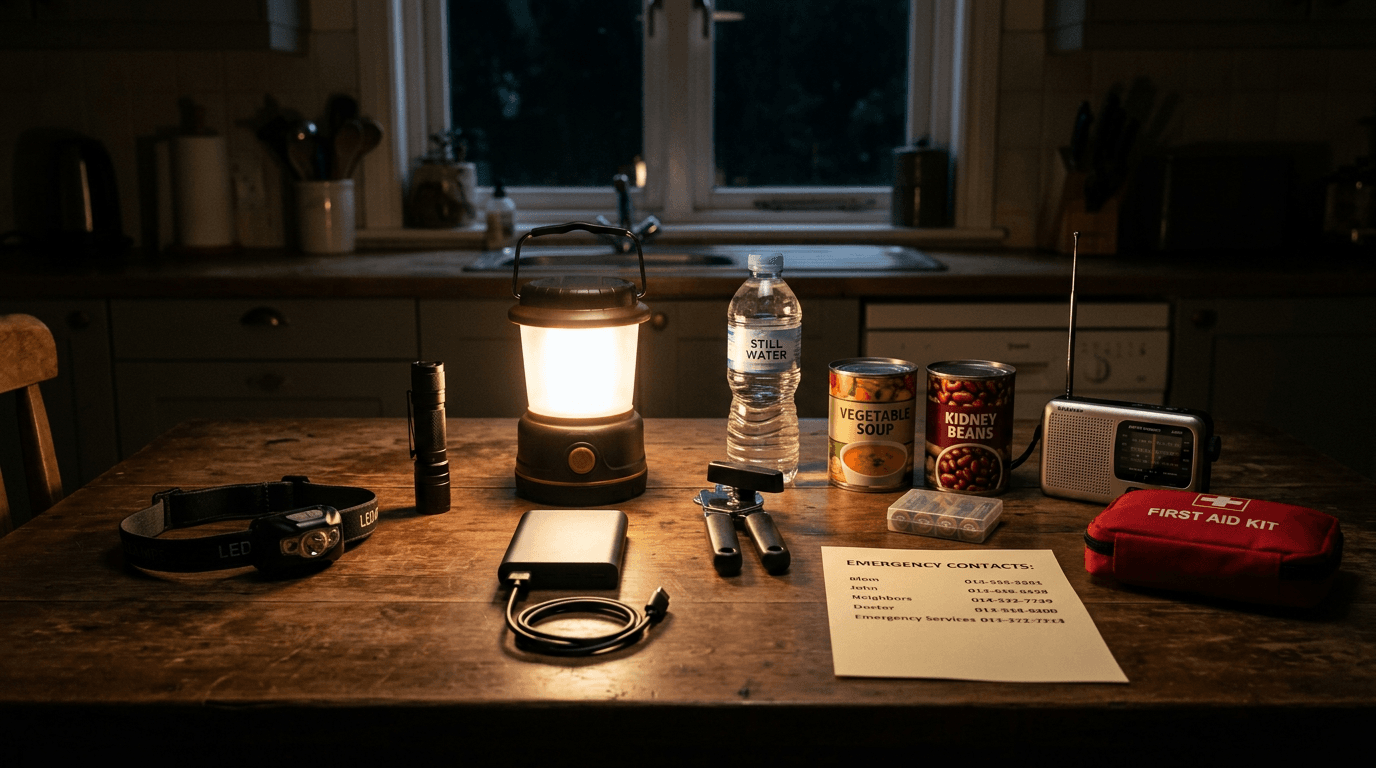
The best power outage supplies for most homes are LED lights, charged phone power banks, stored water, shelf-stable food, a manual can opener, a battery-powered radio, spare batteries, basic first aid, and a plan for medications or powered medical devices. Buy those first; add portable power stations, solar panels, or generators only when they match a specific household need.
Affiliate disclosure
This article may contain affiliate links. If you buy through these links, The Survival Nexus may earn a commission at no extra cost to you. We recommend product categories and buying criteria that fit the emergency scenario described. Read our disclosure.
The best power outage supplies are not a pile of tactical gadgets. They are a small set of practical items that lets your household see, communicate, charge essentials, eat safely, stay warm or cool enough, and avoid the most common blackout mistakes. The right kit for a suburban house will not look exactly like the right kit for a small apartment, but the buying order is surprisingly similar.
This guide is built around priority, price, and usefulness. Start with the inexpensive items that solve immediate problems. Then add upgrades only if they match your home, climate, budget, and outage risk. If you already have some emergency supplies, use this as a gap check rather than a shopping list you must complete in one weekend.
If you only buy 5 things first
If you are not ready to build a full kit, make the first purchase simple: light, phone power, food access, and information. This small starter set covers the most common first-night problems without jumping straight to expensive backup power.
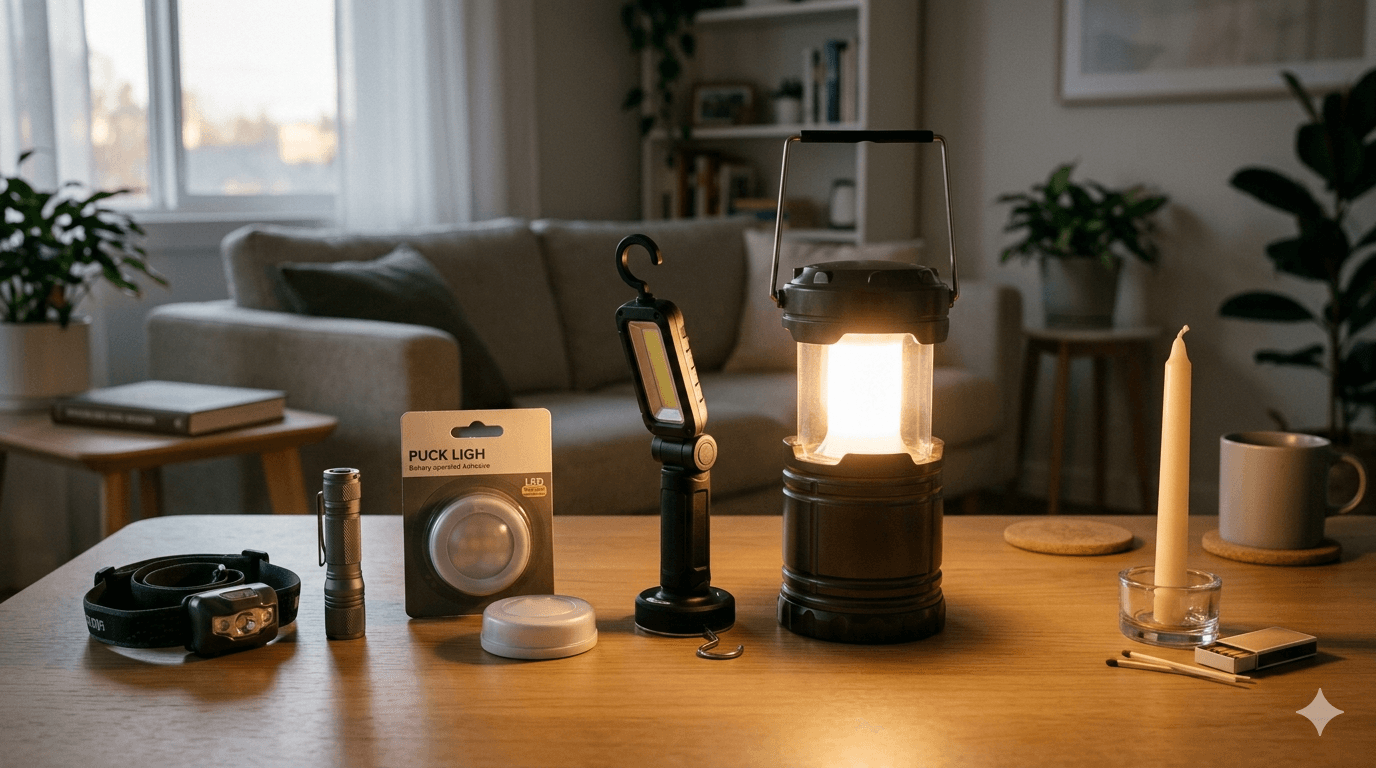
Hands-free light: compare simple LED headlamps so each person can move safely in the dark.
Room light: compare practical LED lanterns for a table, hallway, or shared room.
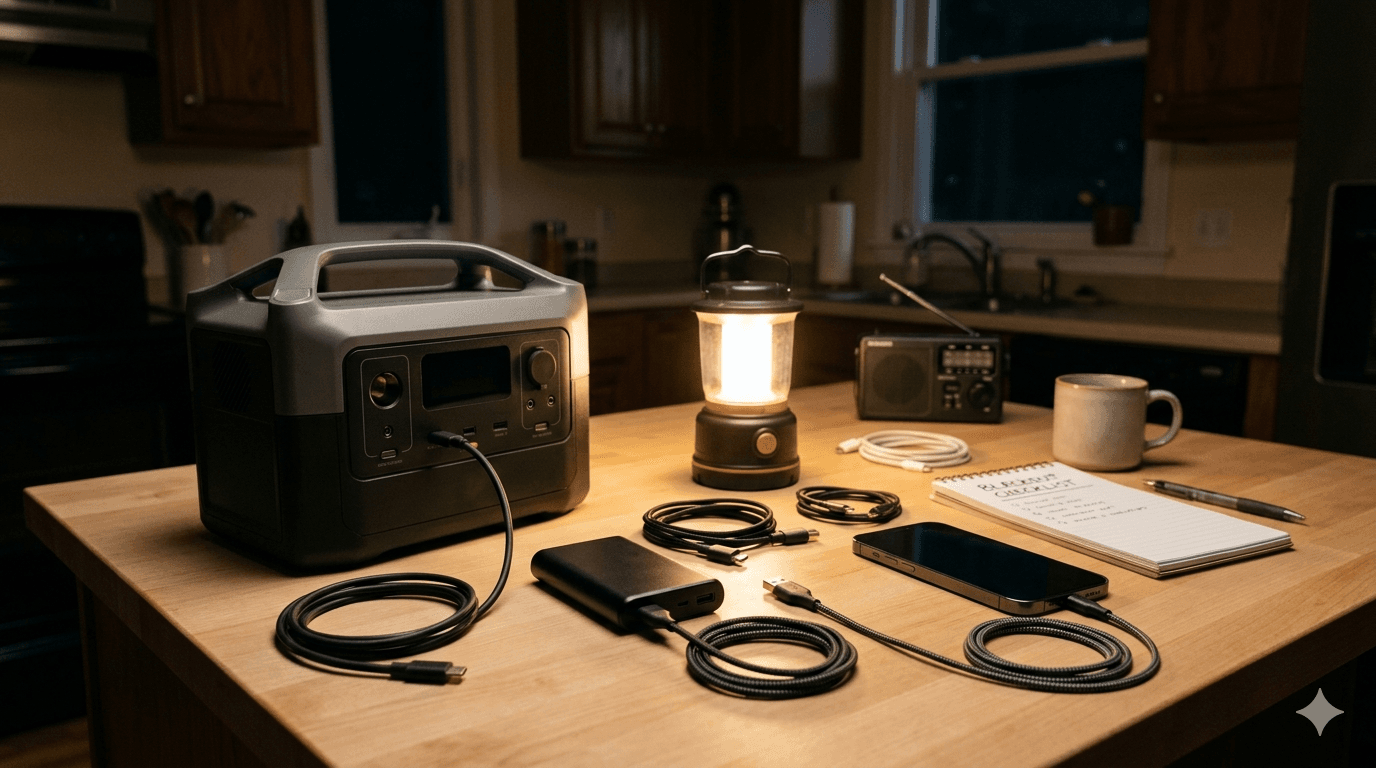
Phone power: compare emergency phone power banks before worrying about larger power stations.
Emergency information: compare NOAA weather radios if cell service or internet access becomes unreliable.
Food access: compare manual can openers if canned food is part of your plan.
These are affiliate links, which means TSN may earn a commission if you buy through them. Use them as starting points for comparison, not as a claim that one specific product is perfect for every household.
Free printable blackout checklist
Want the short version? Download the free Home Power Outage Starter Checklist and use it as a household gap check before storms, winter weather, heat waves, or local grid alerts.
Mentioned in this section
Selected products named in this guide
Selected products named above, not a ranking or a complete list. Buy any of them elsewhere if you prefer.
Storing household water
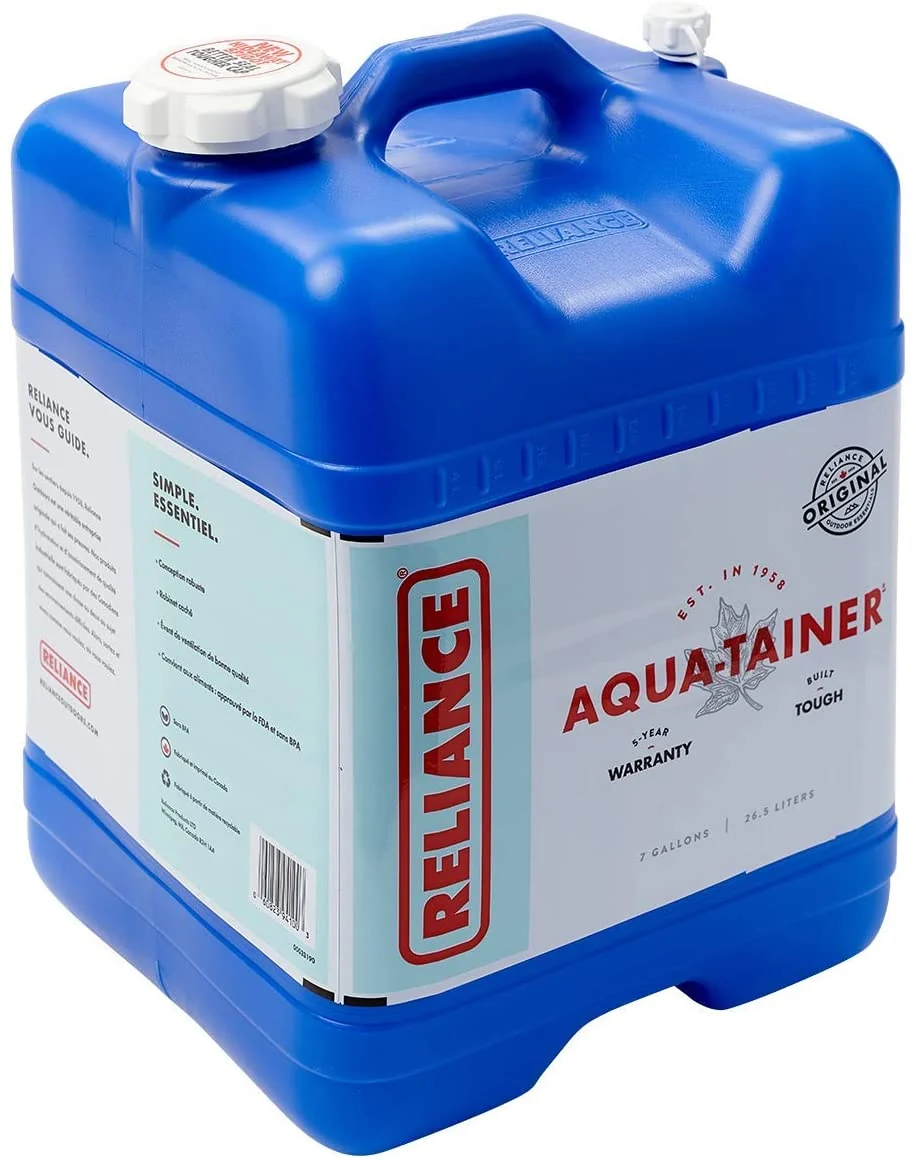
Reliance Aqua-Tainer 7 Gallon
A rigid 7-gallon (26 L) container with a built-in handle and spigot for planned home storage.
Limitation: A full container is heavy, it should be stacked only when empty, and marketplace availability can change.
Opening stored canned food
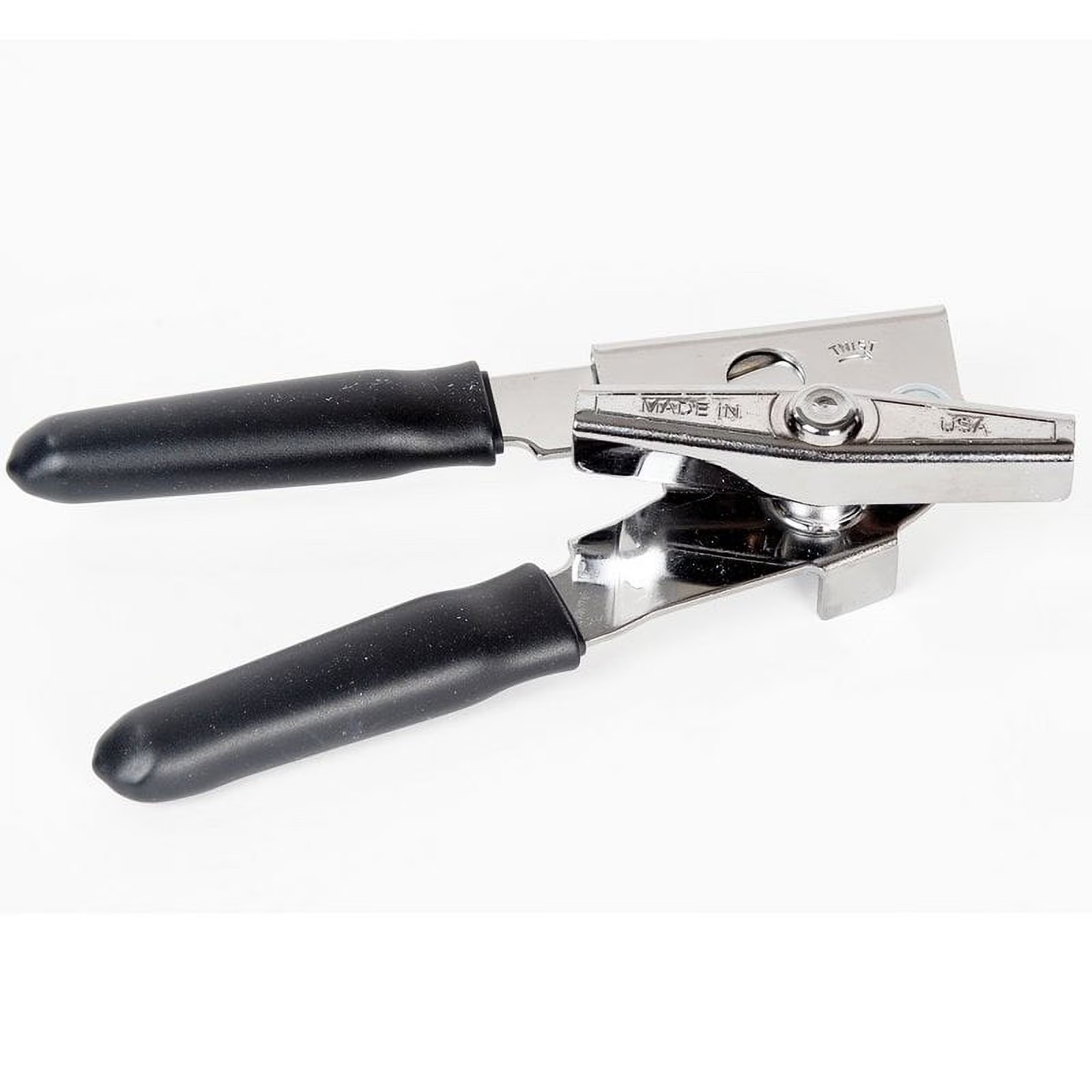
EZ-DUZ-IT 3028 Deluxe
A straightforward manual can opener that can stay with the pantry supplies it supports.
Limitation: Its carbon-steel parts should be washed by hand and dried promptly after use.
The first things to buy
If you are starting from almost nothing, do not begin with a generator. Begin with the items that help in almost every outage: a flashlight or headlamp for each person, spare batteries or rechargeable batteries, a charged power bank, a manual can opener, water containers, shelf-stable food, a basic first-aid kit, and a battery-powered or hand-crank radio. If anyone in the home depends on refrigerated medication, powered medical equipment, or a charged communication device, plan for that before comfort upgrades.
For winter outage planning, pair this list with TSN’s guide to staying warm indoors without fire or electricity. For power options beyond phone charging, compare the tradeoffs in seven power options after disaster.
Under $50: the highest-value basics
A useful starter kit can be cheap. The goal at this level is not comfort; it is preventing the obvious problems that make the first night harder than it needs to be.
LED flashlight or headlamp: headlamps are especially useful because they keep both hands free.
Manual can opener: small, cheap, and easy to forget until you need it. If you are relying on canned food, read TSN’s guide on how to open a can without a can opener as a backup skill, not as Plan A.
Water containers: store water before the outage, not after everyone in town is buying the same jugs.
Basic phone power bank: one small power bank can keep a phone useful for alerts, messages, maps, and family coordination.
Printed emergency contacts: power outages often reveal how much of your plan only exists inside a locked phone.
$50 to $150: practical upgrades
Once the basics are covered, upgrades should make the kit easier to use for more than a few hours. This is where many households get the best value: not luxury, but fewer weak points.
Larger power bank: look for enough capacity to recharge phones several times, plus USB-C if your household uses newer devices.
LED lantern: safer and easier for a room than candles, especially around children, pets, and tired adults.
NOAA weather radio or emergency radio: useful when cell service is congested, batteries are low, or local weather is part of the outage.
Rechargeable battery set: standardize around the battery sizes your lights and radios actually use.
Cooler and thermometer: useful for deciding what stays cold and what needs to be eaten, moved, or discarded. Use the food safety during a power outage guide for practical refrigerator and freezer decisions.
Product categories worth considering
These are not ranked “best products” or personal test results. Treat them as practical buying categories for a home power outage kit. Start with the low-cost items that solve common problems, then add larger upgrades only if they fit your household.
Budget-friendly option: LED headlamp
For most homes, a simple LED headlamp is more useful than an oversized flashlight because it keeps both hands free while you check breakers, move around the house, or help someone else.
Look for a common battery type or straightforward USB rechargeability.
Choose simple controls that are easy to use in the dark.
Avoid complicated tactical modes as the main selling point.
Suggested starting point: Compare simple LED headlamps for power outages.
Budget-friendly option: LED lantern
A lantern is better for lighting a room, table, or hallway. It is also safer than relying on candles when people are tired, pets are moving around, or children are present. For room lighting, headlamps, and battery tradeoffs, see the guide to the best lights for a blackout.
Look for stable bases, simple brightness settings, and replaceable or rechargeable batteries.
Store it where the household can find it without searching in the dark.
Avoid open flame as your main indoor lighting plan.
Suggested starting point: Compare practical LED lanterns for home blackouts.
Useful upgrade: phone power bank
A basic power bank is one of the highest-value outage items because phones handle alerts, family messages, maps, notes, and emergency calls. If you are unsure when to step up in size, compare a power bank with a portable power station based on the devices you actually need to charge.
Look for enough capacity to recharge your main phone at least once or twice.
Check that the ports match your household’s charging cables.
Recharge it on a schedule instead of assuming it is still full months later.
Useful upgrade to compare: Phone power banks for emergency charging.
Useful upgrade: emergency radio
A battery-powered or hand-crank radio gives you another way to receive weather and local emergency information when cell networks are congested, phones are low, or internet service is down. For a practical feature comparison, read the emergency radio for power outages guide.
Look for NOAA weather radio support if you are in the United States.
Prefer simple controls and battery options you already stock.
Do not make a radio your only communication plan; pair it with phone power and written contact details.
Useful upgrade to compare: NOAA weather radios and emergency radios.
Often overlooked: water containers
Water storage is not flashy, but it matters. Containers let you store water before storms, grid strain, or local infrastructure issues create a rush at stores. For smaller homes, our emergency water storage guide for apartments covers practical storage choices.
Choose containers you can actually lift, clean, store, and rotate.
Keep some smaller bottles or jugs for easy daily use during an outage.
Do not buy advanced filters before you have a basic water storage plan.
A current example is the Reliance Aqua-Tainer 7 Gallon (26 L). A full container is heavy, and Reliance describes it as stackable only when empty. You can also compare emergency water storage containers. These are affiliate links; TSN may earn a commission from qualifying purchases.
Cheap but essential: manual can opener
If canned food is part of your outage plan, a manual can opener is not optional. It is small enough to keep in a kitchen drawer, backup bin, or vehicle kit.
Choose a basic model that feels sturdy and comfortable in your hand.
Store it with the food it supports, not in a random junk drawer.
Treat improvised can-opening skills as a backup, not the normal plan.
A current example is the EZ-DUZ-IT 3028 Deluxe manual can opener. Its carbon-steel cutter should be hand washed and dried promptly. You can also compare manual can openers for emergency food storage. These are affiliate links; TSN may earn a commission from qualifying purchases.
Higher-cost upgrade: portable power station
A portable power station can be useful after the basics are covered, especially if you need to run phones, lights, a laptop, router, or small medical device. It is not the same as whole-house backup power.
Check watt-hour capacity, output ports, recharge time, warranty, and manufacturer safety information.
List the devices you actually need to run before buying one.
Do not let a power station replace water, lighting, food access, and safe heating basics.
Worth comparing after the basics: Portable power stations for home outages.
$150 and up: buy only if it fits your home
Higher-cost gear can be worth it, but it is also where people waste money. A portable power station may be excellent for phones, laptops, lights, a router, or small medical devices, but it is not the same as whole-house backup. A small solar panel can help during longer outages, but only if your climate, storage space, and daylight access make sense. A generator can power more, but it adds fuel storage, noise, maintenance, extension-cord planning, and serious carbon monoxide risk.
Before buying expensive backup power, list the devices you truly need to run. Phones and lights are easy. A refrigerator, freezer, sump pump, well pump, CPAP machine, or furnace blower changes the calculation. If the setup connects to home wiring, use a qualified electrician and follow local code. Do not improvise generator connections.
What not to buy first
Avoid starting with a huge generator before you have light, water, food access, phone power, and a safe plan for heat. Avoid mystery-brand batteries or chargers with poor safety information. Avoid indoor combustion heaters unless you understand the manufacturer instructions, ventilation requirements, and carbon monoxide risk. Avoid buying months of freeze-dried food before you have water storage and normal pantry food you already know how to cook.
A practical safety note
The biggest blackout risks are often boring: falls in the dark, spoiled food, unsafe heating, carbon monoxide, and dead phones. Keep generators outdoors and away from windows, doors, and vents. Do not use grills, camp stoves, or fuel-burning devices indoors unless they are specifically designed and approved for that use. If anyone in your home has medical needs, ask the medical provider or equipment supplier what backup power and outage planning they recommend. Anyone planning to use a generator should also work through the generator carbon monoxide safety checklist before the outage.
Simple home blackout checklist
One flashlight or headlamp per person, stored where people can find it in the dark.
Spare batteries or charged rechargeable batteries for every critical device.
At least one charged power bank for phones.
Water stored before storms, heat waves, or grid strain events.
Shelf-stable food your household will actually eat, plus a manual can opener.
Battery or hand-crank radio for weather and emergency information.
Working smoke alarms and carbon monoxide alarms, especially if backup heat or generator use is possible.
A written plan for refrigerated medication, medical devices, pets, and family communication.
Editorial note
This guide prioritizes ordinary household power-outage supplies by immediate usefulness and budget. Product availability, battery formats, and backup-power specifications change, so readers should compare current manufacturer information and adapt the kit to their climate, home layout, and medical needs.
Article recap
- The best power outage supplies cover light, water, food access, phone power, emergency information, and household-specific medical needs.
- Buy inexpensive first-night essentials before portable power stations, solar panels, or generators.
- A practical starter kit can cost under $50 when you build around useful items you already own.
- Generators and fuel-burning equipment require serious carbon monoxide and fire-safety planning.
- Use the free printable checklist to find gaps, then adapt the kit to your climate, home, and outage risk.
Selected productsSelected products in this guide
In the order it appears above.Reference list, in the order it appears above.
- View on Amazon
Reliance Aqua-Tainer 7 Gallon
- View on Amazon
EZ-DUZ-IT 3028 Deluxe
Only articles that already name products get this block. Affiliate disclosure
Sources and further reading
- Ready.gov: Power Outages — accessed Aug 2026
- FoodSafety.gov: Food Safety During a Power Outage — FoodSafety.gov, accessed Aug 2026
- CDC: Carbon Monoxide Poisoning — accessed Aug 2026
Read next
Questions readers askFrequently asked questions
Start with LED lights, charged phone power banks, stored water, shelf-stable food, a manual can opener, a battery-powered radio, basic first aid, spare batteries, and a plan for medications or powered medical devices. Add larger backup-power equipment only after these basics are covered.
Buy lighting and phone power first: one headlamp or flashlight per person, one LED lantern for a shared room, and at least one charged power bank. Then cover water, food access, emergency information, medications, and household-specific temperature needs.
Many households can cover first-night basics for under $50 if they already have food, water containers, and some flashlights. A more complete kit with better lighting, radio reception, phone charging, batteries, and food-temperature tools often falls between $50 and $150. Portable power stations and generators are optional higher-cost upgrades.
Comments
Leave a comment
No comments yet. Be the first to comment!