Power outages
What a 5-Day Power Outage Really Looks Like: What Gets Used, What Fails, and What You Wish You Had
A power outage feels manageable when it is measured in minutes. By the fifth day, it is no longer mainly a lighting problem. Food is warming, phones are diff...
Quick answer
For a five-day power outage, prioritize safe lighting, phone and radio power, food temperature, indoor heat or cold, sanitation, and a backup place to stay. Conserve batteries from the first hour, keep refrigerator doors closed, test equipment before it is needed, and decide in advance when your household would leave.
A power outage feels manageable when it is measured in minutes. By the fifth day, it is no longer mainly a lighting problem. Food is warming, phones are difficult to charge, indoor temperatures may be unsafe, routines have broken down, and every trip for supplies costs time and fuel.
Reports from people who have lived through multi-day outages point to the same lesson: the most useful preparations are ordinary items that solve repeated daily problems. This guide follows the outage from the first hour through day five, showing what tends to get used, what often disappoints, and which decisions are easier when made in advance.
The first hour: confirm, conserve, and communicate
First, check whether the outage is limited to your home. Look at neighboring buildings, check the breaker panel if it is safe to do so, and report the outage to the utility. Use official alerts or a battery radio for updates. Do not assume that an estimated restoration time is a promise.
Keep refrigerator and freezer doors closed.
Use one safe light in a central location instead of lighting every room.
Put phones in low-power mode and send short status messages.
Unplug sensitive electronics if power is flickering or surging.
Check on anyone who depends on powered medical equipment or refrigerated medication.
If calls stop connecting, our guide to what to do when cell service goes down explains how to prioritize texts, emergency calls, satellite features, and a family backup plan.
Day one: convenience disappears first
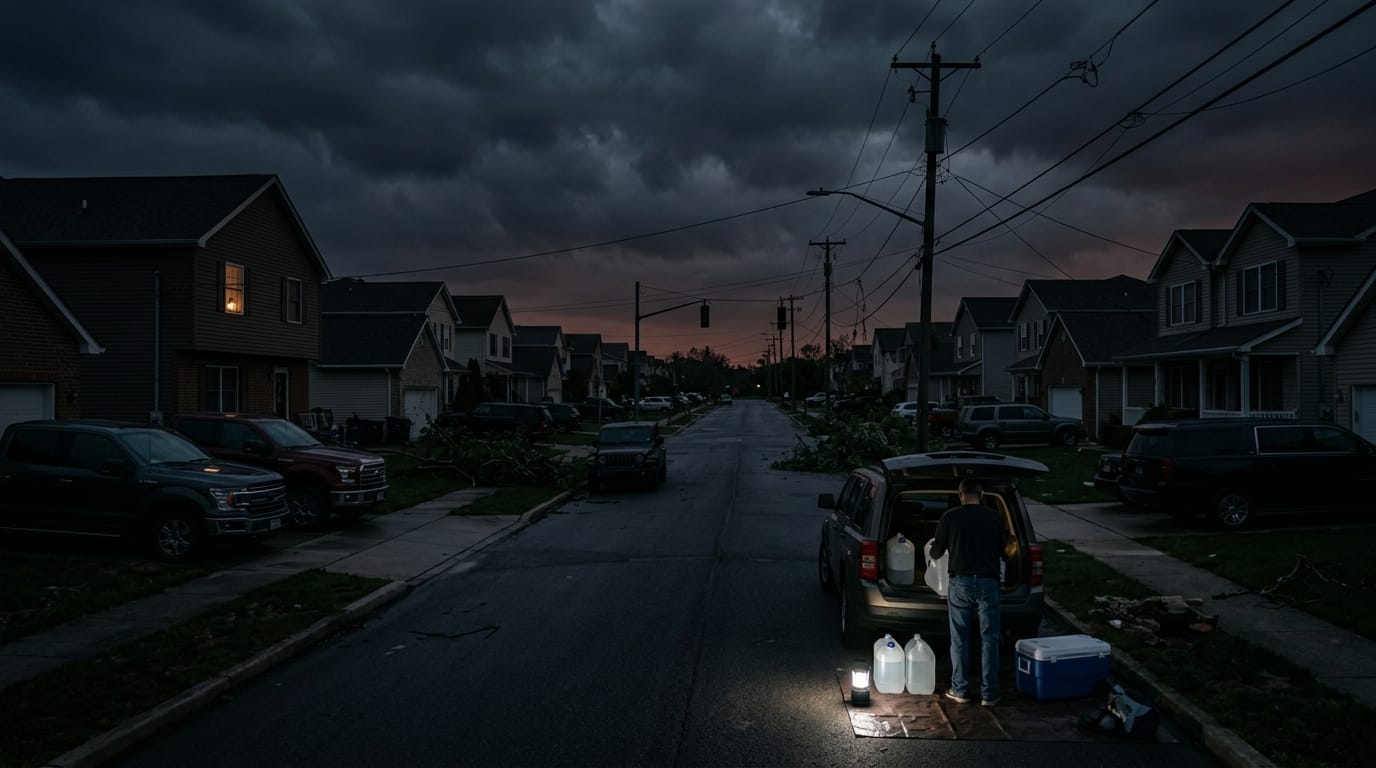
The first day is usually a test of organization. People search for batteries, discover that a flashlight is dim, realize that the can opener is electric, or learn that the power bank was never charged. The outage may still feel temporary, which makes it easy to waste battery capacity or open the refrigerator repeatedly.
Lighting gets used constantly. A headlamp leaves both hands free for cooking, checking a breaker, carrying water, or helping a child. A lantern is better for a shared room. Our comparison of blackout lights for the home explains why a few purpose-placed lights usually work better than one extremely bright flashlight. Avoid candles when safer battery lighting is available.
Day two: food, temperature, and information take over
By the second day, the outage becomes a household-management problem. The refrigerator is no longer something to guess about. Use appliance thermometers if available, follow current official food-safety guidance, and do not taste food to decide whether it is safe. Keep an inventory so the door stays closed instead of becoming a window into a warming box.
Our guide to food safety during a power outage covers what to keep, cook, or discard. Local advisories and current FDA or USDA guidance should take priority over a remembered rule of thumb.
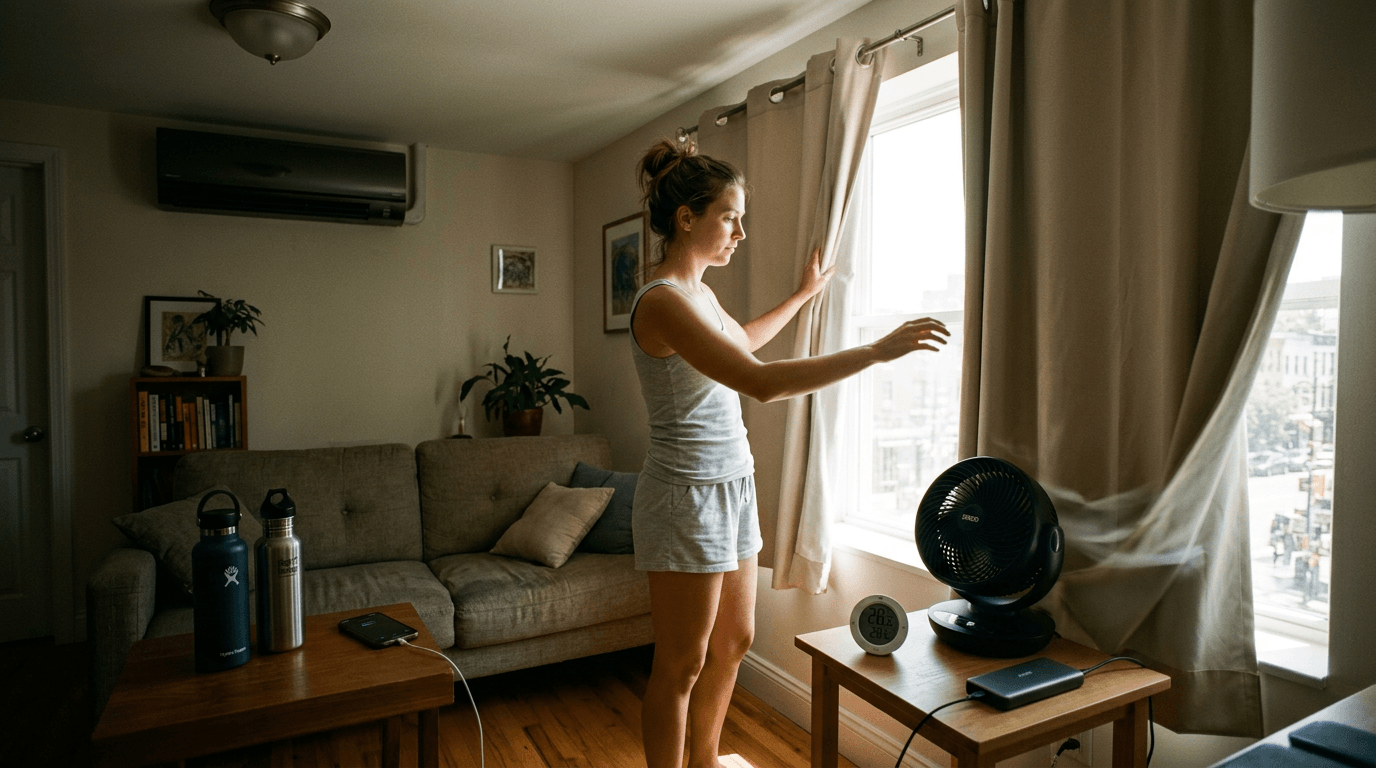
Indoor temperature can become the main risk during a summer or winter outage. Close blinds on the sunny side, use shade and cross-ventilation when outside air is cooler, and move to a safer location if the building can no longer protect vulnerable people. Apartment residents can use the practical steps in our power-outage cooling guide. Follow local heat alerts and do not rely on a fan alone when conditions are dangerously hot.
Days three through five: small problems compound
A multi-day outage exposes systems, not just missing objects. One charged battery is useful, but a charging plan is better. Bottled water helps, but a household also needs a way to wash hands and flush a toilet if water service is interrupted. Stored food matters, but so do a manual can opener, a safe cooking method, and meals that do not create a pile of dirty dishes.
Information also becomes harder to verify. Rumors about restoration times spread quickly. Check the utility, local emergency management, weather service, and public-safety alerts at scheduled intervals rather than draining every phone by refreshing constantly.
Comfort is not frivolous at this stage. Books, cards, familiar snacks, earplugs, wet wipes, clean socks, and a way to make coffee can reduce stress and help a household keep a workable routine. These items rarely appear at the top of emergency lists, yet they may be used every day.
What gets used every day
Headlamps and small lanterns placed where people actually move.
Charged power banks, common cables, and a written charging schedule.
Shelf-stable meals that need little water, fuel, or cleanup.
A battery radio or another low-power way to receive official updates.
Cash in useful denominations when payment systems or local networks are unavailable.
Sanitation supplies, trash bags, paper towels, soap, and wet wipes.
Printed contacts, medication details, utility numbers, and local maps.
If you are building from scratch, start with the priorities in our home power-outage supply guide rather than buying a large collection of specialized gadgets.
What often becomes dead weight
Gear disappoints when it solves the wrong problem, has not been tested, or depends on another missing resource. An uncharged battery is just weight. A complicated stove is not useful if it cannot be operated safely where you live. A freezer full of food is not a backup plan without temperature monitoring and a way to act before the food becomes unsafe.
Other common weak points include devices with proprietary cables, radios no one knows how to tune, oversized flashlights that burn through batteries, and generators that have never been started. Test equipment before storm season, label controls and cables, and let every capable household member practice.
Generator safety cannot wait
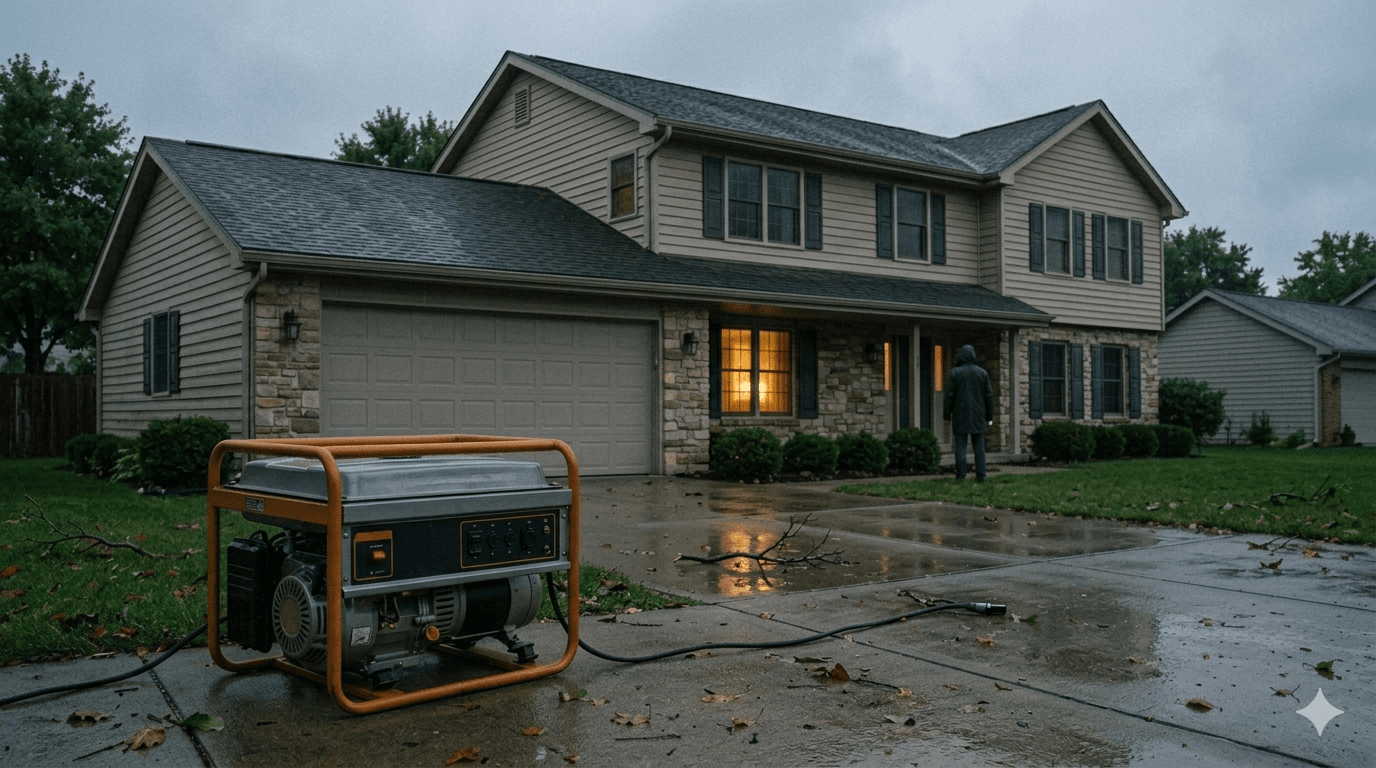
Carbon monoxide is colorless and odorless. Never operate a portable generator inside a home, garage, basement, shed, or partly enclosed space. Run it outdoors, far from doors, windows, and vents, following the manufacturer’s instructions and current public-safety guidance. Keep working carbon monoxide alarms in the home.
Before an outage, read our generator carbon monoxide safety checklist and decide where the generator can be operated safely. If anyone develops possible carbon monoxide symptoms, move to fresh air and seek emergency help.
Know when staying home is no longer safer
Leaving is not a failure of preparedness. It may be the correct decision if officials order an evacuation, indoor temperature becomes unsafe, a medical device cannot be powered, flood or fire risk increases, or the home cannot safely support a child, older adult, pet, or medically vulnerable person.
Choose two possible destinations in advance. Keep enough fuel for local travel when practical, know who can provide transportation, and write down what must leave with you: medicines, identification, mobility equipment, pet supplies, chargers, and essential records.
A five-day outage plan you can build this weekend
Walk through the home after dark using only emergency lighting.
Charge every backup battery and label its matching cable.
Plan five days of simple meals, including options that need no cooking.
Place appliance thermometers in the refrigerator and freezer.
Print essential contacts, medical details, and a local map.
Test radios, alarms, flashlights, and backup-power equipment.
Agree on check-in times and a backup place to meet.
Write down the conditions that would make your household leave.
The goal is not to make five days comfortable in every possible situation. It is to prevent predictable problems from becoming emergencies. Start with light, communication, food safety, temperature, sanitation, and a clear decision point for leaving. Those ordinary preparations are what continue to work after the novelty of the blackout is gone.
Editorial note
This article summarizes practical lessons from multi-day household outages and aligns safety guidance with current public-agency recommendations. Conditions vary by location, season, health needs, and the cause of the outage, so follow utility notices and local emergency instructions.
Article recap
- A multi-day outage quickly becomes a food, temperature, sanitation, and communication problem.
- The most useful supplies solve small problems repeatedly and do not depend on untested equipment.
- Protect battery capacity early and use scheduled check-ins instead of constant phone use.
- Portable generators belong outdoors, far from doors, windows, and vents.
- Decide before the outage which conditions would make your household leave.
Sources and further reading
- Ready.gov: Power Outages — accessed Aug 2026
- CDC: Carbon Monoxide Poisoning — accessed Aug 2026
- FDA: Food and Water Safety During Power Outages and Floods — FDA, accessed May 2026
- National Weather Service: Weather Safety — NOAA/NWS, accessed May 2026
Read next

Questions readers askFrequently asked questions
Plan for at least several days, then extend the plan according to local hazards, medical needs, climate, and how quickly utility crews can reach your area. A short outage kit should still work if the interruption lasts longer than expected.
Lighting and phone charging are obvious immediately, but food temperature, indoor heat or cold, medication storage, sanitation, and reliable information become more important as the hours pass. The exact order depends on the season and the household.
A portable generator must be operated outdoors, far from doors, windows, and vents, exactly as the manufacturer instructs. Never use one in a home, garage, basement, shed, or other enclosed or partly enclosed area. Working carbon monoxide alarms are essential.
Leave if officials order an evacuation or if the home can no longer protect someone from dangerous heat, cold, fire, flooding, carbon monoxide, or a medical risk. Decide in advance where you can go and how you will transport people, pets, medicines, and essential equipment.
Comments
Leave a comment
No comments yet. Be the first to comment!