Power outages
Power Outage Prep Without a Generator or Camping Stove
The electricity goes off just before dinner. Your kitchen is all-electric, the shops may be closed, and there is nowhere safe and permitted to run a generato...
Quick answer
If you have no safe, permitted place for a generator or camping stove, start with familiar ready-to-eat food, accessible safe water, handwashing and a usable toilet plan. Use battery lighting and reserve charging for essential devices. Keep the fridge closed, follow local updates and arrange another destination if staying becomes unsafe.
The electricity goes off just before dinner. Your kitchen is all-electric, the shops may be closed, and there is nowhere safe and permitted to run a generator or camping stove. You do not need to solve that evening by recreating an off-grid cabin indoors.
CleverJoe Off Grid's 10 Things People Forget When the Power Goes Out inspired this approach: pay attention to ordinary needs, including sanitation, refrigeration and something pleasant to do. Here, the equipment choices change to fit a home where burning fuel is not an option.
Start with the home you actually have
Apartments are not all identical, and neither are houses. Outdoor access, building rules, water systems and the people who live with you change what is workable.
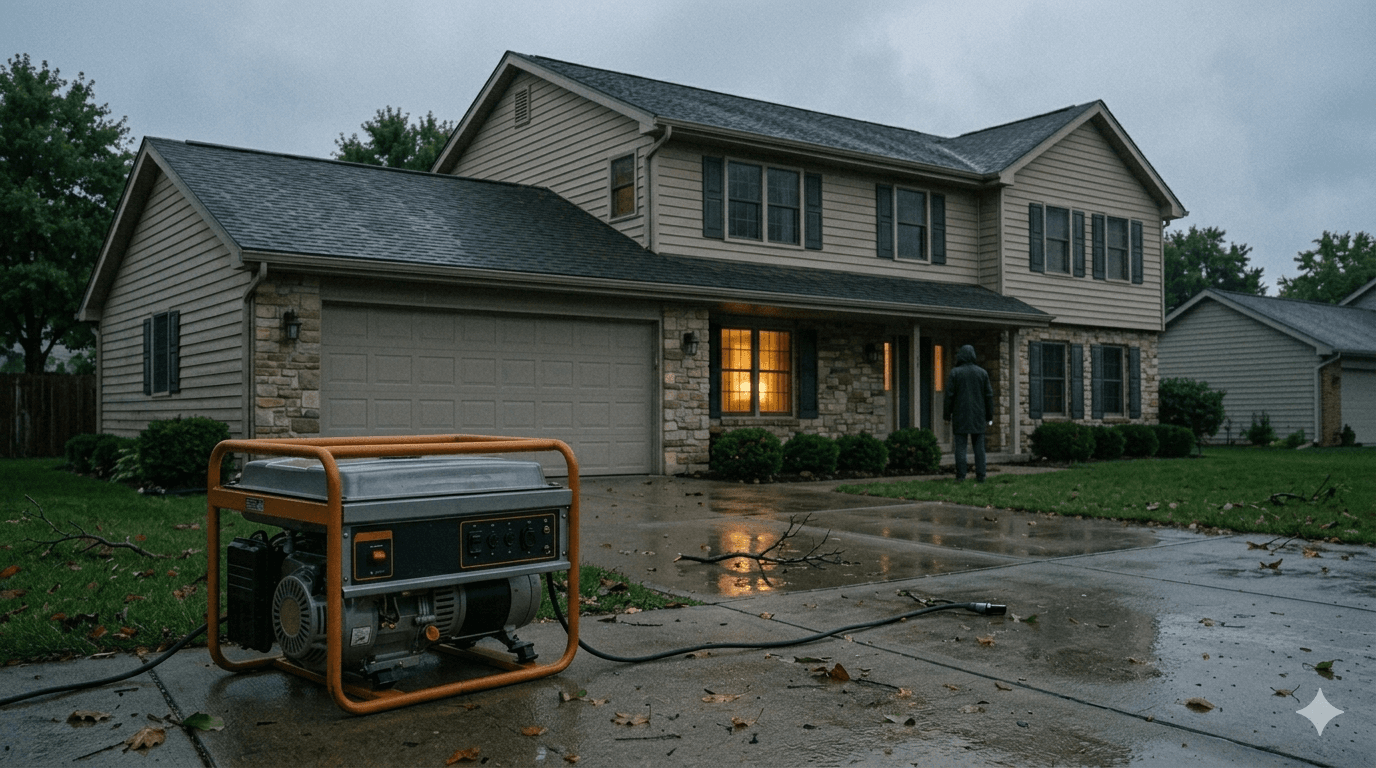
CDC says portable fuel generators belong outdoors, at least 20 feet (6 meters) from doors, windows and vents, with battery-powered or battery-backup carbon monoxide alarms in the home. If you cannot meet the safety requirements and local rules, leave a generator out of your plan.
Never use a portable camping stove or charcoal grill indoors. An open window or a carbon monoxide alarm does not make that acceptable. The useful alternative is a meal that needs no burner, not a search for a loophole.
Make dinner independent of heat
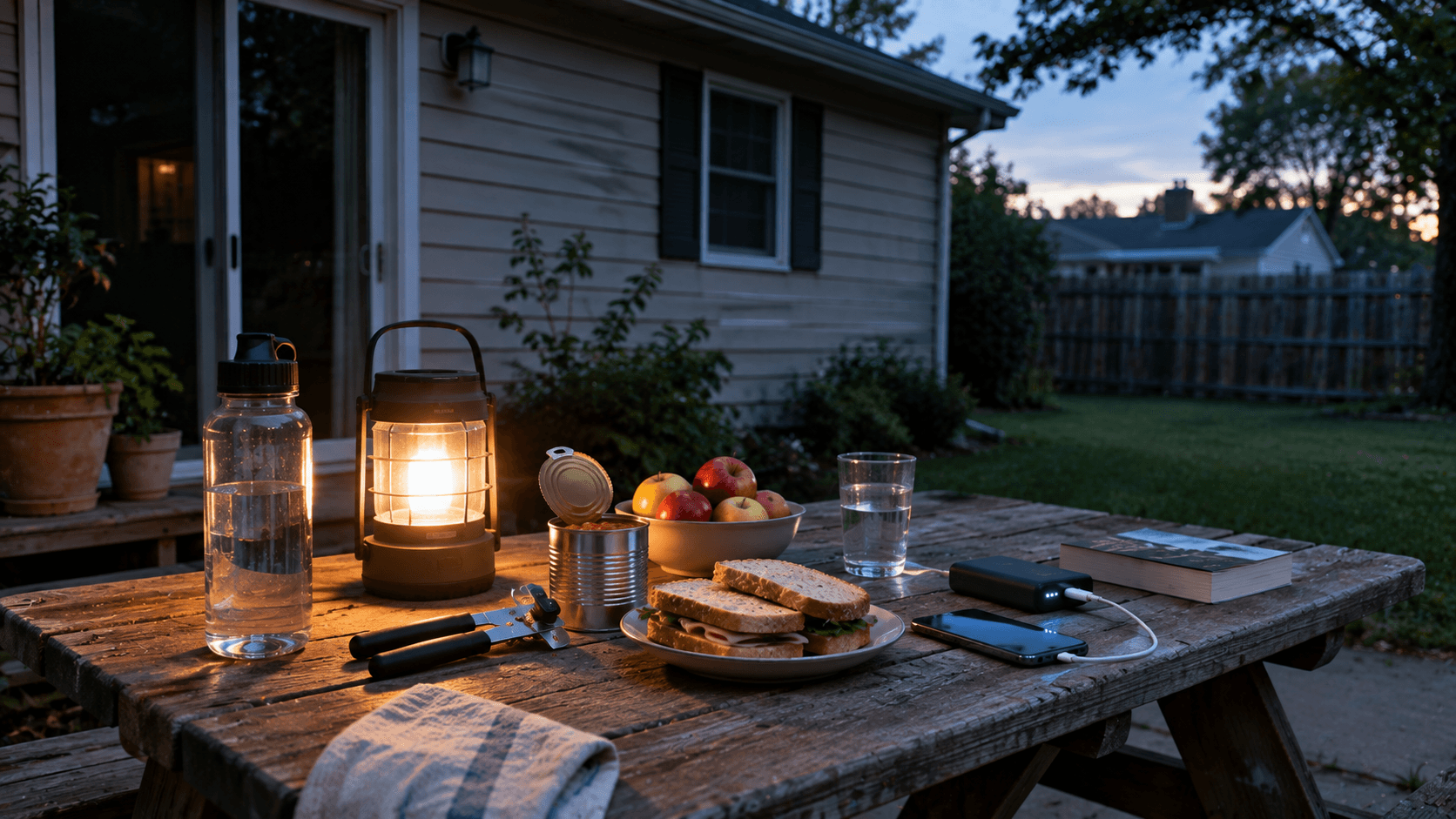
Picture crackers, a small commercially canned portion of ready-to-eat beans or fish, and canned fruit. Choose foods that suit your household's allergies, dietary needs and appetite. Check labels for ready-to-eat food, not just shelf-stable ingredients.
Put a manual opener beside foods that need one. Choose portions you can finish, rather than opening a large container that requires refrigeration afterward. Follow storage instructions once opened. Dry rice, pasta and pancake mix may be useful pantry food, but they do not solve this particular dinner.
Keep these foods in ordinary rotation, replacing what you use. A cold dinner can be complete without a battery-powered kettle.
Leave water for hands as well as drinks
A no-cook meal still needs safe water and clean hands. Keep known-safe drinking water where you can reach, lift and pour it. Plan separately for washing hands and cleaning food-contact items, rather than assuming every stored bottle is available to drink.
A blackout does not automatically stop the taps or make the water unsafe. Check your utility and health authority's notices. If water is unsafe or its safety is uncertain, follow their instructions and use a known-safe supply for drinking, food preparation and hygiene.
A portable filter is not a universal answer. Different filters address different hazards; boiling or disinfecting cannot make water contaminated with fuel or toxic chemicals safe. Without a safe heating method, your plan should not depend on boiling suspect water.
Keep soap and a workable way to wash with safe water. When soap and water are unavailable, CDC recommends sanitizer containing at least 60% alcohol, but it does not remove every germ or harmful chemical and is less effective on dirty or greasy hands. After handling toilet waste, do not treat wipes or sanitizer as a complete substitute for handwashing.
Check the toilet before adding water
The important question is not just whether the tank can refill. Wastewater must still have a working route away from the home. A supply interruption is different from a blocked sewer or a sewage pump without electricity.
Ask the building manager or utility what applies to your system. Do not add water to a toilet when drainage is blocked, backing up, flooded or under a no-flush restriction. King County warns that continued water use can cause sewage backups when electric septic components stop working; that does not mean every municipal sewer stops in a blackout.
If normal flushing is unavailable, use the guidance on what to do when you cannot flush the toilet. Decide how waste will be contained and how hands will be washed before the bathroom is needed. Follow local instructions for removal; a bag is not permission to put waste in ordinary trash.
Give the battery a smaller job
Once dinner needs no electricity, the battery no longer has to be a kitchen replacement. Give it defined jobs, such as charging a phone with its actual compatible cable. Use a battery-powered light for the table or bathroom rather than making the phone serve as the only torch. Prefer battery lighting to candles.
Any battery reserve is finite. Know where the next safe recharge or outside help could come from if the outage continues. Buying a larger box does not answer that question, and a charging symbol does not establish how long it will last.
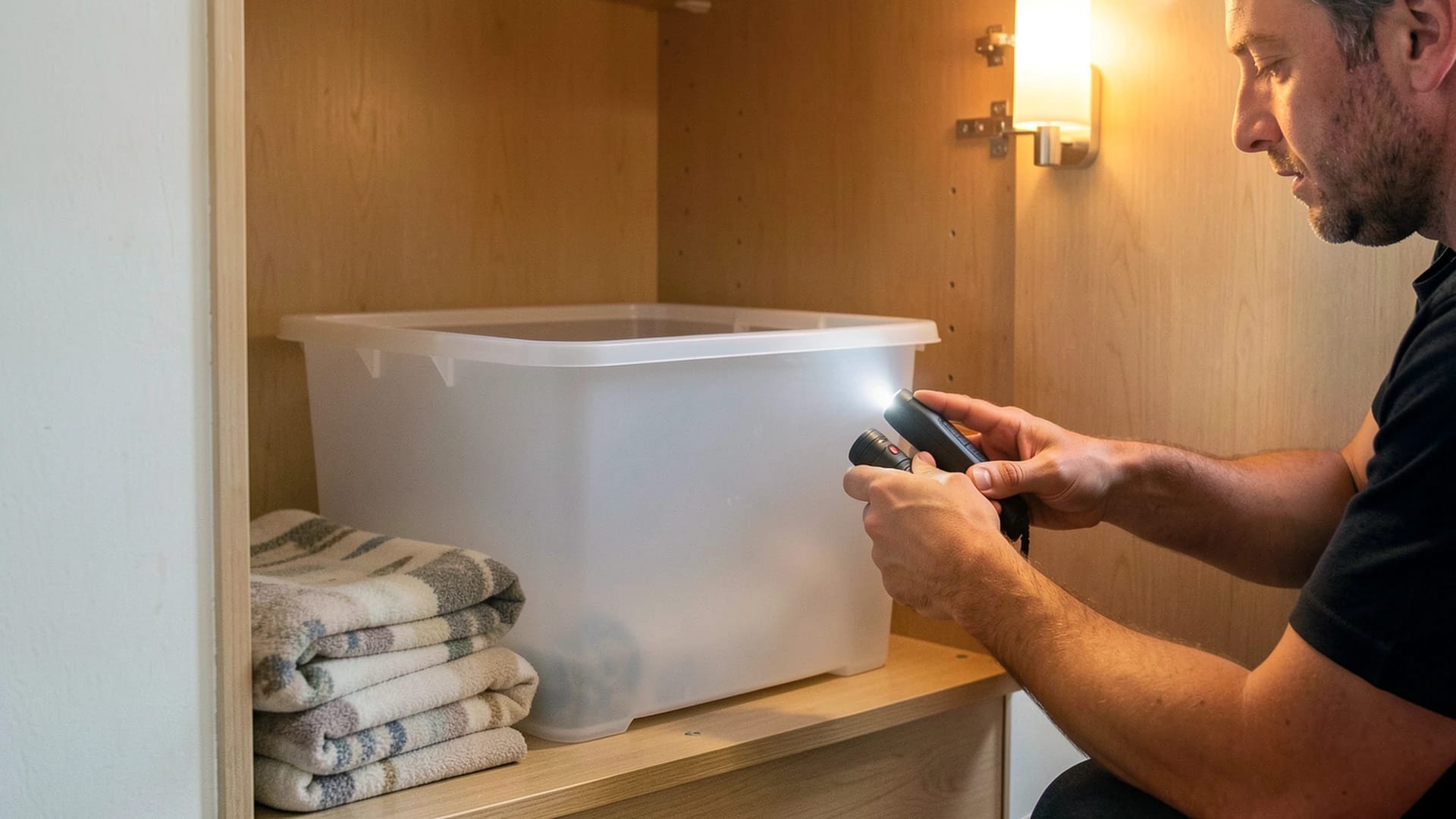
Before an outage, use our power outage kit equipment check to make existing supplies usable. Leave household electricity and essential equipment on. This checks access and operation, not whether a battery will support you through an extended outage.
Separate staying warm from saving food
Dry layers and blankets can help with comfort, but they are not a promise that a home will remain safe. Never use a gas range, oven or camping stove as room heat. If the home becomes too cold or too hot, arrange a suitable destination and safe travel rather than trying increasingly risky heating or cooling workarounds.
Meanwhile, keep refrigerator and freezer doors closed and note when power failed. CDC gives a closed refrigerator up to four hours without power. For a longer outage, refrigerated perishables need a cold source, such as ice in a cooler, and temperature checks to keep them at or below 40°F (4°C). A cooler without ice or another cold source is not a working refrigerator.
Discard refrigerated perishables after four hours without power or a cold source. Never taste food to decide whether it is safe. Use our outage food-safety guide for the next decisions, rather than cooking everything because you fear losing it. Medicine needs its own product-specific plan; food-storage rules are not medicine-storage instructions.
Keep news and a quiet evening available
A charged phone does not guarantee mobile service, internet access or an accurate restoration time. Service may continue, fail or become unreliable. Keep important contacts and an agreed place to get help on paper, not only inside an app.
Have a battery-powered radio suited to local emergency broadcasts. In the United States, a compatible NOAA Weather Radio receiver can receive official weather and hazard information where reception is available. Elsewhere, identify the service used by local authorities. A broadcast receiver cannot send a request for help.
Then give the evening something ordinary to contain: cards, a book, drawing materials or an offline activity someone actually enjoys. A familiar shelf-stable snack can belong in that plan too. Small comforts need not become another shopping category or another demand on the battery.
Choose what makes tonight workable
Return to dinner. Instead of trying to power the cooker, you open the small ready-to-eat portions, eat by battery light and leave the fridge closed. You use safe water for drinks and handwashing. You confirm the building's toilet instructions, check official updates and keep a book beside the chair. This is an example of choosing a workable evening, not proof that staying home will remain safe.
If safe temperature, essential care, drinking water, handwashing or secure waste containment cannot be maintained, seek help or a suitable place to stay before the situation deteriorates. Anyone depending on powered medical equipment needs an individual plan agreed with their care team and device supplier, not an assumption that a consumer battery will cover it.
Use the free home blackout checklist to keep the wider preparations together. The next useful purchase is the one that closes a real gap in your home, not the one that makes it resemble somebody else's cabin.
Editorial note
Follow local emergency notices, building rules and equipment instructions. This guidance does not authorize indoor fuel burning, flushing into an impaired wastewater system or treating chemically contaminated water with a household filter. Medical equipment and medicines need individual backup and storage plans. Seek a suitable destination if essential needs cannot be met safely at home.
Article recap
- A no-cook meal is a complete first option when fuel equipment has no safe, permitted location.
- Safe drinking water, handwashing and a working wastewater route are separate needs.
- Use batteries for defined essential jobs, with a plan for recharge or outside help.
- Protect refrigerated food with time, temperature and a cold source, never a taste test.
- Arrange another destination when temperature, essential care or sanitation cannot be maintained.
Sources and further reading
- CDC: What to Do to Protect Yourself During a Power Outage
- CDC: Keep Food Safe After a Disaster or Emergency
- CDC: How to Make Water Safe in an Emergency — accessed Aug 2026
- CDC: Hand Sanitizer Guidelines and Recommendations
- King County: What to do during and after a power outage
- How to Prepare When Works Impact My Water Supply — Water Corporation, Western Australia, accessed Oct 2026
- NOAA/NWS: NOAA Weather Radio All Hazards
- CleverJoe Off Grid: 10 Things People Forget When the Power Goes Out
Read next
Questions readers askFrequently asked questions
Choose commercially ready-to-eat, shelf-stable foods that fit your dietary needs, such as suitable canned beans or fish, crackers and canned fruit. Check labels and keep a manual opener available. Choose portions you can finish and follow after-opening storage instructions. Dry rice and pasta still require cooking. Safe water and handwashing remain necessary.
No. CDC says never to use a portable camping stove or charcoal grill indoors. An open window or carbon monoxide alarm does not make an outdoor appliance safe inside. If you have no safe, permitted outdoor cooking location, use ready-to-eat meals or obtain food elsewhere when it is safe to do so.
No. The water supply and wastewater system both matter, and buildings differ. Ask the building manager or utility whether flushing is allowed and whether any pumps are affected. Do not add water when drainage is blocked, backing up, flooded or restricted. A supply-only interruption is not the same as a sewer failure.
No. Ready-to-eat meals do not require a power station. Begin with safe water, handwashing, sanitation, battery lighting and a suitable way to charge essential devices. Decide which electrical jobs truly need backup before choosing equipment. Powered medical equipment requires an individual care-team and device-supplier plan; do not assume a consumer battery is suitable.
Comments
Leave a comment
No comments yet. Be the first to comment!