
Collapse & conflict
How to Choose Your Household’s Preparedness Priorities
A long preparedness list can leave you with a full shopping basket and the same unanswered question: what needs attention first in this household? A useful a...

Quick answer
Use the three-page household disaster priorities worksheet to record local hazards and uncertainties, connect them to essential needs and confirmed or missing fallbacks, then choose three actions with owners and completion evidence. H1 to H3 are identifiers, not rankings. Address urgent care or safety needs without waiting for a target date. The printable is not a risk score, complete emergency plan or proof of readiness.
A long preparedness list can leave you with a full shopping basket and the same unanswered question: what needs attention first in this household? A useful answer connects a local concern to something a person needs, then names the next step that would actually improve the situation.
Use the household disaster priorities worksheet to keep that chain visible. Its three printable pages move from local evidence to household consequences to three next actions. You are making a short decision record, not calculating a risk score or completing an emergency plan.
Begin with evidence, not a national ranking
On page 1, write your area and starting date, then use H1, H2 and H3 for a few hazards or disruptions worth investigating. These are identifiers, not first, second and third place. Start with local emergency management, public-agency guidance or relevant hazard maps. Record a source you can find again and the date you checked it.
The American Red Cross recommends planning for emergencies relevant to the places where you live, learn, work and play. A dramatic event somewhere else is not enough to establish your own exposure. Nor does a quiet recent year settle what could affect your neighborhood.
Separate what the source says from what you still need to learn. A local guide might describe winter-storm disruption without establishing how long your home would lose power. Write that uncertainty down. A community map is not a forecast for an individual property, and a concern you have not checked is not automatically a low concern. If a source is missing, make finding it an action rather than inventing an answer.
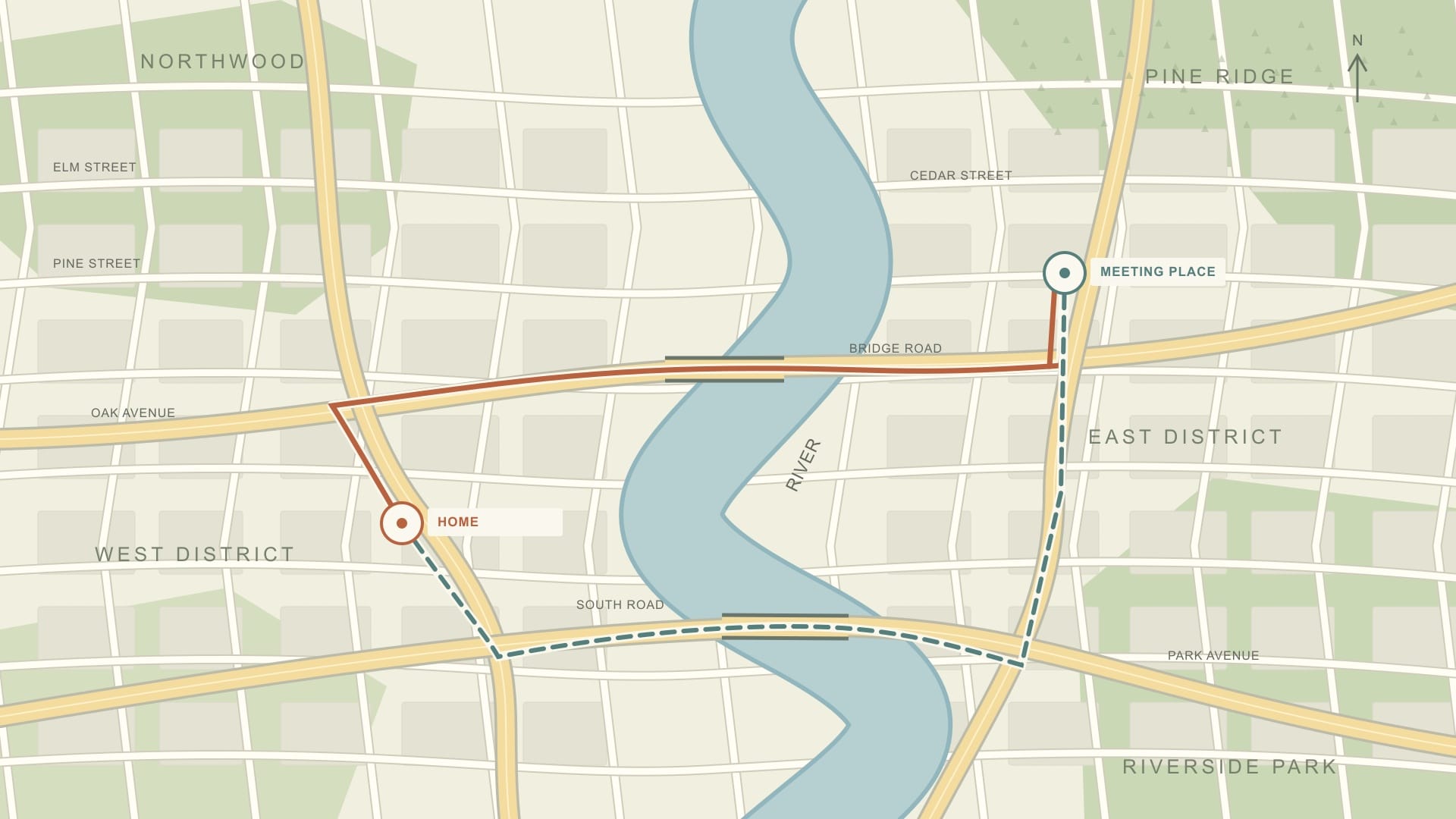
Three spaces keep the first pass manageable; they do not mean only three hazards matter. Keep additional concerns separately. For help organizing destinations, official information sources and route constraints, use our local emergency map guide. Keep detailed navigation work there rather than trying to squeeze it into a hazard card.
Turn each concern into a household consequence
Page 2 asks what would become difficult. In gaps A, B and C, carry over the relevant H ID or IDs, name the essential need and identify who would need help. One hazard can appear in several gaps; one gap can relate to several hazards. The letters keep those consequences distinct when you choose actions on page 3.
Think about an ordinary day: drinking water, accessible food, shelter, power, care, alerts, communication and transport. Include children, pets, service animals and access needs. Ready.gov's Make a Plan guidance recommends adapting plans and supplies to daily living needs and responsibilities, including prescriptions, equipment, languages and people who need assistance.
Describe the fallback you could actually use, then mark it confirmed, unconfirmed or missing. “Neighbor has a car” is not the same as “neighbor has agreed to collect our child under the school's release rules.” “We own a battery” does not establish that it supports prescribed equipment. Note what has been confirmed and leave the rest visible as a gap.
If you already have notes from our household dependency audit, bring the relevant unresolved needs across. You do not need to repeat the whole audit. This worksheet's job is to turn selected concerns into decisions someone can carry forward.
Follow one fictional household through all three pages
Sam's household has a school-aged child and no car. In this fictional example, Sam records H1 as a winter storm, with a county guide checked on 12 November. The guide is the example's local source, not a real county assessment supplied here. Likely outage length and changes to school transport remain unknown.
On page 2, Sam labels gap A with H1. The need is school pickup if normal arrangements change. The current fallback is a neighbor, marked unconfirmed. The unresolved gap is specific: has the neighbor agreed, does the school permit that person to collect the child, and what should happen if travel is unsafe or the neighbor is unavailable?
On page 3, Sam carries over “gap A, H1” and writes an action to ask the neighbor and confirm the school's release and emergency communication procedures. Sam owns the task, with 16 November as the example's reminder. The done criterion is an agreed arrangement consistent with school policy, not simply sending a message. The neighbor becomes an agreed helper only after accepting.
Suppose the neighbor declines. Sam records that blocker and the date of the conversation, then seeks another arrangement with the school and trusted contacts. The row has still produced useful information, but the gap is not closed. No one should attempt a hazardous pickup because a worksheet names a driver; follow current school and local emergency instructions.
Choose consequential actions, not easy ticks
Before filling the three action spaces, compare the unresolved gaps. Which could leave someone without essential care or protection? Which assumption needs checking before other work makes sense? A serious unresolved care or safety need deserves attention before a convenient comfort purchase, even when the purchase would be easier to complete.
For medication, powered medical equipment or care continuity, contact the relevant clinician, pharmacist, equipment supplier or support service for an individual plan. The worksheet cannot determine safe storage, backup capacity, treatment changes or a safe waiting period. If help is urgent, seek it now rather than waiting for a planning date. Follow current alerts and evacuation orders; immediate danger takes priority over paperwork.
Page 3 allows finding, asking, checking and arranging as well as buying. Give each action an owner, an agreed helper where needed, a target and a clear meaning of done. “Improve communication” is vague. “Agree a check-in method with our support contact and put the instructions where both intended users can find them” produces something you can review.
Record a completion date with evidence, or explain why the task remains blocked. Finding a phone number is completion only if finding that number was the task; it does not prove that assistance is arranged. A request for accessible transport remains unresolved until the relevant arrangements and limitations are understood. Target dates are reminders, never permission to delay urgent support.
Review the decisions without staging an emergency
Use the final review fields to say when you will return to the sheet, who should join you and where it is kept. Share relevant arrangements with the people involved. Use initials and brief needs on this worksheet; keep diagnoses, account details and other sensitive records in an appropriately protected place.
Talk through the plan while normal services stay on. Never cut power, stop care or create hazards to test it. For separate portable-equipment checks, our guide to checking an outage kit without turning off the power explains what an ordinary check can and cannot show. A discussion cannot establish battery endurance, future service availability or whether a route will remain open.
Return after a move, a change in care or school arrangements, a helper becoming unavailable, or new local guidance. Keep confirmed details dated and reopen anything that no longer holds. Finishing three actions is a starting point, not a readiness rating. The useful result is knowing which consequential gap comes next, who owns it and what evidence would show it has improved.
Editorial note
The worksheet is an original household planning aid informed by U.S. preparedness guidance, not an agency-approved assessment. Use local equivalents outside the United States. It does not replace current emergency instructions or individualized professional care planning. The household example is fictional.
Article recap
- Carry H1 to H3 from local evidence into gaps A to C, then carry each selected gap and hazard ID into an action.
- Unknown is not low concern. A possible helper or piece of equipment is not a confirmed, usable fallback.
- Prioritize consequential care and safety gaps. Record an owner, a done criterion and evidence, or an unresolved blocker.
Sources and further reading
- Ready.gov: Make a Plan
- Make a Plan — American Red Cross, accessed Nov 2026
Read next


Questions readers askFrequently asked questions
No. It records local evidence and what remains unknown; it does not calculate probabilities, predict an event or rank hazards. H1, H2 and H3 are identifiers that connect the pages. Use relevant local authorities and maps, and do not treat a community map as a property-level forecast.
This version is a three-page printable PDF formatted for US Letter, not a digitally fillable or tagged PDF. Plan to print it and write on it. If that format does not suit your access needs, record the same decisions in a tool or format you can use, with assistance you have agreed if needed.
Seek an individual plan from the relevant clinician, pharmacist, equipment supplier or support service. The worksheet does not establish treatment, medicine storage, safe backup capacity or a safe waiting period. Seek urgent help when needed rather than waiting for a target date, and never interrupt care or cut power to test a plan.
Completing three actions does not certify readiness or mean your emergency plan is complete. Record what actually changed, leave unresolved blockers visible, and review the sheet after household changes or new local guidance. Follow current emergency instructions rather than relying on an old worksheet.
Comments
Leave a comment
No comments yet. Be the first to comment!