
How to Keep an Apartment Cool During a Power Outage
Published on August 15, 2026 · Last reviewed August 15, 2026
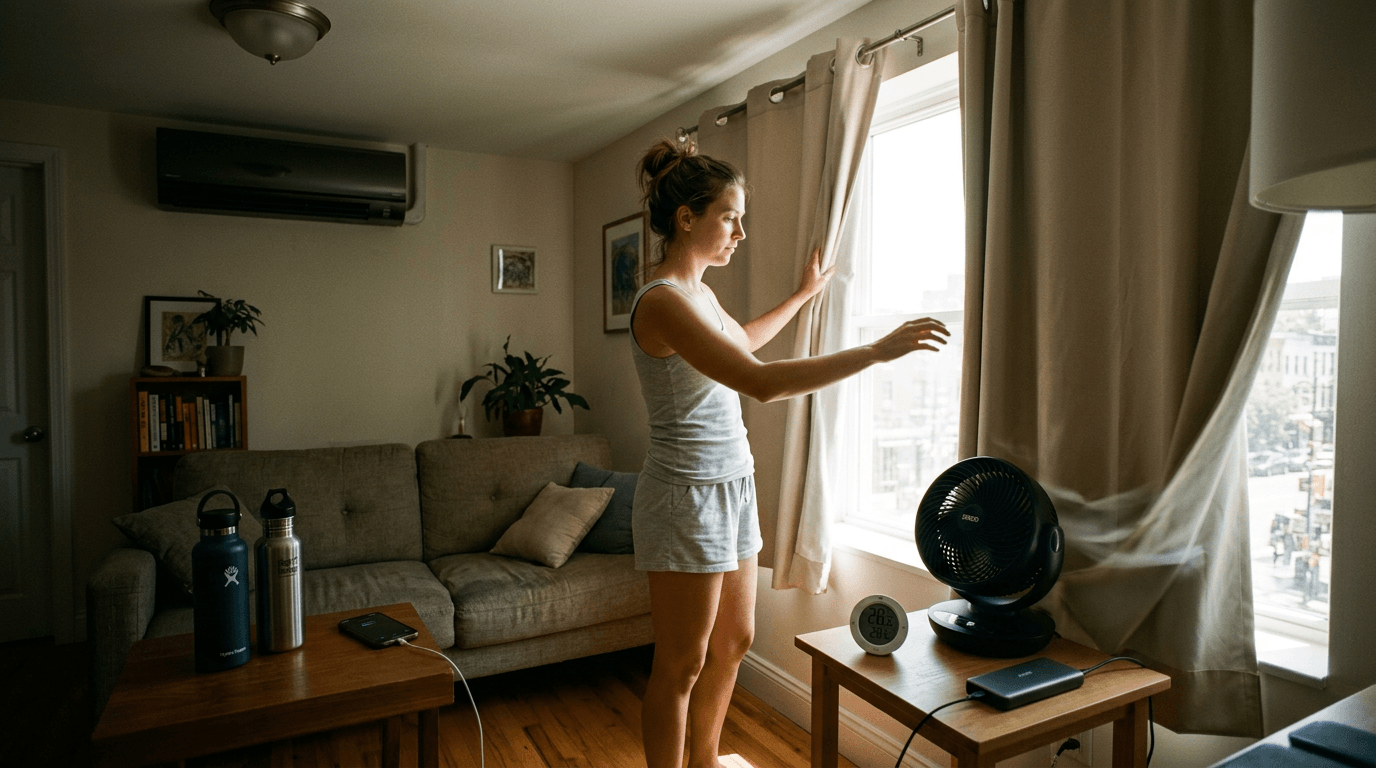
Quick answer
To keep an apartment cooler during a power outage, block direct sun, turn off heat-producing devices, gather in the coolest safe room, and ventilate only when outdoor air is cooler and safe. Use battery fans only within CDC temperature guidance, keep drinking water available, and relocate to an air-conditioned place before heat becomes dangerous.
A summer power outage can turn an apartment into a heat trap, especially on an upper floor, in direct afternoon sun, or in a building with sealed windows. Renters often cannot install permanent shading, change the HVAC system, or run a generator safely. The plan therefore has to work with portable equipment, building rules, and a clear point for leaving.
The goal is not to make the apartment comfortable at any cost. It is to slow heat gain, help people cool themselves, protect critical supplies, and move to an air-conditioned location before the space becomes unsafe.
First 10 minutes after the power goes out
Confirm whether the outage is local, building-wide, or part of a heat emergency. Check the utility outage map, local alerts, weather forecast, and building management. Treat restoration times as estimates because they can change.
Close blinds, curtains, and exterior shutters on windows receiving direct sun.
Turn off lights, ovens, computers, game systems, and other devices that add heat.
Charge or conserve phones and switch battery fans to a lower setting when practical.
Fill clean containers if the water supply is still safe and local instructions permit it.
Check indoor temperature, outdoor temperature, humidity, and air quality if you can.
Contact anyone in the household who may need help returning home or relocating.
Use the home power-outage kit guide to check lighting, phone power, water, radio, and medical-device gaps before the next outage.
Choose the coolest usable room
The coolest room is usually the one with the least direct sun, fewer exterior walls, and the lowest safe position in the unit. Compare rooms rather than assuming the bedroom is best. A shaded interior room may remain cooler than a bright living room even if it is smaller.
Move people, water, medications, chargers, and pet supplies into the selected room.
Close doors to hotter rooms when doing so does not block an exit or reduce needed airflow.
Use light-colored temporary window coverings that the lease allows.
Keep hallways, exits, and mobility-device routes clear.
Do not move into a basement, stairwell, roof area, or utility room unless the building permits access and the space is safe.
A cool common area offered by building management may be better than any individual unit. Ask whether backup power serves a lobby, community room, elevator, or medical-equipment outlet. Never assume an elevator will remain available throughout the outage.
Block heat before trying to remove it
Solar heat through windows can overwhelm a small fan. Block direct sun early, before the room heats up. Close blinds and curtains on the sunny side. If the lease and fire code allow temporary reflective material, install it without blocking an emergency exit or damaging the window.
Reduce indoor heat as well. Avoid cooking with the oven or stovetop, running a clothes dryer, taking long hot showers, or using unnecessary electronics. Choose shelf-stable meals that require little or no cooking. Never bring a grill, camp stove, generator, or other fuel-burning device into an apartment, balcony enclosure, hallway, or garage.
Open windows only when conditions help
An open window is useful only when outdoor air is cooler than indoor air and air quality is acceptable. During the hottest part of the day, open windows can bring more heat inside. When evening or early morning air becomes cooler, cross-ventilate through safe windows if building security, smoke, and local conditions allow it.
Compare indoor and outdoor temperatures instead of relying on how the air feels at one window.
Open windows on opposite sides when possible to create a flow path.
Use a fan near one window to exhaust hotter air only while the outside air is cooler.
Close windows again before outdoor temperature rises.
Keep windows closed when wildfire smoke, hazardous air, or an official shelter instruction makes outdoor air unsafe.
Do not defeat window guards, lean out of windows, prop open fire doors, or create unsecured openings around children or pets.
Use fans within their limits
Battery and rechargeable fans can improve comfort and help sweat evaporate, but they do not lower room temperature. CDC advises using fans indoors only when the temperature is below 90°F (32°C). Above that level, a fan can increase body temperature. Humidity, health conditions, medications, age, and airflow also affect how well a person can cool.
Aim airflow at people rather than trying to circulate the entire apartment.
Use the lowest effective speed to extend battery life.
Keep fingers, hair, loose fabric, children, and pets away from blades and cords.
Do not place a fan where it can fall into water or block an exit.
Recharge batteries before forecast heat and inspect swollen or damaged power banks.
If you need to size charging for fans and phones, compare a power bank with a portable power station using the actual wattage and expected runtime of your devices.
Cool people, not just the room
Wear loose, lightweight clothing and reduce unnecessary activity. Move chores to the coolest part of the day. A cool shower, damp cloth on the skin, or cool water on the face, neck, and arms may help. Use water that is safe and comfortable, and assist anyone who has limited mobility or cannot regulate temperature well.
Drink water regularly. People with fluid restrictions or medical conditions should follow their clinician’s advice rather than generic hydration targets. Alcohol and heavy exertion can increase risk. Keep drinking water where it is easy to reach, including overnight.
Protect food, medicine, and medical devices
Keep refrigerator and freezer doors closed. Do not open them repeatedly to cool the room. A refrigerator is not a safe cooling shelter, and spoiled food creates a second emergency.
For decisions about ice, coolers, refrigerator temperatures, and what to discard, follow the power-outage food-safety guide rather than tasting questionable food.
Ask a pharmacist, prescribing clinician, or manufacturer how refrigerated medicine should be handled during an outage. Do not place medicine directly on ice unless the instructions specifically allow it. Do not stop, change, or replace medicine because of heat exposure without qualified guidance.
Anyone using a powered medical device should have a written backup plan from the provider or equipment supplier. Know which cooling center, shelter, hospital, or trusted location can support the device and whether accessible transportation is available.
Plan for children, older adults, disabilities, and pets
Heat can affect anyone, but some people are more vulnerable. Check infants, older adults, pregnant people, people with chronic conditions, people taking heat-sensitive medicines, and anyone who lives alone. Do not rely on a person at higher risk to notice or report symptoms early.
Assign one person to check temperature, water, symptoms, and medication needs.
Keep mobility aids, sensory supports, chargers, and service-animal supplies together.
Use text messages or a written check-in schedule with nearby family or neighbors.
Move pets to the coolest safe area and provide water. Never leave them in a parked vehicle.
Confirm that the planned cool location accepts pets or service animals and is physically accessible.
Know when to leave
A cooling plan needs a relocation threshold. Identify an air-conditioned library, community center, cooling center, friend’s home, hotel, or public facility before the outage. Confirm hours, transportation, accessibility, pet rules, and whether the location is actually operating during the emergency.
Leave before travel becomes harder if the apartment keeps heating, cooling measures are ineffective, a vulnerable person cannot remain safe, or officials advise relocation. If the building is secure but the unit is too hot, tell management or a trusted contact where you are going.
Warning signs of overheating can include heavy sweating, muscle cramps, dizziness, headache, weakness, nausea, or shortness of breath. Confusion, fainting, severe worsening symptoms, or suspected heat stroke require emergency help. Call 911 for a medical emergency and begin cooling the person while help is on the way if you can do so safely.
A renter-friendly cooling kit
Indoor thermometer and access to local heat and air-quality forecasts.
Blackout curtains, removable shades, or lease-safe temporary window covering.
One or more battery fans with tested batteries and charging cables.
Charged phone power banks stored away from excessive heat.
Drinking water and easy meals that do not add cooking heat.
Cool cloths, light clothing, and basic hygiene supplies.
Printed contacts, cooling-center information, transit options, and a building-management number.
A plan for medicine, medical devices, children, pets, service animals, and accessible transport.
Use the free Home Power Outage Starter Checklist as the broader household gap check, then add the heat-specific items your apartment requires.
Apartment blackout cooling checklist
Check outage status, heat alerts, air quality, and the expected duration.
Block direct sun and stop unnecessary indoor heat sources.
Move the household into the coolest safe room.
Use windows only when outdoor air is cooler and safe.
Use fans only within CDC temperature guidance.
Keep water available and watch for heat-related symptoms.
Protect food, medicine, and powered medical needs.
Check vulnerable neighbors or household members.
Relocate early when the apartment cannot remain safe.
The bottom line
An apartment cooling plan is a sequence: block heat, choose one cool room, ventilate only when conditions help, use fans within safe limits, cool and hydrate people, and leave before the unit becomes dangerous. Permanent modifications and generators are not required for the first steps.
Prepare the cool location and transport plan before the hottest day. During an outage, follow local alerts and medical advice rather than waiting for the apartment or a vulnerable person to cross an uncertain limit.
Article recap
- Block direct sun and reduce indoor heat sources before the apartment warms up.
- Choose one cool, accessible room and move essential supplies there.
- Open windows only when outdoor air is cooler and air quality is safe.
- CDC advises using indoor fans only below 90°F (32°C).
- Identify an accessible air-conditioned location and leave before vulnerable people become unsafe.
Editorial note
Heat risk depends on indoor temperature, humidity, health, medication, building design, and access to cooling. Follow local heat alerts, utility instructions, medical advice, and emergency guidance. Call 911 for a medical emergency.
Frequently asked questions
How can I keep an apartment cool during a power outage?
Block direct sun, choose the coolest room, reduce indoor heat sources, and ventilate only when outdoor air is cooler and safe. Use battery fans within CDC's safe temperature guidance, keep water available, and identify an air-conditioned place you can reach if the apartment continues heating.
Is it safe to use a fan when an apartment is extremely hot?
CDC advises using fans indoors only when the temperature is below 90°F (32°C). Above that, a fan can increase body temperature. A fan also does not replace air conditioning, hydration, medical care, or relocation to a cooler place when heat is becoming dangerous.
When should I leave a hot apartment during a power outage?
Leave for a cooler safe location when the apartment keeps heating, cooling measures are ineffective, a vulnerable person cannot remain safe, or officials advise relocation. Confusion, fainting, severe weakness, worsening symptoms, or suspected heat stroke require emergency help. Call 911 for a medical emergency.
How do I protect refrigerated medicine during a summer blackout?
Ask the pharmacist, prescribing clinician, or manufacturer how the medicine should be stored and how long it can remain outside its required range. Keep the refrigerator closed, prepare an approved backup cooling method, and do not place medicine directly on ice or change a dose unless a qualified professional instructs you to do so.
Sources and further reading
- Ready.gov: Extreme Heat, accessed August 15, 2026
- CDC: About Heat and Your Health, accessed August 15, 2026