
The Three Most Plausible SHTF Scenarios Right Now
Published on March 30, 2026 · Last reviewed May 30, 2026
Quick answer
For The Three Most Plausible SHTF Scenarios Right Now, confirm what is happening, handle immediate safety, then work through water, food, communication, shelter, medications, documents, and local alerts in that order. Adapt the steps to local alerts, household health needs, and official instructions.
SHTF rarely arrives as one clean event with a name. It shows up as a chain reaction. One system fails, people panic, the next system buckles under load, and within 48 hours normal life feels fake.
Right now, three scenarios sit at the top of the plausibility list for the US and Canada because they do not require sci fi. They require stress on systems that are already under pressure: conflict and emergency powers, cyber disruption of critical infrastructure, and a renewed infectious disease wave.
This is not prediction. It is threat prioritization, so you can prepare with focus instead of paranoia.
Scenario 1 Military escalation and emergency rules at home
For most North Americans, “war” sounds like something that happens somewhere else. The more realistic risk is the domestic tail of war: supply shocks, fuel spikes, increased security posture, protests and counter protests, and governments using emergency authorities to control movement or protect infrastructure during a period of instability.
There is also a difference between what people call “martial law” and what actually happens. In the US, “martial law” is not clearly defined in federal statute and has historically been rare and situation specific, often tied to civil disorder or disaster conditions where civilian authorities are displaced. In Canada, the Emergencies Act exists for extraordinary national emergencies and was invoked in 2022, showing that the legal mechanism can be used under extreme political and security stress.
Why it is plausible now: the global security environment remains hot, and official threat assessments explicitly treat homeland risks as connected to overseas conflict, including disruptions and coercive actions that play out inside domestic life.
What it looks like on the ground: not tanks in your neighborhood, but restrictions, delays, shortages, and sudden rules about where you can gather or how critical sites are protected. The first pain is usually logistics and public order, not direct combat.
Scenario 2 Cyber disruption plus electricity instability
This one is brutally realistic because it does not require a nationwide blackout to create nationwide chaos. If payments wobble, fuel distribution stalls, and communications degrade, people behave as if power is gone even when the lights are still on.
Cyber agencies have been warning about critical infrastructure risk, and recent incidents have reinforced that operational technology is a real target, not just office IT. Canada’s cyber authorities also explicitly frame malicious activity against critical infrastructure as a public safety risk that can cause service outages.
Why it is plausible now: the threat is persistent, the tooling is widespread, and interdependence is the vulnerability. Grid reliability discussions increasingly place cybersecurity alongside weather and demand as core risks.
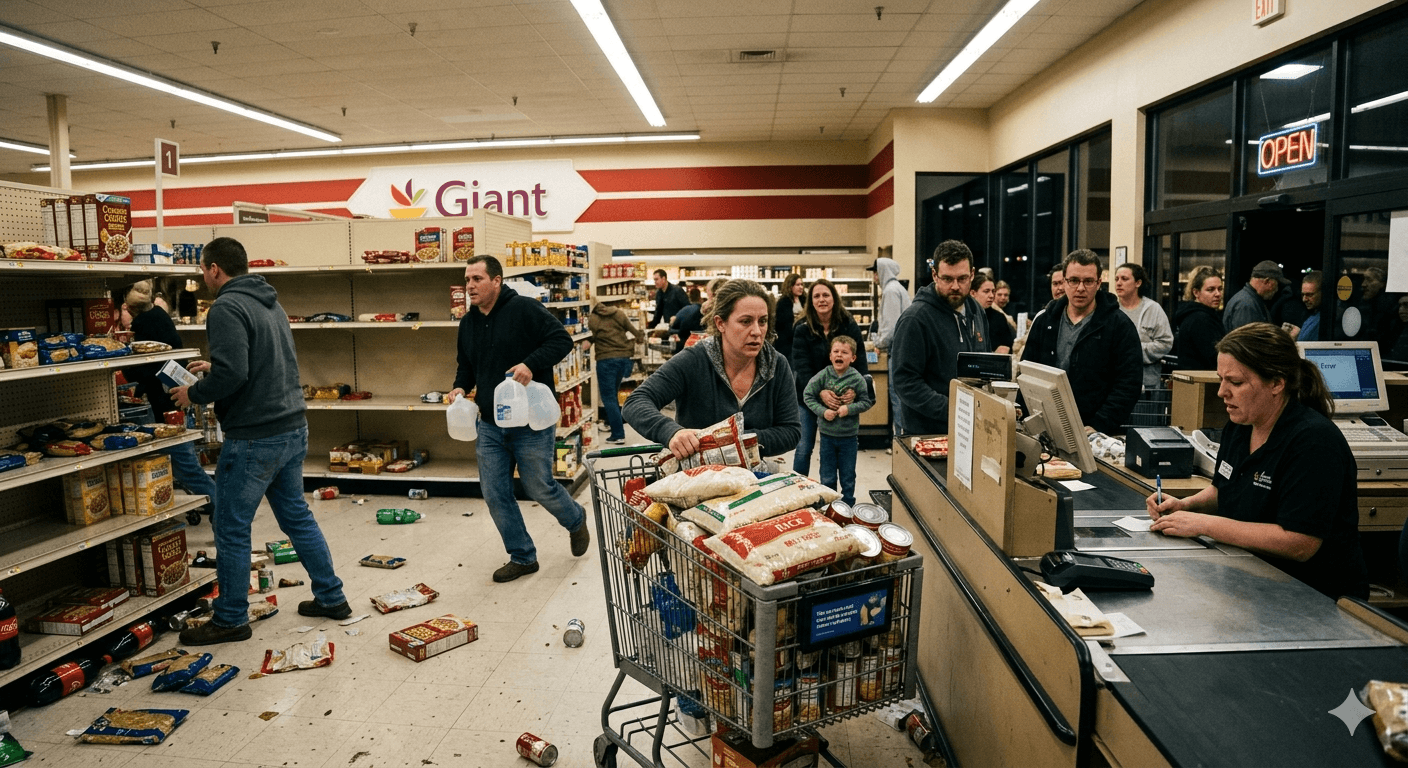
What it looks like on the ground: partial outages, rolling instability, or “everything works except the things you need.” ATMs and card networks glitch. Gas pumps fail to authorize. Cell networks get congested. Water treatment and traffic systems may degrade in pockets. People flood stores and roads, and that social surge becomes its own outage.
Scenario 3 A new pandemic wave
A “pandemic” does not need to look like 2020 to be disruptive. A high spread respiratory virus wave, a new variant that hits harder, or a different pathogen that strains hospitals can still trigger school disruption, staffing shortages, supply issues, and risk management decisions that split communities.
WHO continues to publish ongoing risk assessments and preparedness messaging around pandemic readiness years after COVID, emphasizing that future pandemic risk remains a live problem even if the world wants to move on.
Why it is plausible now: global travel is normal, surveillance and reporting are uneven, and public tolerance for restrictions is lower. That combination can produce a messy response where institutions react late, and households are forced to self manage more.
What it looks like on the ground: not necessarily lockdowns, but waves of absenteeism, overwhelmed clinics, price spikes on basics, and a constant background of uncertainty that makes every other crisis worse.
How these scenarios connect
These three risks stack.
A cyber disruption can trigger a loss of trust, cash runs, and localized unrest. A war driven supply shock can drive fuel prices up, hit delivery schedules, and increase political tension. A pandemic wave can weaken staffing across utilities, hospitals, transportation, and law enforcement, making any other disruption harder to contain.
The connection is not the headline. The connection is human behavior under stress. When people feel trapped, uninformed, or unable to buy essentials, the social layer becomes the accelerant.
Bug in or bug out
Most people should plan to bug in by default, and bug out only when staying becomes clearly unsafe. Bugging out is expensive in calories, fuel, and exposure. It also assumes you have a destination that is safer than where you are now.
Use a simple decision rule. Bug in when your home is structurally safe, you can manage temperature, you have water and sanitation, and the threat outside is higher than the threat inside. Bug out when the home becomes the threat.
Examples that justify bug out: wildfire in your path, structural damage, flooding risk, active violence nearby, or a medical need you cannot meet at home.
If you bug in, your priorities are stability and low profile. Keep warmth, water, and food simple. Limit unnecessary trips. Keep phones charged but used with discipline. If you bug out, your priorities are speed and clarity. Know the destination, the route, and the backup route. Do not improvise in the middle of panic traffic.
The practical overlap prep
The good news is you do not need three separate plans. One core plan covers all three scenarios.
Keep a 72 hour baseline that does not depend on the grid: water, no cook food, basic lighting, cash buffer, and a way to charge phones. Keep your household medical basics ready so a pandemic wave does not force emergency shopping. Have a communications routine and a family meetup plan in case networks are congested or unreliable.
If you can function calmly for 72 hours, most “SHTF” moments shrink back into problems you can manage instead of disasters that control you.
Article recap
- Handle immediate safety before comfort or convenience.
- Work from basics: water, food, shelter, medication, communication, and documents.
- Use local alerts and credible sources instead of rumors.
Editorial note
This refresh adds review cues and source links while keeping the article practical and non-alarmist. Adapt the steps to local alerts, household health needs, and official instructions.
Frequently asked questions
What should I do first for The Three Most Plausible SHTF Scenarios Right Now?
Start with immediate safety, then verify the situation through official or high-credibility sources. After that, work through water, food, medications, communication, shelter, documents, and any local instructions that apply to your area.
When should I stop using a DIY approach for The Three Most Plausible SHTF Scenarios Right Now?
Adapt the steps to local alerts, household health needs, and official instructions. If there is immediate danger, serious illness, unsafe water or food, fire, carbon monoxide, evacuation orders, or uncertainty you cannot resolve, treat that as a reason to get official or professional help rather than improvising.
Sources and further reading
- Ready.gov: Make a Plan — Ready.gov, accessed May 30, 2026
- Ready.gov: Build a Kit — Ready.gov, accessed August 14, 2026
- National Weather Service: Weather Safety — NOAA/NWS, accessed May 30, 2026