
Wildfire Smoke Clean Room Setup: Air Purifier, Filters, and What Actually Helps
Published on June 4, 2026 · Last reviewed June 13, 2026
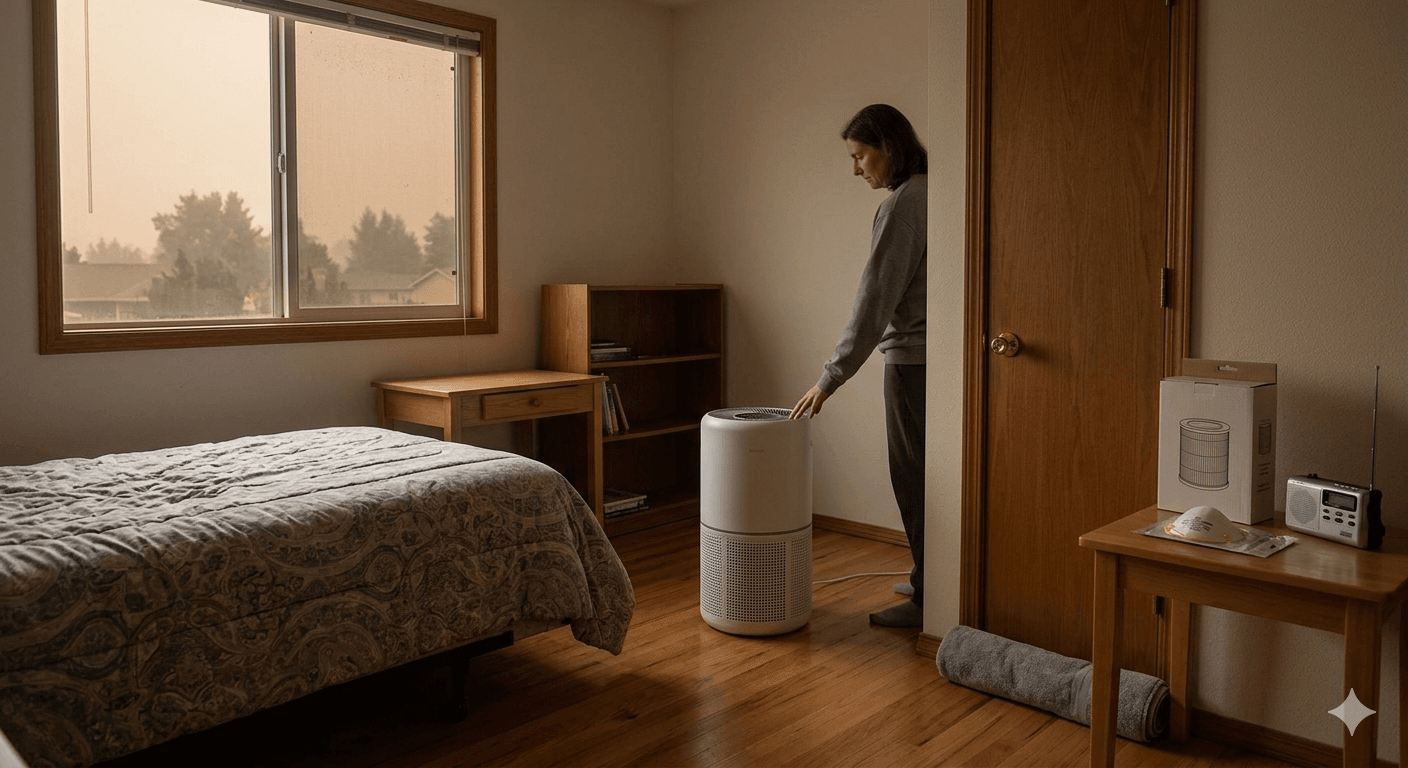
Quick answer
To set up a wildfire smoke clean room, choose one small room with few windows, close it off, run a properly sized HEPA air purifier if available, reduce indoor pollution sources, and limit door openings. Keep spare filters and N95 respirators ready, and relocate if smoke, heat, symptoms, or official guidance make staying unsafe.
Wildfire smoke can make a normal home feel unsafe even when the fire is far away. The sky turns gray, the house smells smoky, and every open door or leaky window seems to bring the outside indoors. For many households, the best immediate move is not evacuation. It is creating one cleaner-air room and reducing the smoke that gets inside.
This guide is about a practical clean room setup for wildfire smoke: one ordinary room, a sensible air purifier or filter plan, and habits that keep indoor air from getting worse. It pairs naturally with evacuation planning, but it is for the days when officials say to stay indoors and reduce exposure.
Quick answer: how to set up a wildfire smoke clean room
Choose one room with few windows and doors, close it off from the rest of the home, run a properly sized HEPA air purifier if you have one, reduce indoor pollution sources, and limit door openings. If you do not have a purifier, a temporary box-fan filter setup may help, but it must be built and used safely and should not be left unattended if the fan or setup is questionable.
Pick the right room
The best clean room is usually small, central, and easy to close off. A bedroom, office, or interior room can work better than a large open living area. Fewer windows mean fewer leaks. Fewer doors mean fewer interruptions. If someone in the household has asthma, heart or lung disease, is older, pregnant, or very young, prioritize their comfort and access.
Do not seal the room so tightly that it becomes unsafe or overheated. The goal is cleaner air, not a plastic bubble. If heat is also a problem, follow local health guidance and prioritize cooling centers or safer shelter when indoor temperatures become dangerous.
Use filtration, not fragrance
Air fresheners, candles, incense, and scented sprays do not solve wildfire smoke. They add more particles or chemicals to the room. Use a true HEPA air purifier if possible and size it for the room. Keep extra filters on hand if your area has regular smoke seasons.
A purifier works best when the room is closed, the filter is clean, and the unit runs continuously during smoky periods. Put it where airflow is not blocked by curtains, bedding, or furniture.
What about box-fan filters?
A box fan with a high-efficiency furnace filter can reduce particles in some situations, but safety matters. Use a newer fan if possible, follow public-health instructions for the design, avoid damaged cords, and do not leave a questionable setup running unattended. This is a fallback, not a replacement for a purpose-built purifier.
If you live in a smoke-prone area, prepare the filtration setup before smoke arrives. Trying to buy filters during a smoke event often means empty shelves and rushed decisions.
Stop making indoor air worse
During smoke days, avoid frying food, burning candles, smoking indoors, vacuuming with a poor filter, using fireplaces, or running anything that adds particles. A clean room can be undone by one smoky pan or scented candle.
Keep doors and windows closed when outdoor air is poor. If your HVAC system allows recirculation and has a suitable filter, follow manufacturer and local public-health guidance. Replace filters as needed and do not force equipment beyond its design.
Prepare before smoke season
A wildfire smoke kit is simple: an air purifier or safe filter setup, spare filters, N95 respirators for necessary outdoor trips, tape or weatherstripping for obvious leaks, medications and inhalers already refilled, and a plan for where vulnerable family members can go if indoor air or heat becomes unsafe.
If wildfire risk also brings evacuation risk, keep this plan connected to your 20-minute wildfire evacuation routine. Clean indoor air helps while you stay; the go-bag helps when staying is no longer the safer choice.
Know when a clean room is not enough
A clean room reduces exposure; it does not make every situation safe. If someone has trouble breathing, chest pain, severe symptoms, or worsening medical needs, seek medical help. If local officials recommend evacuation or relocation, follow their guidance. If indoor heat becomes dangerous because windows are closed and cooling is unavailable, find a safer place.
People with asthma, COPD, heart disease, pregnancy, infants, and older adults should plan earlier and more conservatively. Smoke is not just a nuisance for vulnerable people.
Clean room checklist
Choose one small room with few windows and doors.
Run a properly sized HEPA purifier or safe approved filter setup.
Keep doors and windows closed when outdoor air is poor.
Avoid candles, incense, frying, smoking, and other indoor particle sources.
Keep spare filters, medications, N95s, and evacuation supplies ready.
Leave or get help if symptoms, heat, or official guidance make staying unsafe.
Article recap
- A clean room is one small room where you reduce smoke entry and run filtration continuously.
- HEPA filtration is more useful than fragrance, candles, or improvised comfort measures.
- Avoid adding indoor particles from cooking, candles, smoke, poor vacuuming, or fireplaces during smoke days.
- Vulnerable people should act earlier and relocate if symptoms, heat, or official guidance make staying unsafe.
Editorial note
Reviewed against EPA, AirNow, and CDC wildfire-smoke guidance. Indoor air decisions should follow local air-quality alerts, public-health guidance, and medical advice for people with asthma, heart or lung disease, pregnancy, infants, or older adults.
Sources and further reading
- EPA: Wildfires and Indoor Air Quality — U.S. Environmental Protection Agency, accessed June 13, 2026
- AirNow: Wildfire Smoke — AirNow, accessed June 13, 2026
- CDC: Wildfire Smoke and Your Patients' Health — Centers for Disease Control and Prevention, accessed June 13, 2026